Maine's mud season puts extreme stress on asphalt driveways and parking lots through freeze-thaw cycles, frost heaves, and water saturation. This guide provides five essential steps for property owners to inspect their pavement after winter, including checking for new cracks, examining drainage patterns, and identifying frost heave damage. Early detection of these issues can prevent minor problems from becoming expensive full replacements.

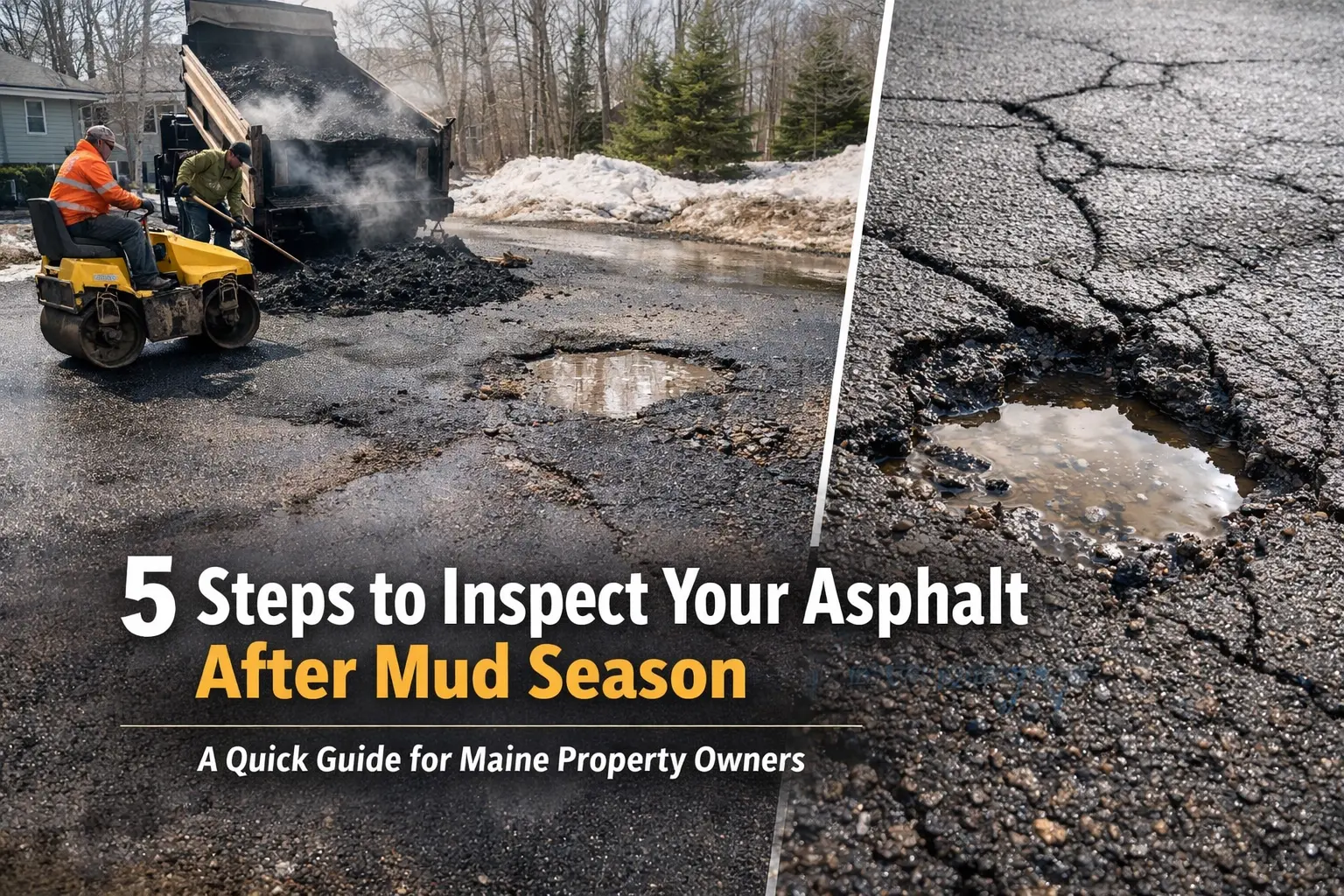
If you live in Maine, you know that "Spring" is really just a polite way of saying "Mud Season." It’s that unique time of year when the snow melts, the ground thaws, and every dirt road in the state turns into a chocolate-pudding-colored obstacle course. But while the mud gets all the headlines, your asphalt driveway or parking lot is silently enduring one of the most stressful times of its lifecycle.
The transition from the deep freeze of a Maine winter to the soggy reality of spring is incredibly hard on pavement. Between the frost heaves, the weight of snowplows, and the constant expansion and contraction of ice, your asphalt has likely moved more in the last three months than it does all summer.
Pine State Asphalt knows that catching damage early is the difference between a simple repair and a total driveway replacement. Before you get too deep into your spring landscaping and gardening, it’s time to perform a "post-mud season" inspection. Here are five simple steps every Maine property owner should follow to ensure their pavement stays in top shape.
Once the last of the snowbanks have retreated and the surface has dried off after a spring rain, grab a cup of coffee and walk your entire asphalt surface. Don't just glance at it from the porch: you need to get your eyes close to the ground.
Pine State Asphalt recommends walking in a grid-like pattern to ensure you don’t miss anything. What are you looking for? Hairline cracks. These are the "newcomers" that likely formed over the winter. When water gets into the tiny pores of the asphalt and freezes, it expands by about 9%. That expansion pushes against the asphalt from the inside out, creating tiny fissures.
In the world of maine paving, these small cracks are the primary entry point for future problems. If left untreated, they will allow even more water to penetrate the sub-base during the next rainstorm. By identifying them now, you can plan for crack filling before the heavy summer heat arrives.
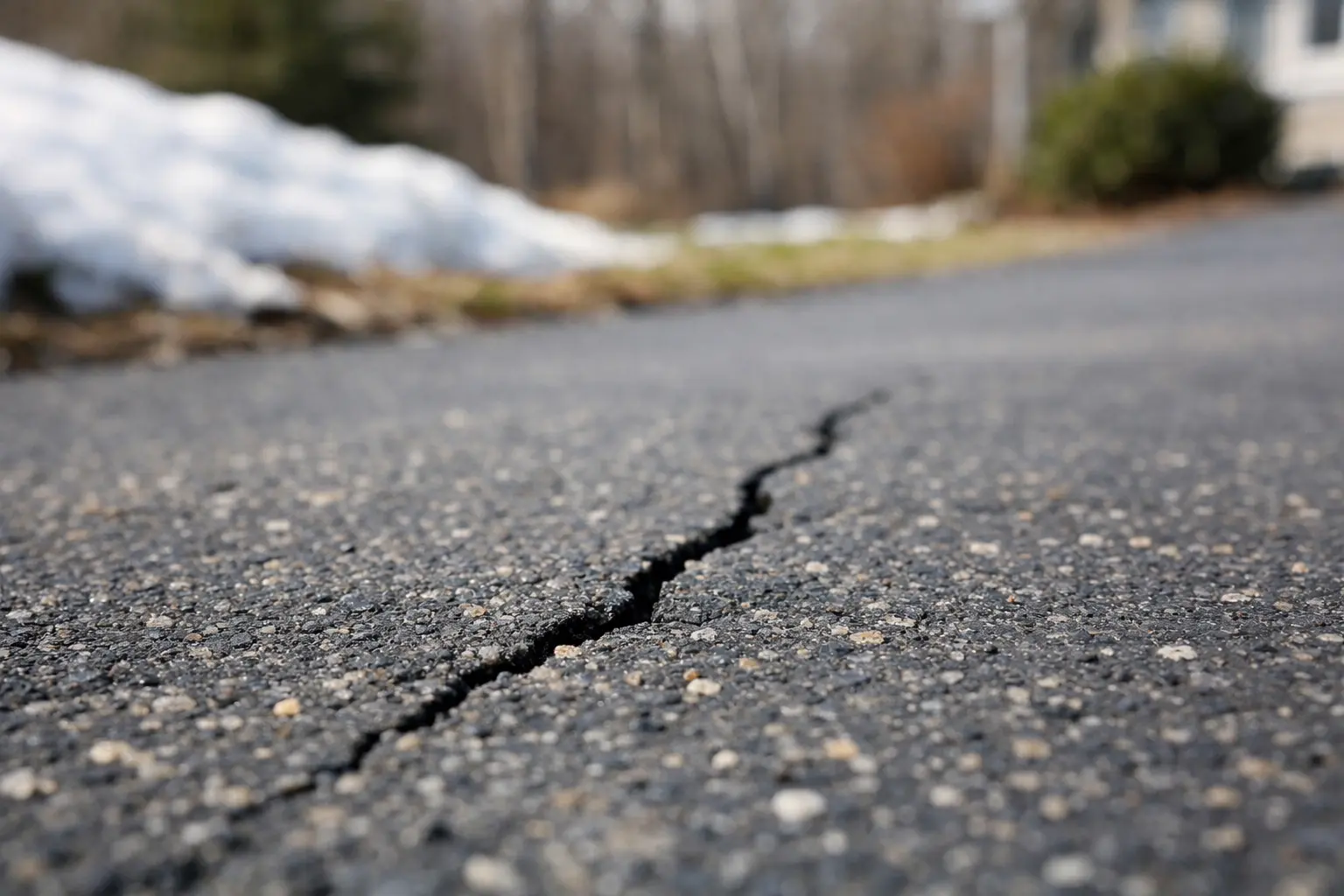
If you had cracks last fall, they didn't just stay the same size over the winter. They almost certainly grew. Go back to any areas you were worried about last year and check their status.
Has a small crack turned into an "alligator" pattern (a series of interconnected cracks that look like reptile skin)? Alligator cracking is a major red flag: it means the structural integrity of the asphalt is failing, usually because the base underneath has become saturated and soft.
You also need to look for potholes. In the Portland area, paving companies portland maine are often called out for potholes that seem to appear overnight. These usually happen when the frozen ground beneath the asphalt thaws unevenly. If a plow hit a weakened spot or if the sub-base washed away during a heavy melt, you’ll find a hole. These are priority repairs. A pothole isn't just an eyesore; it’s a liability for pedestrians and a recipe for suspension damage to your car.
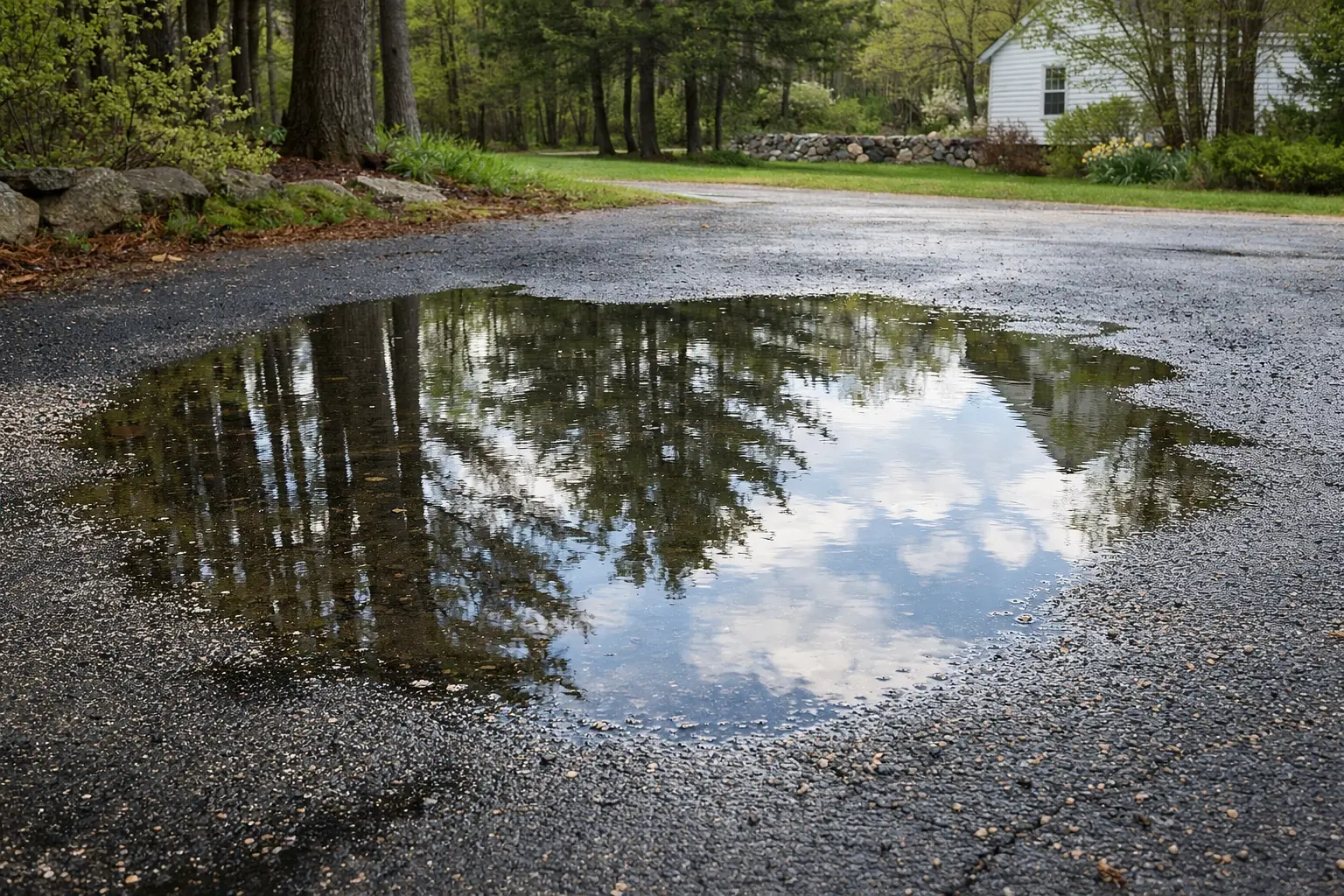
Water is the absolute arch-nemesis of asphalt. During mud season, the ground is already saturated, which means any additional rain or snowmelt has nowhere to go but across the surface of your driveway.
Wait for a rainy day or pull out the garden hose and see where the water pools. If you notice standing water that lasts more than a few hours after the rain stops, you have a drainage issue. Common problem areas include:
Pine State Asphalt suggests checking your gutters and downspouts during this time as well. If your downspouts are dumping directly onto the asphalt, you’re practically inviting a pothole to form. Rerouting that water can save you thousands in future paving costs.
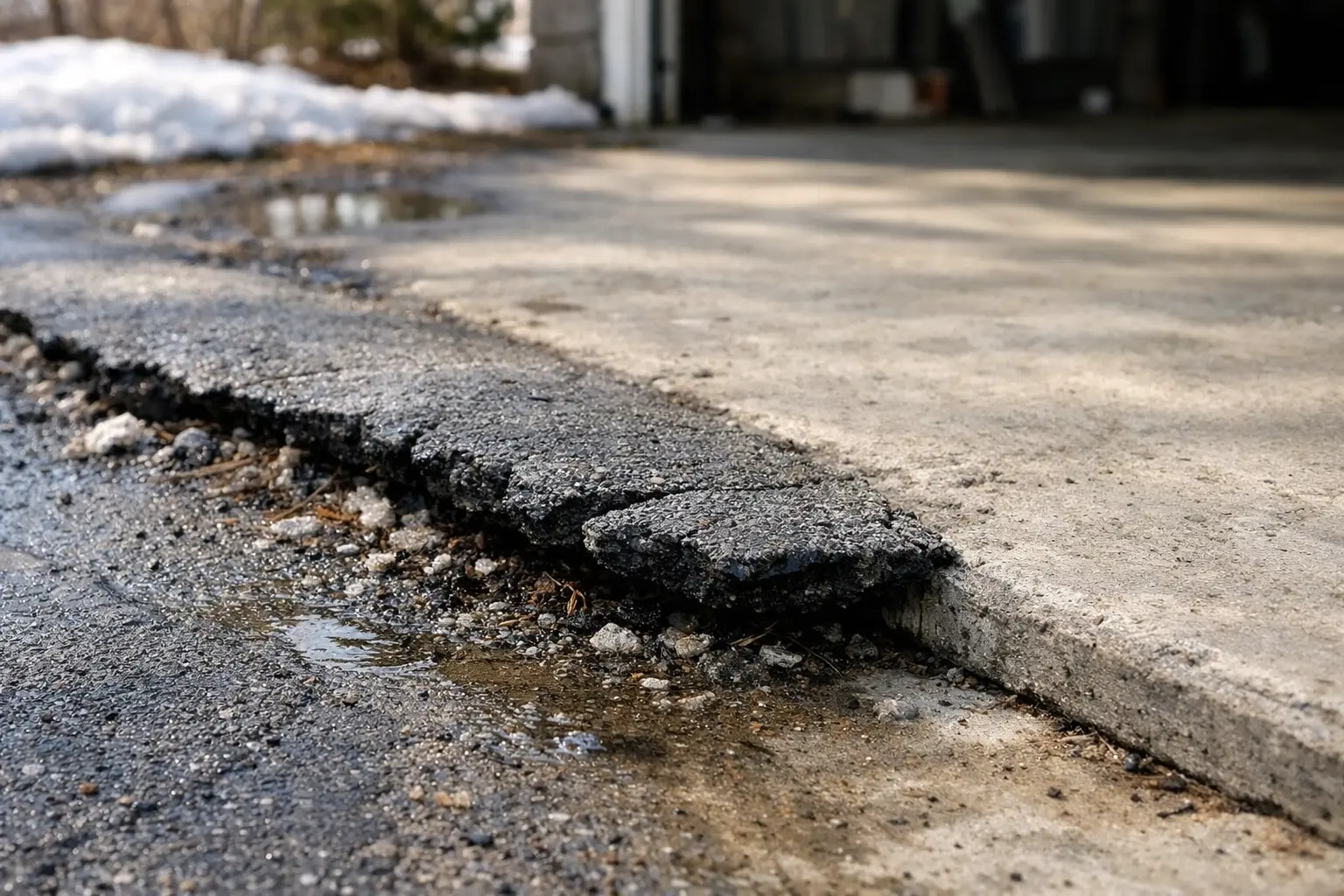
Maine is famous for its frost heaves on the highways, but they happen in your driveway too. As the ground thaws from the top down, water can get trapped between the frozen deeper layers and the asphalt surface. This causes the ground to "heave" upward.
In a perfect world, the asphalt would settle right back down into its original position once the ground fully thaws. Unfortunately, that’s not always the case. Look for areas where:
If you see significant lifting or settling, it might indicate that your driveway was built on a poor sub-base (like clay or silty soil) that holds too much water. While minor settling is normal for Maine, major heaving often requires professional regrading to prevent the asphalt from snapping under the weight of a vehicle. You can read more about how the base affects your property value in our guide on boosting property value with paving tips.
The final step is the most practical: get out your phone and take pictures. It sounds simple, but having a visual record of your asphalt’s condition each spring is incredibly helpful.
Take "wide-angle" shots of the whole driveway and "macro" shots of specific cracks or potholes. Use a ruler or even a coin next to a crack to show the scale. This documentation serves two purposes:
Once you have your photos, prioritize your repairs. Potholes and drainage issues that threaten your foundation should be at the top of the list. Small cracks can be handled with a professional crack-filling service, and a dull, grey surface can be refreshed with sealcoating once the weather stays consistently above 50 degrees at night.

You might wonder why we focus so much on this specific time of year. In the heat of the summer, asphalt is flexible. It can handle a little bit of movement. But in the late winter and early spring, asphalt is brittle because of the cold. When the ground underneath it starts turning into "mud" and shifting, the brittle asphalt can't flex: it just cracks.
This is also the time when the "sub-base" is most vulnerable. The sub-base is the layer of crushed stone and gravel beneath the blacktop. If that gravel is saturated with water, it loses its ability to support weight. Driving a heavy delivery truck or a piece of construction equipment on a "soft" driveway during mud season is one of the quickest ways to ruin a paving job.
If your inspection revealed more than a few tiny cracks, don't panic. Maine driveways are built to be tough, but they aren't invincible. The key is proactive maintenance.
If you've noticed significant damage, it might be time to look into professional repairs. Whether it’s simple crack sealing to keep the water out or a more involved patching and overlay project, addressing the issues now will save you from a full "rip and replace" job later.
For those who did their winterizing back in the fall, you might find that your driveway survived the season with flying colors! In that case, a simple cleaning and a fresh coat of sealcoating later this spring might be all you need to keep it looking brand new.
Pine State Asphalt has seen everything the Maine climate can throw at a driveway. From the salt air of the coast to the deep freezes of the interior, we know what it takes to make asphalt last in the Pine Tree State.
If your post-mud season inspection has left you with questions, or if you've spotted some "alligatoring" that has you worried, we’re here to help. We provide honest assessments and high-quality workmanship for both residential and commercial properties across Southern Maine.
Don't let mud season get the best of your property. Take an hour this weekend to walk your driveway, snap some photos, and get ahead of the spring rush.
Ready to get those repairs handled?
Contact Pine State Asphalt today for a free consultation. Let's make sure your driveway is ready for another great Maine summer!



"They were easy to work with and did a beautiful job sealing the driveway. So very happy we use them."


"Did my driveway. Very large, very steep driveway with some special features. Came out great. Very happy with the service. Nice people to work with too."

"You guys did an awesome job! The sealcoating looks great on my driveway and you can barely tell that the in-laws pothole was ever there. Thanks for the work!"


%201.png)


.jpg)
.jpg)
.png)
.png)