Southern Maine property owners face a critical choice between traditional hot-mix asphalt and recycled asphalt millings for their driveways and private roads. While traditional asphalt offers superior durability, aesthetics, and easier snow removal with a 20-25 year lifespan, millings provide a cost-effective, eco-friendly middle ground between gravel and full paving that works well for rural properties and long driveways. The best choice depends on your property's location, traffic needs, budget, and desired curb appeal.

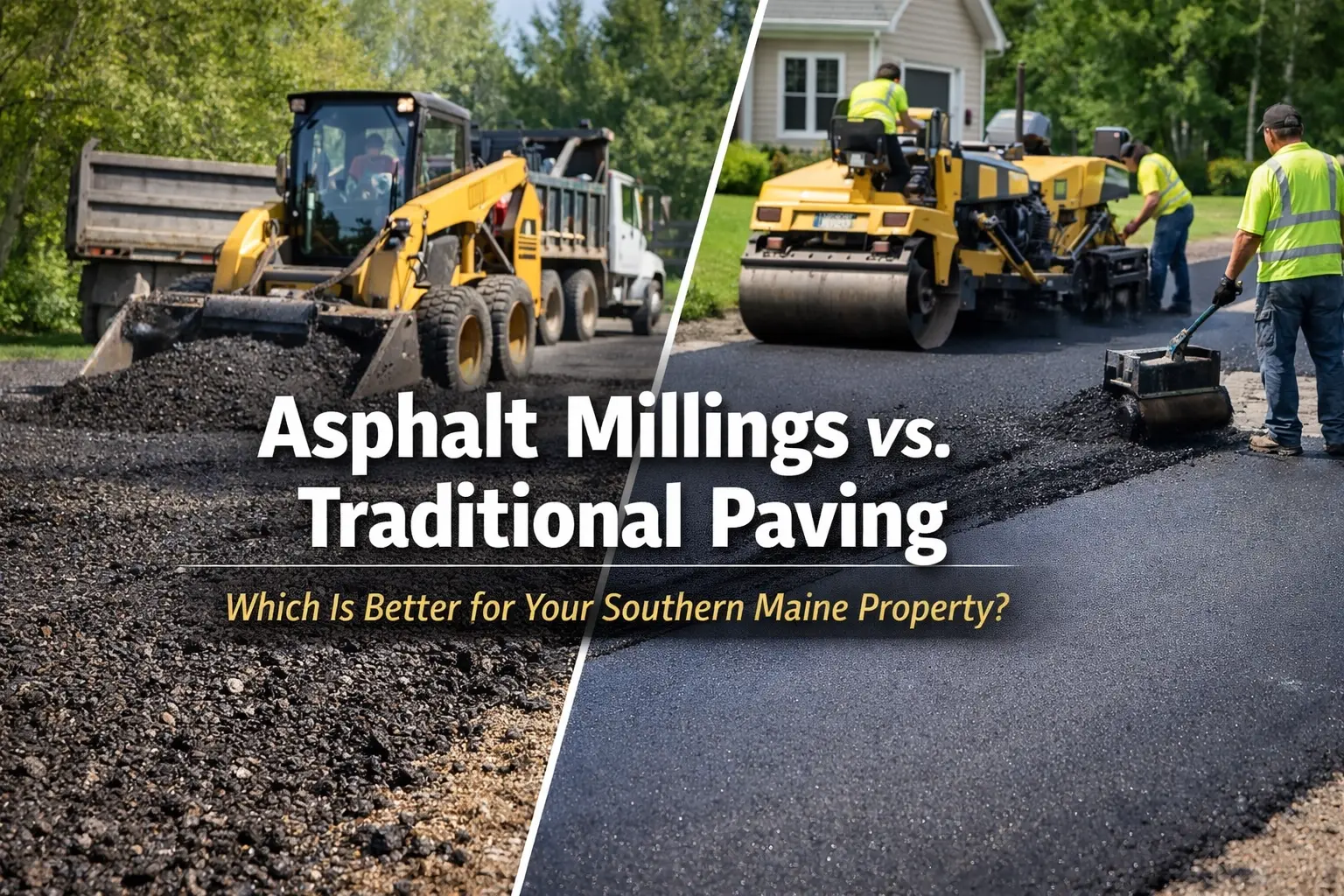
As the frost begins to pull out of the ground and "Mud Season" makes its annual debut in Southern Maine, many property owners find themselves staring at their driveways and private roads with a sense of dread. Whether it’s the deep ruts in a gravel path or the spiderweb cracks in an aging driveway, the transition from winter to spring often highlights the need for a more permanent solution.
When it comes to surfacing a property, two options frequently dominate the conversation: traditional hot-mix asphalt and recycled asphalt millings. Both have earned their place in the industry, and Pine State Asphalt has seen both perform across the varied landscapes of Cumberland and York Counties. However, choosing between them isn’t just about personal preference; it’s about understanding how each material interacts with Maine’s unique climate, your property’s specific needs, and your long-term goals.
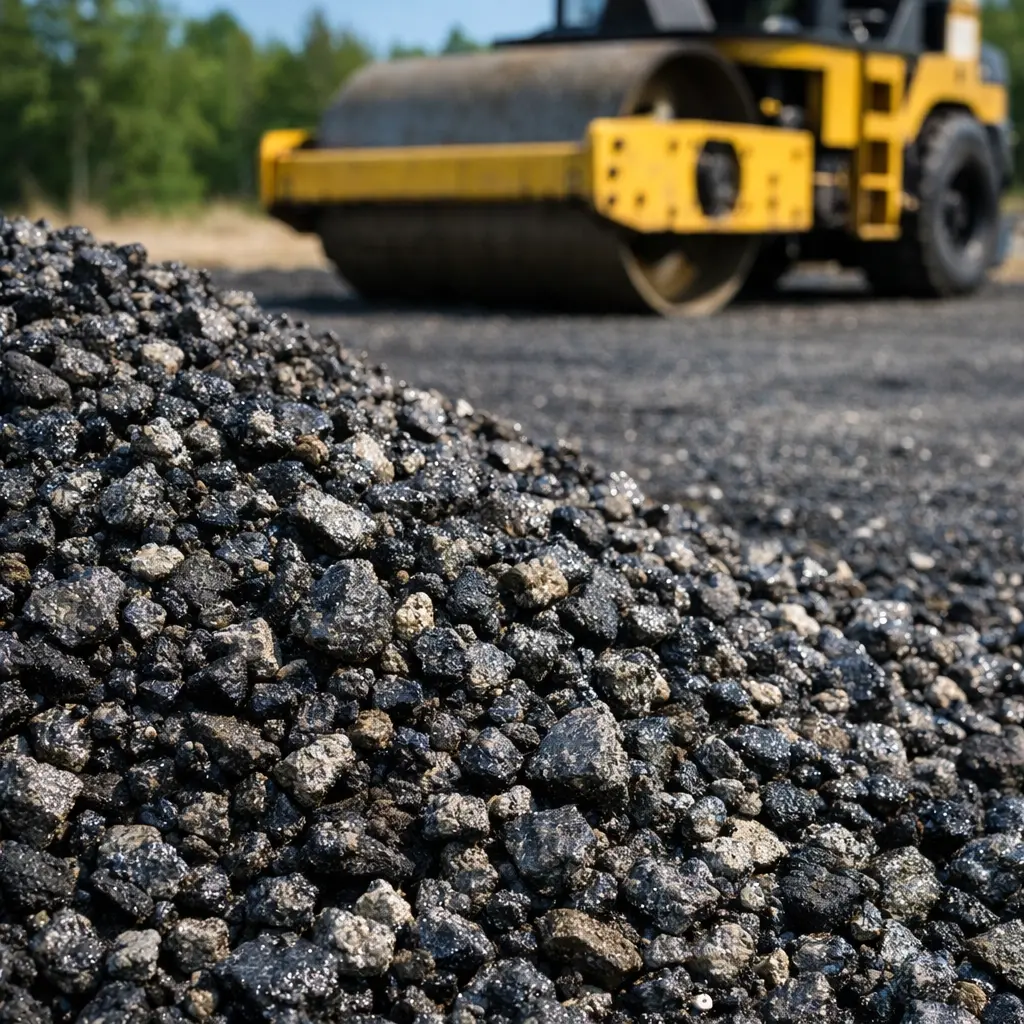
To understand the comparison, it’s important to first define what asphalt millings actually are. Essentially, millings are the ultimate recycling success story in the construction world. When old roads or parking lots are scheduled for resurfacing, the top layer of asphalt is ground up into small, gravel-sized pieces. This recycled material still contains a significant amount of the original asphalt binder (the "glue" that holds the rocks together).
Pine State Asphalt often recommends millings for property owners who want a surface that is more stable than traditional gravel but doesn't require the full structure of a paved driveway. Because the material is recycled, it is an environmentally friendly choice that keeps old road materials out of landfills. When spread and compacted properly, the heat from the sun can actually cause the old binder to soften slightly, helping the pieces knit together over time.
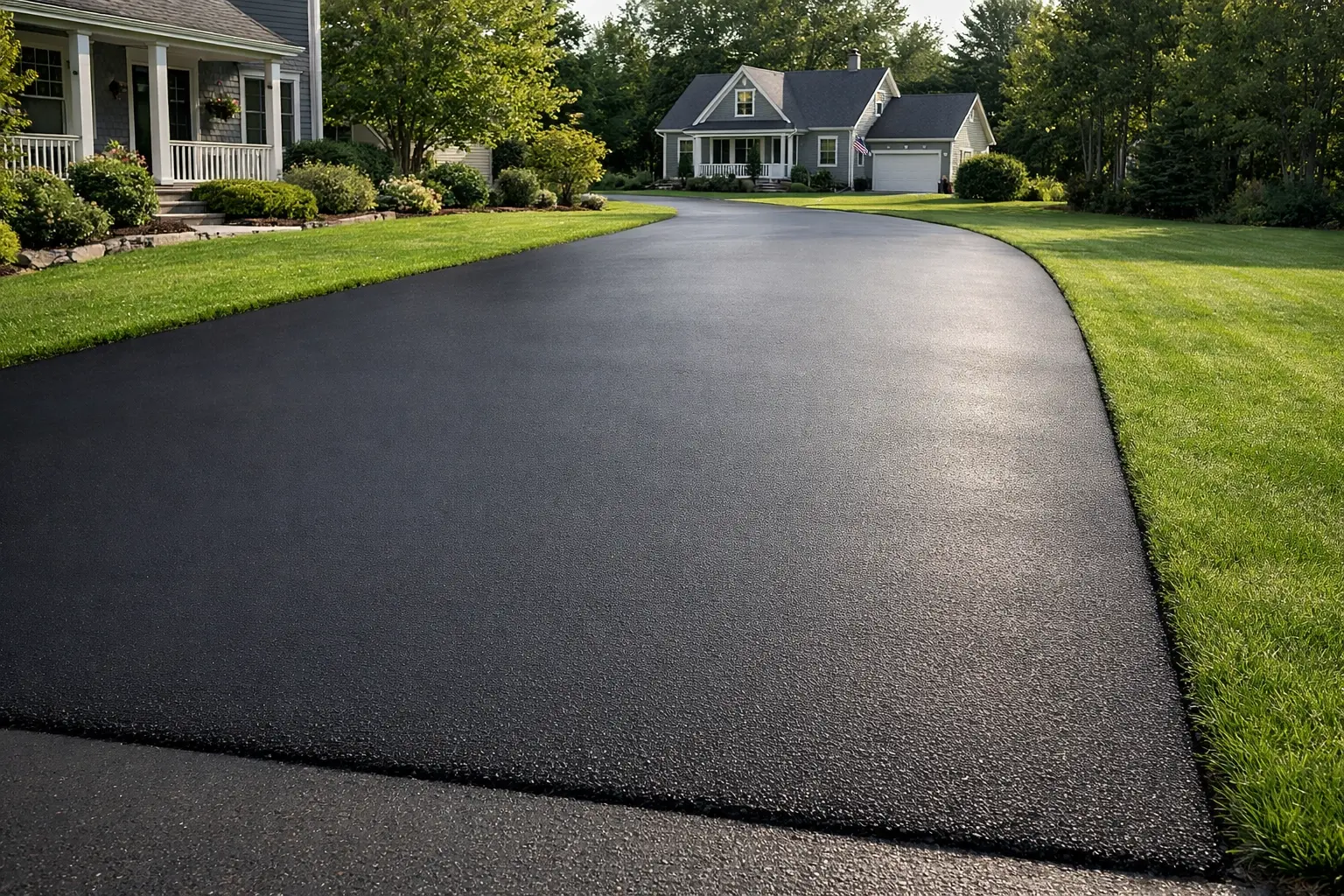
Traditional hot-mix asphalt is the smooth, black surface most people envision when they think of paving Portland Maine. It consists of a precise mixture of stone, sand, and liquid asphalt cement, heated to over 300 degrees Fahrenheit before being transported to the job site. Once laid by a professional crew and compacted with heavy rollers, it creates a solid, non-porous surface.
For those looking for a long-term investment, traditional asphalt is often the benchmark. Organizations like the Maine Asphalt Paving Association emphasize the importance of quality mixes that are designed to withstand the heavy temperature fluctuations of the Northeast. When installed correctly over a solid base, this material provides a level of durability and "curb appeal" that is difficult to match with other materials.
In Southern Maine, the climate is the ultimate judge of any paving project. The freeze-thaw cycle is particularly brutal here. During the day, snow melts and water seeps into the ground; at night, that water freezes and expands, exerting massive pressure on whatever is sitting on top of it.
Traditional asphalt, being a solid and flexible surface, is designed to move slightly with the earth. However, if it isn't maintained, water can get into cracks and cause significant damage. On the plus side, a smooth asphalt surface is a dream for snow removal. Whether you are using a snowblower in Scarborough or a plow in Saco, the blade glides easily over hot-mix asphalt, making winter maintenance much simpler.
Asphalt millings behave a bit differently. Because they are semi-permeable, they actually offer excellent drainage. Water is less likely to pool on the surface, which can reduce the risk of ice patches during the shoulder seasons. However, millings are not as solid as hot-mix. A heavy snowplow blade can easily catch the material and displace it, meaning you might find yourself raking your "driveway" back into place every spring.
When evaluating the two options, Pine State Asphalt encourages owners to look at the "lifecycle" of the surface.
Traditional hot-mix asphalt is built for the long haul. With a solid foundation and regular maintenance: such as sealcoating and crack filling: a professional driveway can easily last 20 to 25 years. It is designed to handle high-traffic volumes, from daily commutes to heavy delivery trucks. You can learn more about maximizing this lifespan in our guide on boosting property value with paving tips.
Asphalt millings, while durable, generally have a shorter functional lifespan, often ranging from 8 to 12 years before they start to resemble a standard gravel road again. Because they lack the fresh, hot binder of new asphalt, they will eventually break down under the weight of heavy vehicles or the erosive power of heavy Maine rainstorms. They are an excellent "middle ground" solution but are rarely a "permanent" one in the same sense as hot-mix.
Maintenance is where the two paths diverge significantly. For a traditional residential asphalt driveway, maintenance is proactive. Pine State Asphalt recommends waiting a year or two after installation and then applying a high-quality sealcoat every 3 to 5 years. This protects the binder from UV rays and water penetration. If a crack appears, it can be filled quickly to prevent it from becoming a pothole.
Millings require a more "reactive" maintenance style. Over time, you may find that ruts develop in high-traffic areas. Maintenance usually involves adding a fresh layer of millings and compacting them again. You don't sealcoat millings, as the material is too loose to benefit from it. For some, the lower maintenance requirements of millings are a selling point, while others prefer the clear maintenance schedule of traditional paving.
If you are looking to increase the resale value of a home in a suburban neighborhood, aesthetics matter. Traditional asphalt provides that "finished" look. It’s clean, it’s dark, and it provides a sharp contrast against a green lawn or a freshly painted house. It defines the boundaries of the property and looks professional.
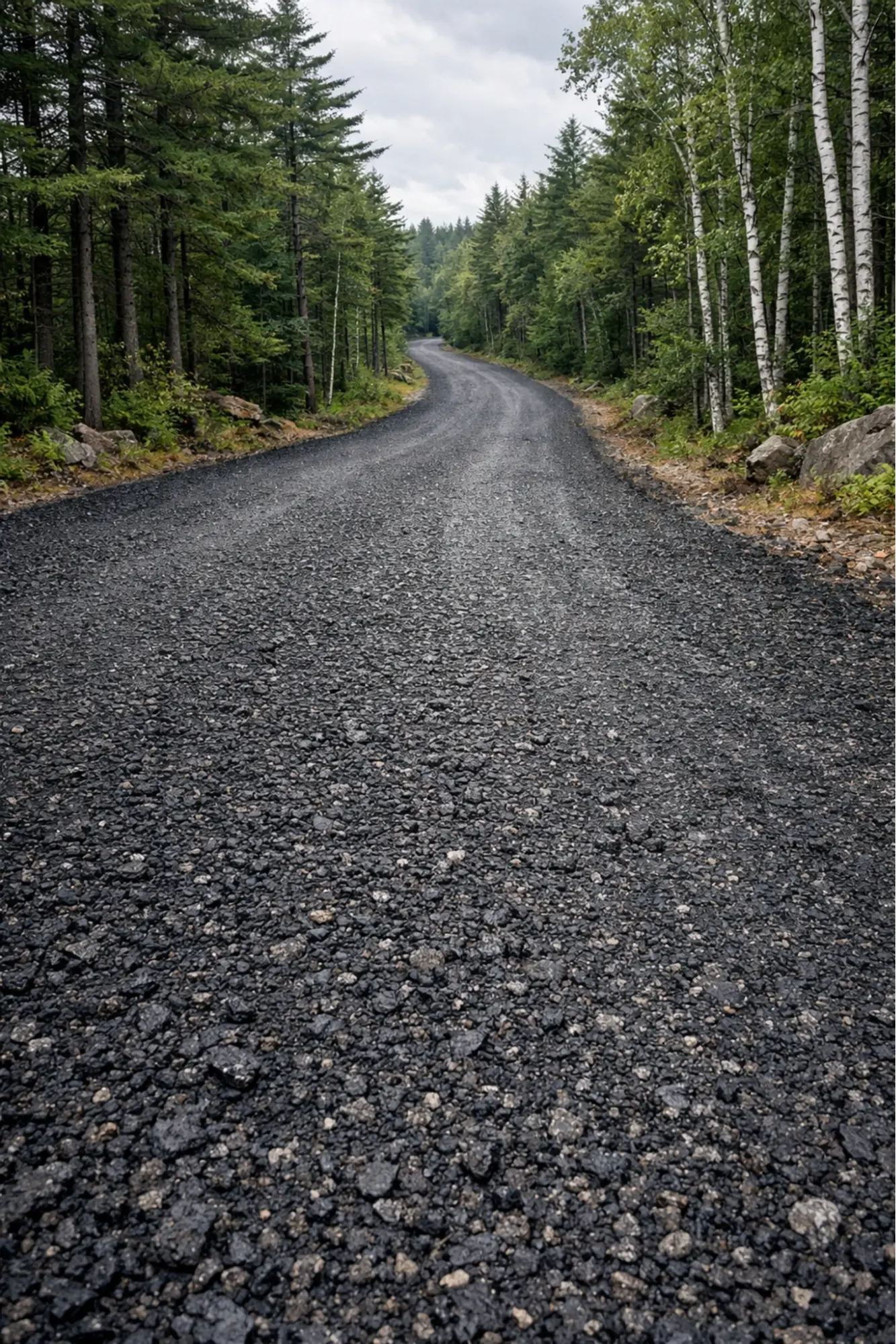
Asphalt millings have a more "rustic" or industrial appearance. Initially, they look like dark gray gravel. Over time, they fade to a lighter gray. While this look fits perfectly for a long rural driveway leading to a farmhouse or a commercial storage yard, it might not offer the same "wow factor" for a home in a more densely populated area.
Pine State Asphalt believes that every property is unique, but there are some general rules of thumb that can help Southern Maine residents decide.
Choose Traditional Hot-Mix Asphalt if:
Choose Asphalt Millings if:
Whether you choose the premium finish of hot-mix or the rugged utility of millings, the most important factor isn't the surface material: it’s the earth works underneath. No material can survive a Maine winter if the base is poorly constructed.
Proper excavation, the removal of organic material (like roots and topsoil), and the installation of a well-compacted gravel base are non-negotiable. Without a solid foundation, traditional asphalt will crack and millings will disappear into the mud. Pine State Asphalt prides itself on ensuring that the "unseen" part of the job is done with the same precision as the surface layer.
In the debate of asphalt millings vs. traditional paving, there is no universal "winner." Traditional asphalt remains the gold standard for durability, ease of maintenance, and aesthetic value, making it the preferred choice for most suburban homes and businesses in the Portland area. However, millings provide a fantastic, cost-effective alternative for larger properties and rural applications where a "good enough" surface is a massive improvement over the seasonal headache of mud and ruts.
As the weather warms up, now is the time to assess your property's needs. Whether you’re leaning toward the smooth finish of a new driveway or the practical benefits of recycled millings, working with a contractor who understands the local soil and climate is essential.
Ready to transform your property? Pine State Asphalt is here to help you navigate these choices and ensure your investment stands up to whatever a Maine winter throws its way.
Contact us today for a consultation and let's get your project on the schedule for the upcoming season!



"They were easy to work with and did a beautiful job sealing the driveway. So very happy we use them."


"Did my driveway. Very large, very steep driveway with some special features. Came out great. Very happy with the service. Nice people to work with too."

"You guys did an awesome job! The sealcoating looks great on my driveway and you can barely tell that the in-laws pothole was ever there. Thanks for the work!"


%201.png)

.jpg)
.png)
.png)