Maine's brutal freeze-thaw cycles destroy driveways built without the right foundation, drainage, and materials. This guide breaks down the seven most common paving mistakes Southern Maine homeowners make, from weak sub-bases to poor compaction, and explains exactly how frost heave forms and how to stop it permanently. Pine State Asphalt shares the local expertise needed to ensure your driveway investment survives every Maine winter.


Living in Southern Maine, we know that our landscape is beautiful, but our climate is absolutely brutal on infrastructure. Between the heavy snowfalls in Portland, the salty air in Kennebunkport, and the dramatic temperature swings in Gorham, our asphalt driveways and parking lots have a lot to contend with.
When it comes to maine paving, the stakes are higher than in most other parts of the country. A driveway that looks perfect in July can turn into a roller coaster by April if it wasn’t built with the specific challenges of the Pine Tree State in mind. Unfortunately, many property owners fall into common traps: often because they are trying to save a bit of money upfront or they are working with contractors who don't understand our unique soil conditions.
Pine State Asphalt has seen it all. We’ve been called in to fix brand-new driveways that failed after just one winter, and almost every time, the failure can be traced back to one of seven common mistakes. If you’re planning a project, here is how you can avoid those pitfalls and ensure your investment lasts for decades, not just seasons.
The most expensive mistake you can make is focusing only on the "black stuff." While the asphalt is what you see, it’s only as good as what’s underneath it. In Maine, our native soil is often heavy with clay or silt: materials that hold onto water like a sponge.
Many paving contractors portland maine residents hire might try to cut corners by skipping the deep excavation. They might suggest paving over your existing thin layer of gravel or, worse, over old, cracked asphalt without a proper foundation. If your sub-base isn't at least 8 to 12 inches of well-compacted crushed aggregate, your driveway is essentially floating on a layer of mud.
Pine State Asphalt recommends a thorough earthworks and grading process before a single drop of asphalt is laid. We remove the "frost-susceptible" soil and replace it with clean, bank-run gravel and crushed stone. This creates a solid, non-moving platform that can withstand the weight of your vehicles and the pressure of the earth moving below.
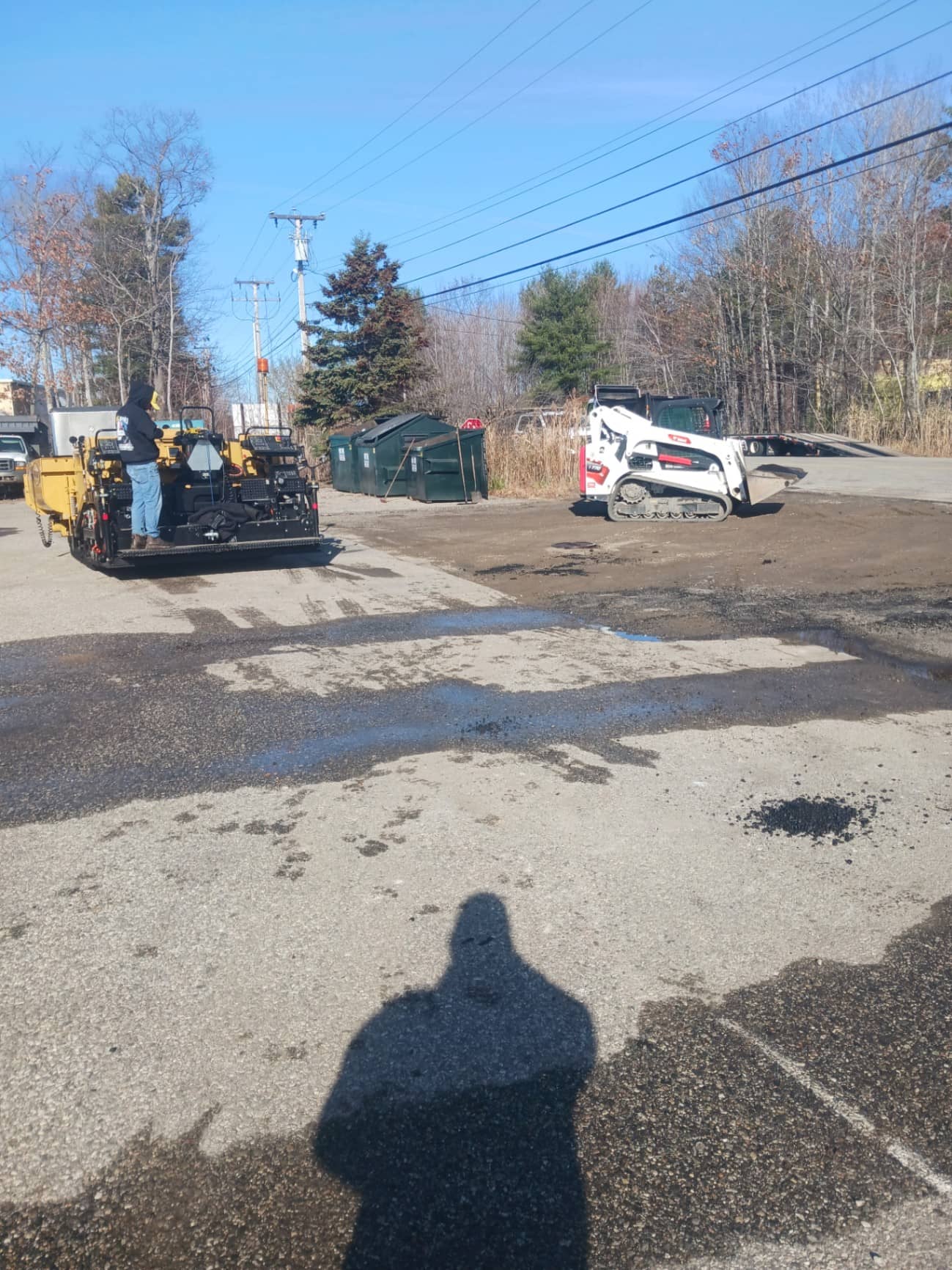
Water is the undisputed enemy of asphalt. If water stands on your driveway for more than ten minutes after a rainstorm, you have a drainage problem. In Maine, standing water doesn't just cause aesthetic issues; it seeps into the pores of the asphalt, gets into the base, and then freezes. When water freezes, it expands by about 9%, which literally rips your pavement apart from the inside out.
The mistake many homeowners make is allowing a contractor to follow the "lay of the land" rather than engineering a proper pitch. At a minimum, every paved surface should have a 1% to 2% slope to move water away from structures and off the edges.
If your property is naturally flat or has a high water table, you may need more than just grading. Techniques like installing French drains or swales are often necessary to keep the base dry. Without positive drainage, even the highest quality state paving will fail prematurely.
We all want our projects done as soon as possible, but asphalt has a very specific "Goldilocks" temperature. If it’s too cold, the asphalt won't compact properly. If it’s too wet, the steam from the moisture will create bubbles and weak spots in the surface.
One of the biggest mistakes in maine paving is trying to squeeze in a job in late November or early April when the ground is still frozen or the ambient temperature is hovering near freezing. The Maine Asphalt Paving Association (MAPA) provides guidelines on temperature requirements, and generally, you want the air and surface temperature to be at least 50°F and rising.
Paving on a frozen subgrade is a recipe for disaster. As that ground thaws in the spring, the support under your new asphalt will turn to mush, leading to immediate cracking and sinking. A reputable contractor will tell you when it’s too late (or too early) in the season to pave, even if it means waiting a few months.

Not all asphalt is created equal. There are different "mix designs" intended for different uses. A highway needs a different mix than a residential driveway, and a parking lot in Florida needs a different binder than one in Freeport.
A common mistake is using a mix with too much large aggregate for a residential driveway. While this might be durable, it can look "honeycombed" and porous, allowing more water to enter the surface. Conversely, using a mix that is too "soft" (too much liquid asphalt) might look great and smooth, but it will scuff and rut easily under the weight of your car on a hot July day.
When looking at paving companies portland maine offers, ask about their mix selection. Pine State Asphalt uses premium materials designed for the New England climate: mixes that are flexible enough to handle the freeze-thaw cycle but tough enough to resist "power steering tears" and heavy snowplow blades.
Compaction is the final and most critical step of the paving process. If the asphalt isn't rolled to the correct density while it is still hot, it will remain porous. These tiny air pockets (voids) are where water sits and where oxidation starts, making the asphalt brittle.
Many low-budget contractors use rollers that are too light or they don't make enough passes. You can often tell a poorly compacted driveway by its texture; it looks open and grainy rather than tight and smooth.
At Pine State Asphalt, we use heavy, professional-grade vibratory rollers to ensure that every square inch of your residential paving project or commercial parking lot hits the target density. This "tightens" the surface, making it much more resistant to water penetration and oil spills.
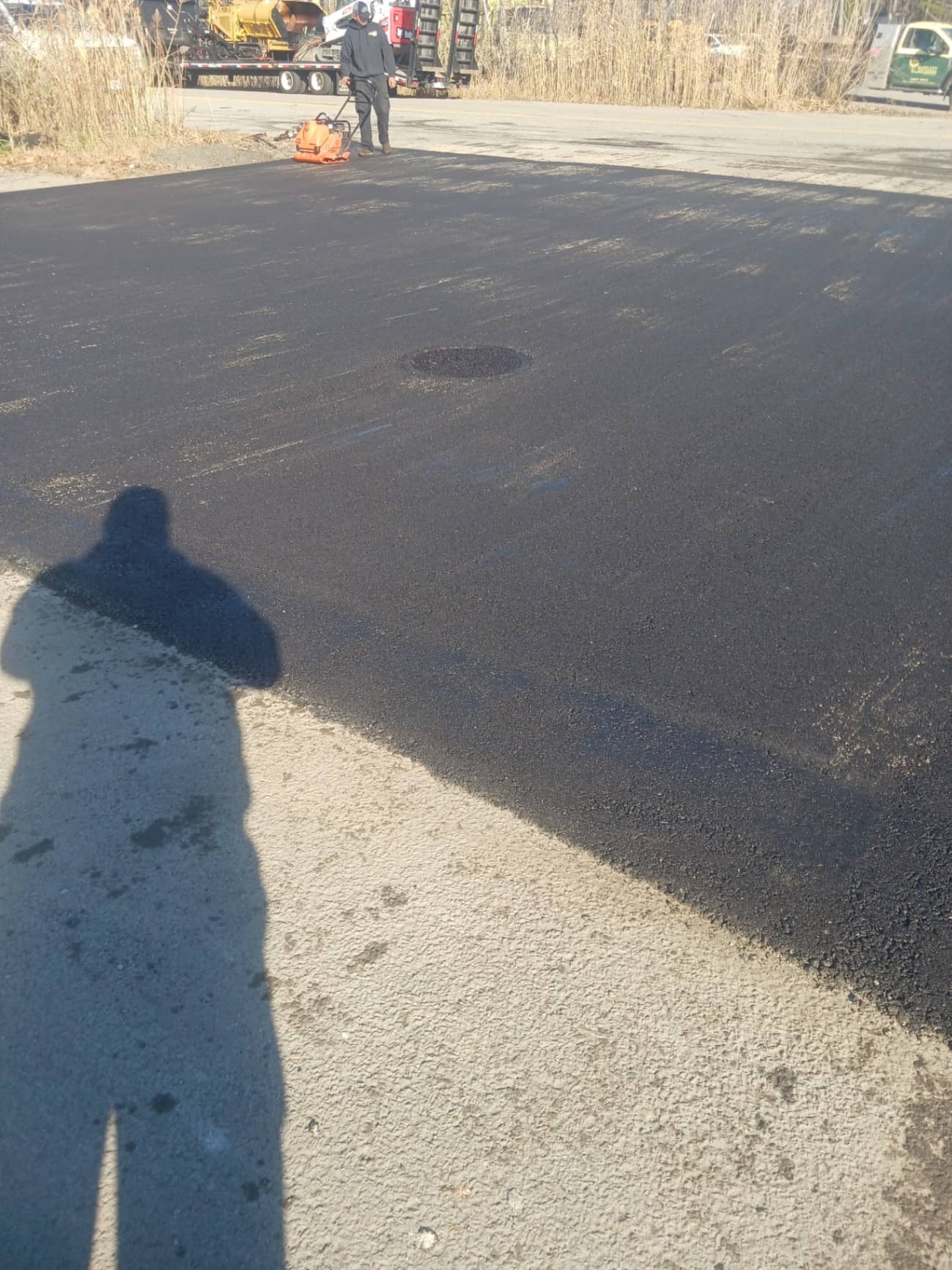
This is a classic mistake that unfortunately still happens every summer in Southern Maine. A truck will pull into your driveway and tell you they "just finished a big state job nearby" and have some leftover asphalt they can give you at a massive discount if you pay cash right now.
Never do this.
There are several reasons why this is a mistake:
Always choose a local, established company. Pine State Asphalt is a locally owned and operated company with deep roots in the community. We provide transparent estimates and stand behind our work with full licensing and insurance.
Many people think that once the asphalt is down, the job is done for twenty years. This is the "set it and forget it" mistake. Because Maine’s environment is so aggressive, your asphalt needs a little love every couple of years to keep it flexible and waterproof.
The most common maintenance mistake is waiting for huge cracks to appear before calling a professional. By then, the water has already reached the base. Small cracks (around 1/4 inch) should be filled immediately to keep the sub-base dry. Additionally, sealcoating should be performed every 2-3 years to protect the binder from UV damage and chemicals.
If you've spent any time driving in Maine, you know what a frost heave is. It's that sudden bump in the road that seems to appear overnight in January and disappears by June. On a driveway, it looks like a section of pavement has been pushed up by a giant hand from below.
What Causes Frost Heave?
For a frost heave to occur, you need three things:
When water in these soils freezes, it doesn't just turn to ice; it forms "ice lenses." These lenses grow by drawing more water up from below through capillary action. As the ice lens grows, it exerts immense upward pressure, lifting everything above it: including your driveway.
To stop frost heave forever, you have to break that three-part chain. You can't change the temperature, so you have to focus on the water and the soil.
The most effective way is to excavate the area significantly deeper than the standard 4-6 inches. By removing the silty "frost-active" soil and replacing it with clean, well-draining stone and gravel, you create a zone where water cannot be "wicked" upward. Because the gravel is coarse, it doesn't hold enough water to form those destructive ice lenses. Combined with a geotextile fabric to keep the new gravel from mixing with the old mud, this creates a stable foundation that remains flat regardless of how deep the frost line goes.
When you search for paving contractors portland maine or elsewhere in the southern part of the state, you'll find plenty of options. However, experience in our specific geography is irreplaceable. We understand the "freeze-thaw" cycles of the Saco River valley and the drainage challenges of coastal Scarborough.
Pine State Asphalt brings over 10 years of local experience to every job. We don't just lay asphalt; we engineer surfaces that are built to survive Maine. Whether you're a homeowner looking for a new driveway or a business owner needing a complete commercial parking lot overhaul, we focus on the details that prevent these seven common mistakes.
Paving is a significant investment in your property’s value and curb appeal. By ensuring your project has a deep, stable base, perfect drainage, and is performed during the right weather window with the right materials, you can avoid the "Maine driveway blues." Don't let a "good deal" today turn into a massive repair bill tomorrow.
Ready to get it done right the first time? Contact Pine State Asphalt today for a professional evaluation of your project. We’ll take the time to look at your soil, your drainage, and your specific needs to provide a solution that stands the test of time.



"They were easy to work with and did a beautiful job sealing the driveway. So very happy we use them."


"Did my driveway. Very large, very steep driveway with some special features. Came out great. Very happy with the service. Nice people to work with too."

"You guys did an awesome job! The sealcoating looks great on my driveway and you can barely tell that the in-laws pothole was ever there. Thanks for the work!"


%201.png)


.jpg)
.jpg)
.png)
.png)