Maine homeowners can protect their asphalt driveways from winter damage by completing key fall maintenance tasks before the ground freezes. Inspecting for cracks, clearing debris, improving drainage, and filling surface cracks reduces the impact of the freeze-thaw cycle that causes significant pavement deterioration throughout the season. Addressing these issues early—while temperatures still allow for repairs—can prevent minor problems from becoming costly fixes by spring.

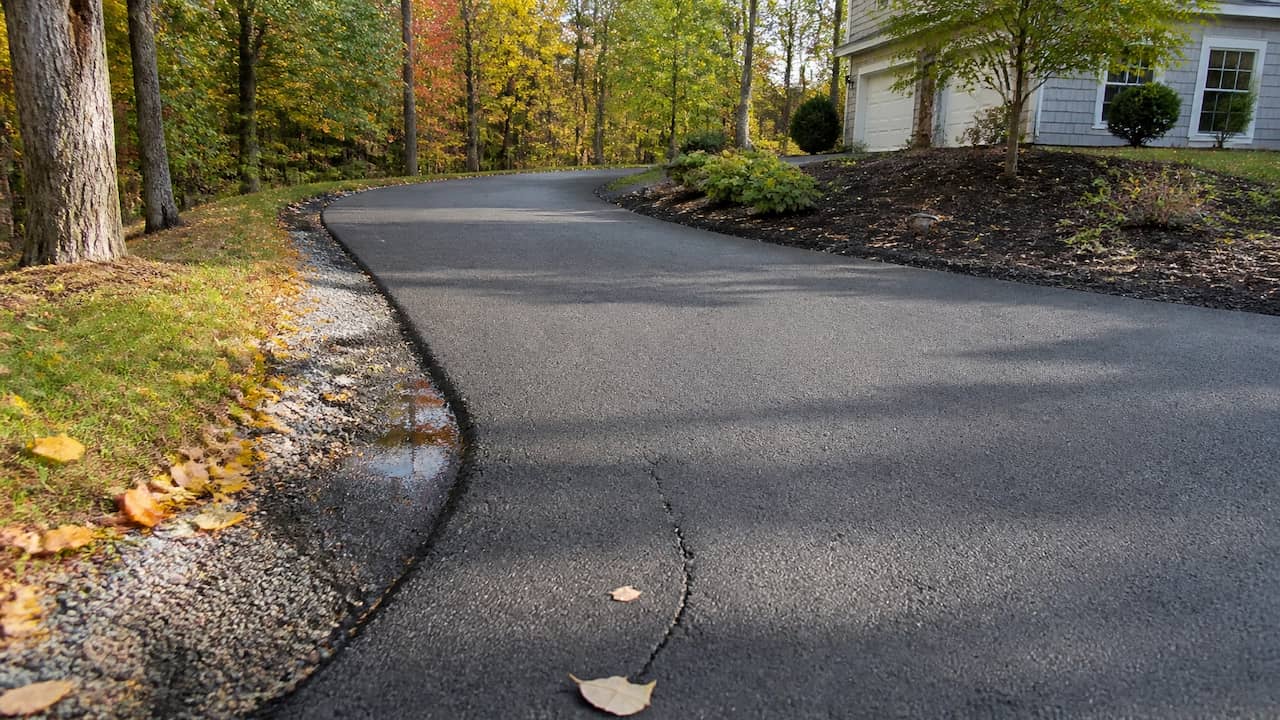
Early fall is an excellent time for Maine homeowners to inspect and prepare their asphalt driveways before colder temperatures arrive. While winter may still feel a few weeks away, the pavement is already heading into an important maintenance window.
Maine driveways face a demanding combination of rain, falling leaves, snow, ice, road salt, and repeated temperature changes. When moisture enters small cracks or collects beneath the pavement, freezing temperatures can turn minor surface problems into larger repairs by spring.
Pine State Asphalt recommends using the early fall season to complete a simple but thorough driveway check. Cleaning the surface, improving drainage, filling cracks, and identifying base problems can help reduce the effects of the freeze-thaw cycle and keep a driveway in better condition through winter.
The freeze-thaw cycle occurs when temperatures move above and below freezing repeatedly. Water from rain, melting snow, or wet ground can enter cracks and small openings in asphalt. When that water freezes, it expands and places pressure on the surrounding pavement.
As temperatures rise, the ice melts and leaves space for more water to enter. The process then repeats. Over time, cracks widen, edges break apart, and sections of the driveway may begin to settle or lift.
Maine’s long winters and changing coastal weather can create many of these cycles throughout the season. A driveway does not need to have a major defect for freeze-thaw damage to begin. Small cracks, standing water, and weak edges can all allow moisture to work into the pavement system.
Fall preparation is focused on two basic goals:
These steps cannot prevent every winter-related problem, especially when an asphalt base has already weakened. However, they can help homeowners identify trouble early and address manageable issues before the ground freezes.
Before cleaning or making repairs, homeowners should walk the entire driveway and look at the surface from different angles. A quick inspection from the car may not reveal early damage.
Pine State Asphalt recommends looking for:
It can be helpful to take photographs and mark problem areas with removable chalk. This gives homeowners a way to monitor whether a crack or depression changes during the fall.
Not every crack requires the same repair. A narrow surface crack may be suitable for routine crack filling, while widespread cracking, alligator cracking, settlement, or frost heave may point to a deeper drainage or base issue.
Leaves and branches are a normal part of autumn in Southern Maine, but they should not be allowed to remain on an asphalt driveway for long periods.
Wet leaves hold moisture against the pavement. Dirt, pine needles, and other organic debris can also collect along driveway edges, in cracks, and near drainage paths. When these areas stay damp, they create more opportunity for water to enter the pavement.
A fall cleaning should include:
Homeowners should also trim back shrubs, branches, and groundcover that hang over the driveway. Vegetation can drop additional debris onto the pavement and may hide cracks or damaged edges during inspection.
Trimming is especially important near driveway entrances and low areas where leaves can collect and block runoff. Keeping the edges visible makes it easier to see whether water is flowing properly.
Water is one of the most important issues to investigate before winter. A driveway that consistently holds puddles after rain may have a grading problem, a blocked drainage path, or a weakened base beneath the asphalt.
Homeowners should check the following areas:
Gutters should be clear of leaves and sediment so they do not overflow during fall storms. Downspouts should discharge away from the driveway and foundation whenever possible.
A downspout that sends water across the driveway can repeatedly saturate one section of pavement. In freezing weather, that moisture can contribute to cracking, surface breakup, and movement around the driveway edge.
A properly graded driveway should move water away from the home and toward an appropriate drainage area. Water should not flow toward the garage, collect beside the foundation, or remain in low pockets.
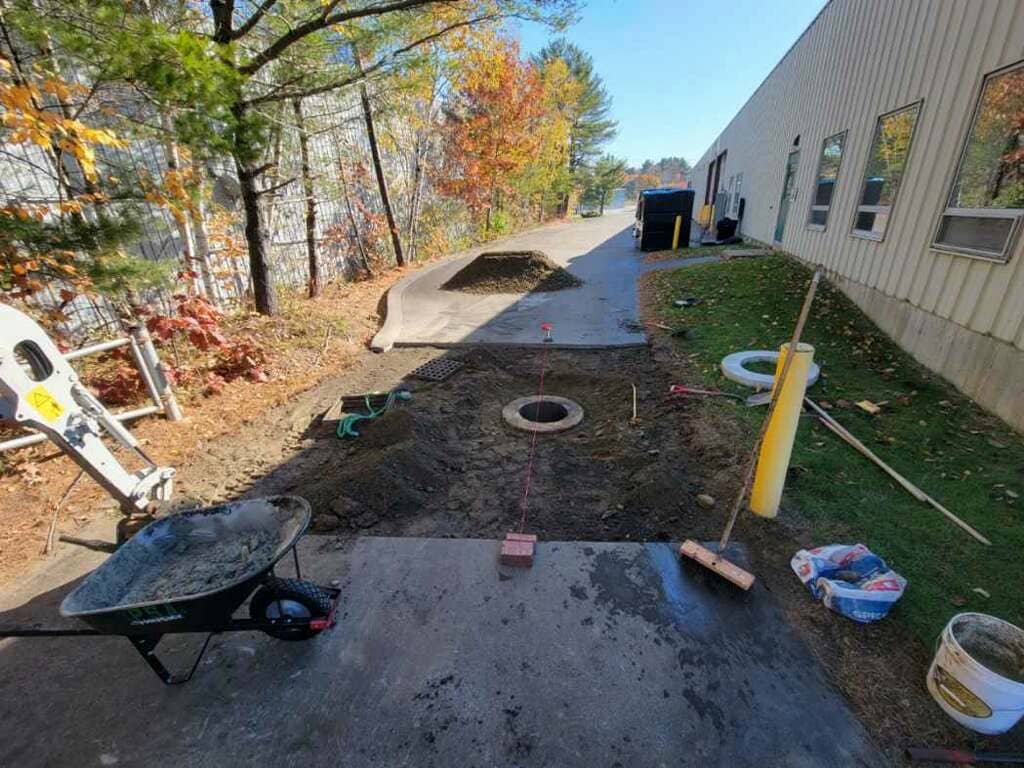
Some drainage problems are easy to correct by clearing debris or redirecting a downspout. Others require grading, a swale, a drainage channel, or additional earthwork.
The edges of a driveway are often more vulnerable than the center. If soil, mulch, or leaves build up along the sides, they may prevent water from leaving the pavement. Crumbling edges can also allow water to reach the base more easily.
If pooling remains after gutters and drainage paths have been cleared, Pine State Asphalt recommends having the area evaluated rather than simply covering the depression with surface material.
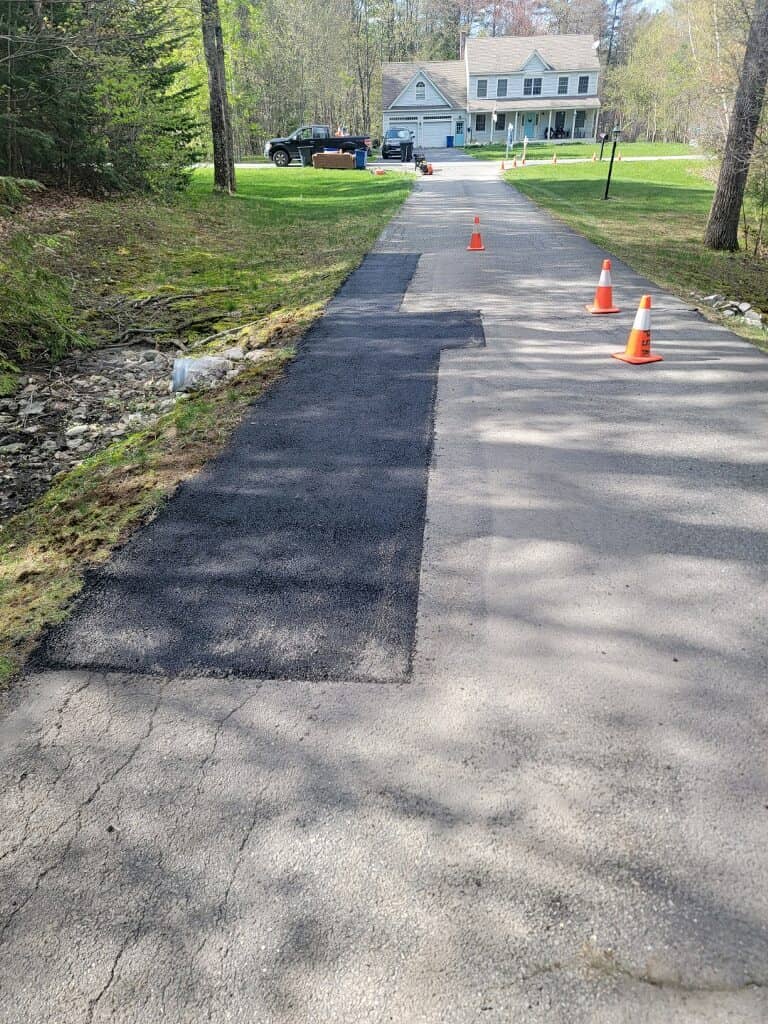
Crack filling is one of the most practical fall maintenance steps for an asphalt driveway. The purpose is to reduce the amount of water that can enter the pavement before freeze-thaw conditions become common.
Before filling a crack, the opening should be cleared of dirt, vegetation, loose asphalt, and moisture. A crack filler will not bond well when the area is dirty or wet.
Small, relatively stable cracks may be addressed with a suitable asphalt crack-filling product when weather conditions allow. The product should be applied according to the manufacturer’s instructions, including requirements for surface temperature, drying, and curing.
Larger cracks require more caution. Wide, irregular, or interconnected cracks may indicate that water has reached the base or that the pavement is moving. Alligator cracking is particularly important because it often signals structural deterioration rather than a simple surface defect.
Sealcoating should not be used as a substitute for crack repair. Sealcoat can protect and restore the surface, but it will not reliably close deep or actively moving cracks.
If a driveway has extensive cracking, soft areas, settlement, or repeated potholes, a professional assessment can help determine whether the appropriate solution is crack filling, patching, an overlay, or a more extensive repair.
Sealcoating can provide a water-resistant layer over an asphalt surface and help protect it from oxidation, moisture, and routine wear. It is often part of a regular maintenance plan, but fall weather must be suitable for proper application and curing.
In Maine, sealcoating generally requires:
Early September may offer a dependable window, but weather conditions can change quickly. A warm afternoon does not always mean the pavement will remain warm enough overnight. Pine State Asphalt recommends considering the full forecast, including evening temperatures and possible rain.
Cracks should be filled before sealcoating. A new or recently paved driveway may also need additional curing time before it is sealed. Homeowners with newer pavement should follow the paving contractor’s maintenance guidance instead of applying sealer too soon. Pine State Asphalt discusses new asphalt curing and surface changes in its article about tire marks on new Maine driveways.
If the fall sealcoating window has passed, it is better to wait for appropriate conditions than to apply a coating in cold or damp weather. Crack filling and drainage maintenance may still be completed as conditions permit, with sealcoating planned for a more reliable season.
The visible asphalt surface is only one part of a driveway. Beneath it is the aggregate base and supporting soil, which help the pavement withstand vehicle loads and seasonal movement.
Homeowners cannot fully inspect the base without removing pavement, but certain surface symptoms can provide useful clues. Watch for:
A weak or wet base may not be solved by adding a thin layer of asphalt on top. In some cases, the affected area needs excavation, improved drainage, additional aggregate, or grading before new pavement can perform properly.
This is especially relevant for homeowners planning Portland Maine driveway paving or other new paving work. A durable driveway depends on more than the asphalt mix. Proper preparation, grading, drainage, and compaction are all important parts of the project. Pine State Asphalt provides residential asphalt paving and repair services throughout Portland, Scarborough, Gorham, Yarmouth, Freeport, Saco, Biddeford, and surrounding communities.
Once fall maintenance is complete, homeowners can make winter care easier by preparing the driveway edges and snow-removal equipment.
Reflective driveway markers can help identify the pavement edges before snow covers them. This may reduce the risk of plow damage to the asphalt, shoulders, landscaping, and drainage areas.
When snow arrives, plastic shovels and rubber-edged equipment are generally gentler on asphalt than sharp metal edges. Snow should be pushed or piled where melting water can drain away from the driveway rather than flow back across it.
De-icing products should also be used carefully. Excessive salt and repeated wetting and freezing can contribute to surface deterioration. Sand or other traction materials may be useful in areas where traction is the primary concern. Homeowners should follow product instructions and avoid applying more material than necessary.
For additional seasonal guidance, Pine State Asphalt’s winterizing guide for Maine homeowners covers snow removal, drainage, crack repair, and cold-weather inspections.
Before the first hard freeze, homeowners should:
Fall driveway preparation does not need to be complicated, but it should be completed before freezing temperatures limit repair options. Cleaning the pavement, keeping drainage paths open, filling cracks, and identifying base problems can all help reduce the impact of Maine’s freeze-thaw cycle.
Sealcoating may also be beneficial when the surface and weather conditions are suitable, but it should not be used to cover unresolved structural or drainage issues. When cracks continue to return, water pools in the same locations, or sections of asphalt settle and heave, professional evaluation can help identify the underlying cause.
For homeowners who need assistance with Maine paving, driveway repair, grading, or Portland Maine driveway paving, Pine State Asphalt can be contacted here. A careful fall inspection now can help a driveway enter winter cleaner, drier, and better prepared for the season ahead.



"They were easy to work with and did a beautiful job sealing the driveway. So very happy we use them."


"Did my driveway. Very large, very steep driveway with some special features. Came out great. Very happy with the service. Nice people to work with too."

"You guys did an awesome job! The sealcoating looks great on my driveway and you can barely tell that the in-laws pothole was ever there. Thanks for the work!"