Asphalt paving in Southern Maine can often continue through late September and into early October, but success depends on air temperature, base conditions, moisture, and available compaction time—not just the calendar date. As temperatures drop toward the 40s and overnight frost becomes more frequent, the daily paving window shrinks and the risk of inadequate compaction increases. Pine State Asphalt recommends an on-site evaluation before committing to late-season paving, and notes that fall is also a practical time to complete grading, drainage work, and crack repairs in preparation for a smooth spring paving season.

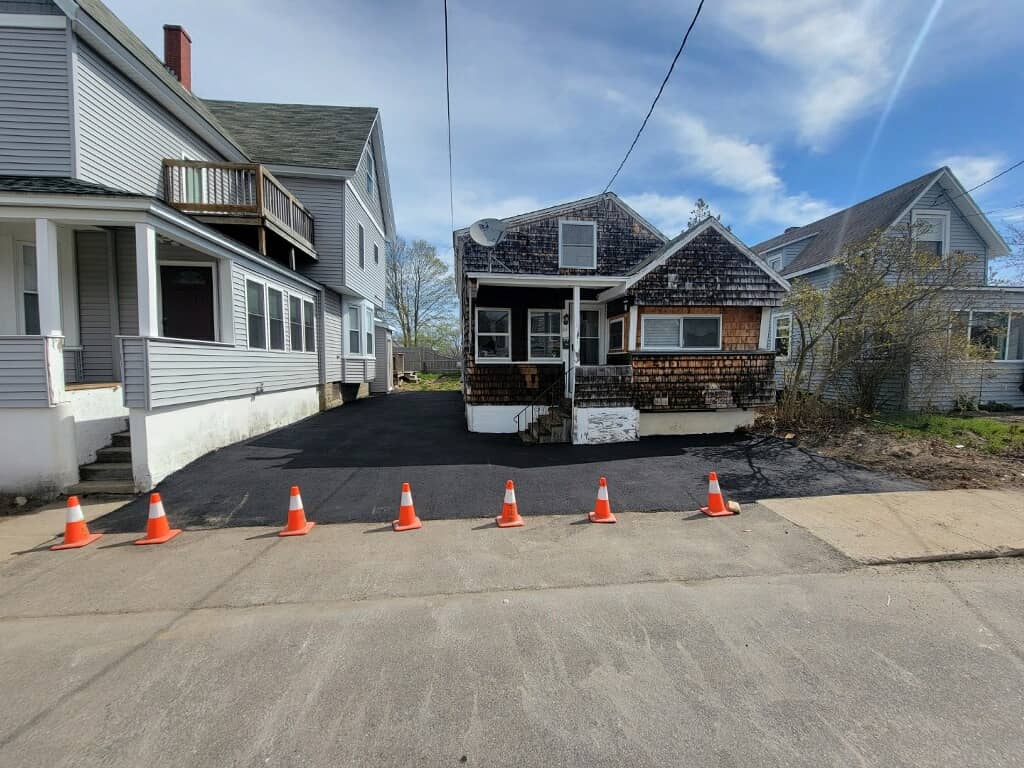
For many Southern Maine property owners, early October brings an important question: How late in the season can asphalt paving be completed?
The answer depends less on the calendar and more on the conditions at the job site. Air temperature, pavement temperature, ground conditions, sunlight, wind, moisture, and the thickness of the asphalt lift all affect whether a paving project can be completed successfully.
In general, late September and much of early October can still provide suitable paving conditions in Portland, South Portland, Scarborough, Gorham, Windham, Saco, Biddeford, and surrounding communities. As fall progresses, however, the daily paving window becomes shorter and the risk of cold, wet, or frozen conditions increases.
Pine State Asphalt recommends evaluating each project individually rather than relying on a specific date on the calendar.
Maine’s paving season is often described as running from spring through early or mid-fall. That is a useful guideline, but it is not an absolute rule.
A dry, sunny day in early October may offer better paving conditions than a cloudy, rainy day in late September. Likewise, a coastal property in Portland or Kennebunk may remain workable later than a shaded or inland site in Gorham, Sanford, or Windham.
Typical fall conditions in the Portland area change quickly:
Hot mix asphalt must be placed, spread, and compacted while it is still hot enough to achieve proper density. When the mix cools too quickly, rollers may not have enough time to lock the material together.
That is why a reputable contractor may recommend paving on a specific afternoon rather than simply scheduling work for any available day.
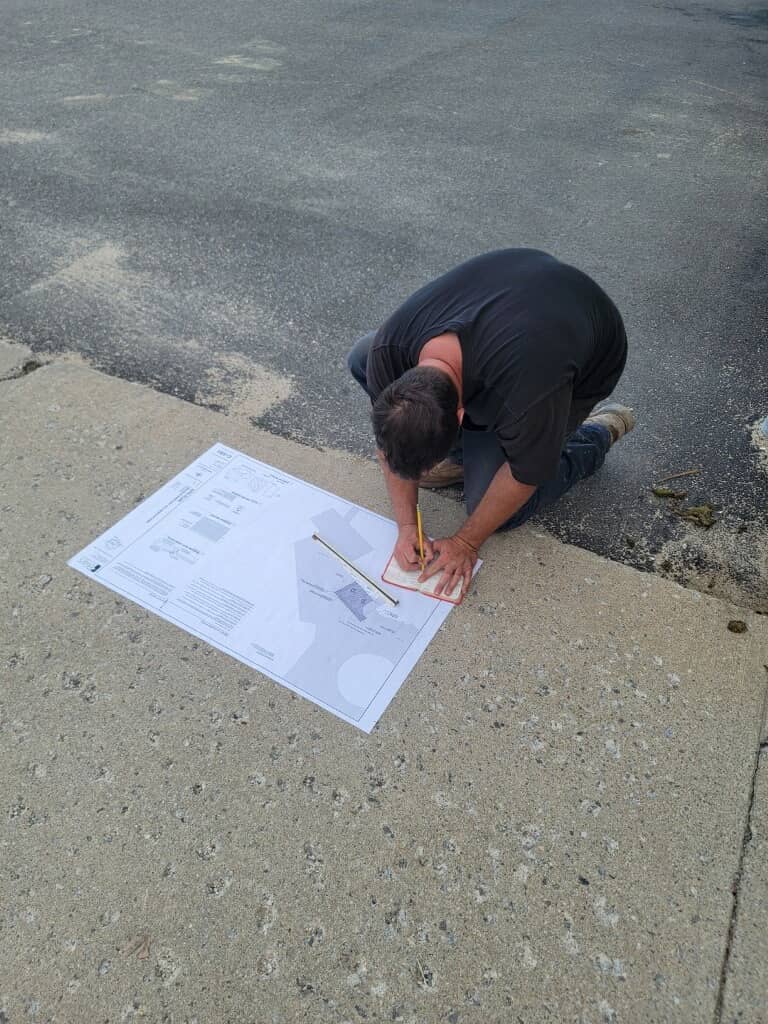
There is no single temperature that applies to every asphalt project. Minimum requirements vary based on the mix, layer thickness, project specifications, and whether the work involves a base course, intermediate course, or surface course.
As a general Southern Maine guideline:
Maine Department of Transportation specifications provide more detailed seasonal and temperature requirements for public projects. Those specifications commonly use higher minimum temperatures for surface courses and allow somewhat lower temperatures for certain base, shim, shoulder, or incidental work.
For private Maine paving projects, the contractor must still evaluate the material, site, and conditions carefully. Public specifications can provide a helpful reference, but a residential driveway or commercial parking lot may have different requirements.
The important point is that “the asphalt plant is still open” does not automatically mean conditions are suitable for paving.
Asphalt arrives at the job site hot, but it begins losing heat as soon as it is placed. Cold air speeds up that cooling process. Wind, shade, cloud cover, and light rain can shorten the available compaction time even further.
The paving crew must work quickly enough to:
The Asphalt Institute explains that hot mix asphalt needs to be compacted before it cools below the effective compaction range, often referenced at approximately 185°F. The exact working temperatures depend on the mix and project specifications, but the principle is consistent: once asphalt cools too much, additional rolling may not produce the required density.
That is why air temperature matters even when the asphalt itself arrives hot. Cold air removes heat from the mix faster, leaving less time for the crew to complete the work properly.
Pine State Asphalt also considers the forecast throughout the entire paving process, not only the temperature at the start of the day.
A common misconception is that a warm afternoon automatically creates good paving conditions. In reality, the existing pavement, gravel base, and soil below the project can remain cold after several chilly nights.
The base acts like a heat sink. If it is cold, it pulls heat out of the fresh asphalt from below. A cold base can cause the new layer to stiffen before the crew has completed compaction.
Before paving, the base should be:
This is particularly important for driveways and parking lots with drainage problems. If water is trapped beneath the asphalt, seasonal freezing and thawing can move the base and lead to settlement, cracking, or surface failure.
For properties needing grading, drainage improvements, excavation, or milling before paving, Pine State Asphalt also provides earthwork and grading services.
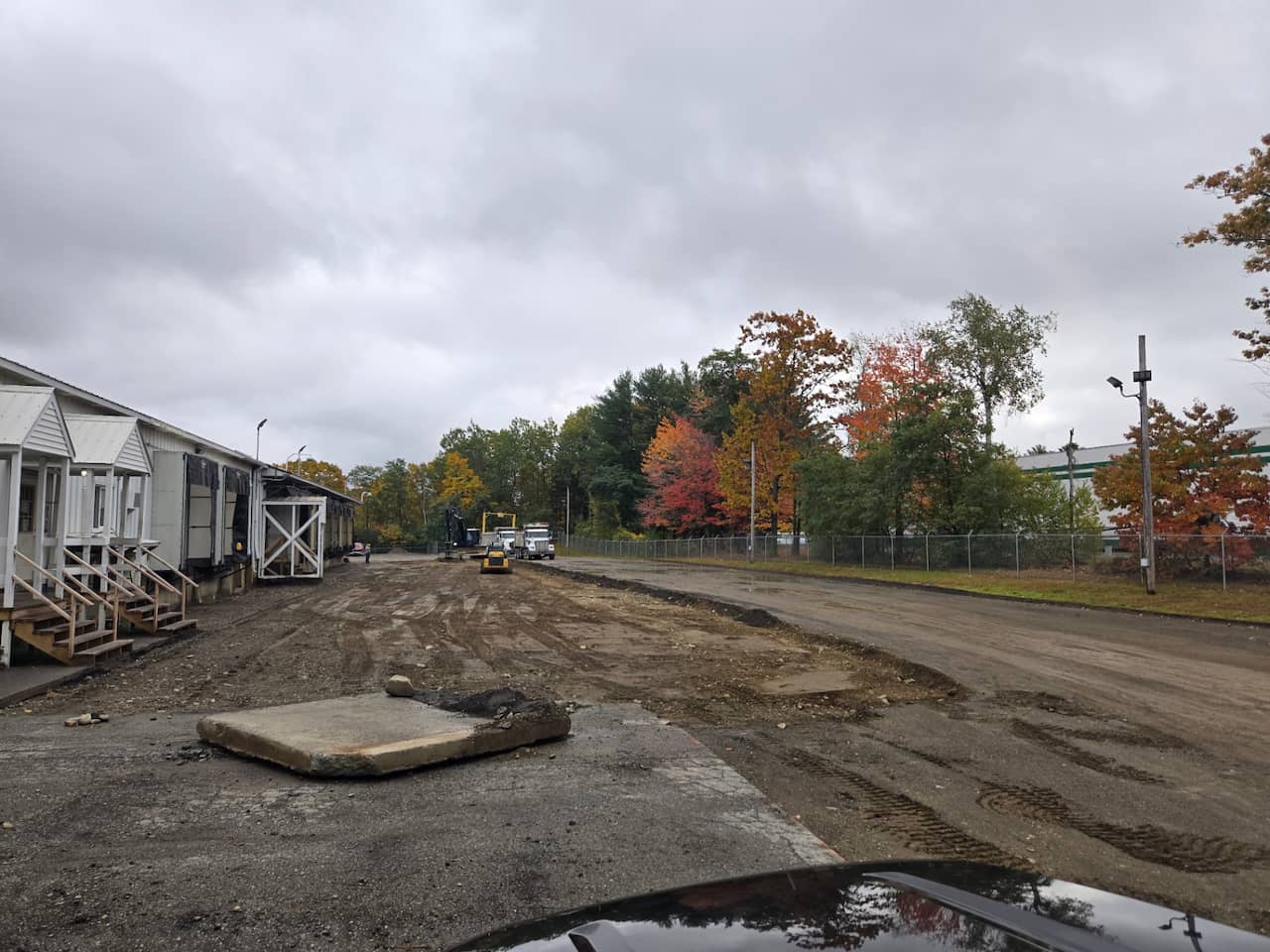
Paving in marginal conditions does not always fail immediately. That can make poor late-season work difficult to identify at first.
The surface may look acceptable when completed, but inadequate compaction can leave the asphalt more open and vulnerable to water infiltration. Over time, that may contribute to:
Thin overlays and surface courses are especially sensitive because they lose heat faster than thicker asphalt layers. A small residential patch or narrow driveway may cool much more quickly than a large, deep parking lot section.
Commercial properties also need to consider traffic. A surface that has not been compacted properly may be exposed to delivery trucks, turning vehicles, and repeated loading before it has developed adequate strength.
For these reasons, Pine State Asphalt may recommend postponing a full paving project rather than placing asphalt during a narrow or unreliable weather window.
When conditions are no longer dependable for full-depth paving, several asphalt-related services may still be possible. The suitability of each service depends on the material, surface condition, moisture, and forecast.
Crack filling may be appropriate during shoulder season when cracks are clean, dry, and within the temperature range required by the selected material. The work helps limit water penetration before winter, but it should not be performed over wet, icy, or frost-filled cracks.
Not every crack is a candidate for the same treatment. Wide, active, or structurally significant cracks may require a more comprehensive repair plan.
Sealcoating generally requires warmer surface and air temperatures, dry pavement, and enough time for the coating to cure before dew, rain, or freezing temperatures arrive. Many products require conditions around 50°F or warmer, but product instructions and site conditions control.
Late September may still offer suitable sealcoating days in Southern Maine. Later in October, overnight temperatures, shade, and shorter daylight hours can make curing less predictable. Sealcoating should not be used to hide widespread structural failure or serious drainage problems.
Fall can be a practical time for grading, milling, excavation, drainage improvements, and base preparation. Completing this work before winter may allow a property owner to begin paving promptly when stable spring conditions return.
Preparation may include correcting drainage, removing failed asphalt, reshaping the subgrade, improving aggregate base, or establishing the correct elevations around buildings and entrances.
Pothole repairs and localized patches may sometimes be completed as interim measures when full paving must wait. The appropriate repair depends on the depth of the failure, water conditions, traffic, and the expected duration of the temporary treatment.
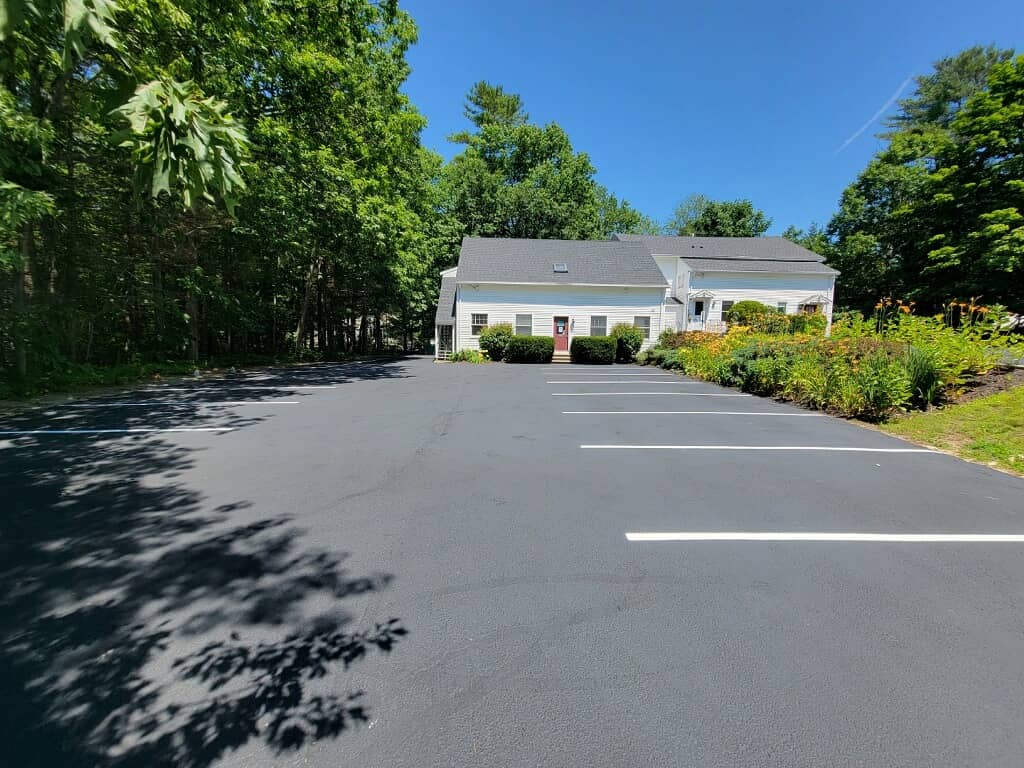
By late September, many property owners are already thinking about winter, but this is also a useful time to plan next year’s asphalt work.
An early site review can identify whether a driveway or parking lot needs:
Planning ahead also gives the contractor time to review access, drainage, traffic patterns, property lines, and any work that should be completed before paving begins.
For businesses, schools, HOAs, and industrial facilities, early planning can help coordinate paving with lower-traffic periods, tenant schedules, delivery access, and other site operations. Pine State Asphalt provides commercial paving, repairs, and maintenance for parking lots, loading areas, access drives, and other asphalt surfaces.
Homeowners considering paving in Portland, Maine, or nearby Southern Maine communities can also use the fall to document problem areas and arrange an evaluation before winter weather makes damage worse.
So, how late in the season can paving be completed in Maine?
For many residential and commercial projects, late September and early October can still be workable when the forecast provides dry conditions, suitable daytime temperatures, and a warm, stable base. As temperatures move toward the 40s and overnight frost becomes more common, the practical paving window narrows.
There is no responsible universal cutoff date. The correct decision depends on air temperature, base temperature, asphalt thickness, moisture, sunlight, wind, mix design, and the time required for proper compaction.
Pine State Asphalt recommends scheduling an on-site evaluation before committing to late-season paving. If conditions are right, the work can proceed with careful planning. If they are not, fall preparation, crack repair, grading, or a well-organized plan for spring may be the better path.
For questions about residential or commercial paving in Southern Maine, property owners can contact Pine State Asphalt to discuss the project and determine the most practical next step.



"They were easy to work with and did a beautiful job sealing the driveway. So very happy we use them."


"Did my driveway. Very large, very steep driveway with some special features. Came out great. Very happy with the service. Nice people to work with too."

"You guys did an awesome job! The sealcoating looks great on my driveway and you can barely tell that the in-laws pothole was ever there. Thanks for the work!"