Tire marks and scuffs on a newly paved driveway are a common and natural occurrence during the first summer, caused by the asphalt's slow curing process and Maine's intense summer heat softening the surface. Homeowners can minimize damage by avoiding stationary power-steering turns, cooling the driveway with a hose on hot days, and waiting at least 12 months before sealcoating. In most cases, these cosmetic marks fade on their own within the first year as the asphalt hardens and traffic compacts the surface.


You finally did it. You scheduled the residential paving project you’ve been planning for years. The crew from Pine State Asphalt just finished, and your driveway looks like a pristine, black ribbon leading to your home. It’s smooth, it’s dark, and it has instantly boosted your curb appeal.
But then, a week later, it happens. You pull your SUV into the garage, and as you glance back, you see them: scuffs. Swirl marks. Indentations where your tires turned.
For many homeowners in Southern Maine, from Windham to Scarborough, this is a moment of pure panic. Did the contractor use bad materials? Did the rain last night ruin the cure? Is the driveway already "failing"?
Pine State Asphalt wants to put your mind at ease. If you are seeing tire marks on your new Maine paving project this summer, you’re likely witnessing a completely natural part of the asphalt life cycle. In this guide, we’ll explain the science behind these marks, why the Maine summer heat plays such a big role, and how you can protect your investment while it matures.
One of the biggest misconceptions about paving in Portland, Maine is the difference between asphalt drying and asphalt curing.
When a crew finishes a job, the asphalt is "dry" enough to walk on almost immediately and drive on within 24 to 72 hours (depending on the weather). However, it is not "cured." Curing is a chemical process where the oils in the asphalt binder oxidize and the material hardens into its permanent, rigid state.
In the world of Maine paving, a full cure can take anywhere from six months to a full year. During this window, the asphalt remains flexible. This flexibility is actually a strength, it’s what allows your driveway to survive the brutal freeze-thaw cycles of a New England winter without snapping like a cracker. But during the first summer, that same flexibility makes it susceptible to cosmetic scuffing.
If you had your driveway paved in late October, you might never see a single tire mark. But in the peak of a Maine summer, the sun is your driveway’s biggest challenge.
Asphalt is naturally black, which means it absorbs a massive amount of solar heat. On a 85°F day in Saco or Biddeford, the surface temperature of your asphalt can easily soar above 130°F. At these temperatures, the asphalt binder softens. It becomes almost like a very dense "clay."
When you combine hot asphalt with hot tires (which have been friction-heated from driving on the highway), you have the perfect recipe for surface marks. The heat keeps the oils near the surface in a liquid-like state, making it easy for the heavy treads of a vehicle to "displace" the fine stones on the top layer.
If Pine State Asphalt could give one piece of advice to every homeowner with a new driveway, it would be this: Avoid stationary turns.
Modern vehicles have incredibly powerful power steering systems. It is very easy to sit in your driveway, completely stopped, and crank the steering wheel from left to right. When you do this on fresh asphalt in the heat of the day, your tires act like a giant eraser. They grind against the surface, twisting the soft binder and shifting the aggregate.
This often results in "power steering marks", circular scuffs that look like the asphalt has been rubbed raw. While they look alarming, they are almost always purely cosmetic. The structural integrity of the portland maine driveway paving is still intact; you’ve simply rearranged the very top layer of the finish.
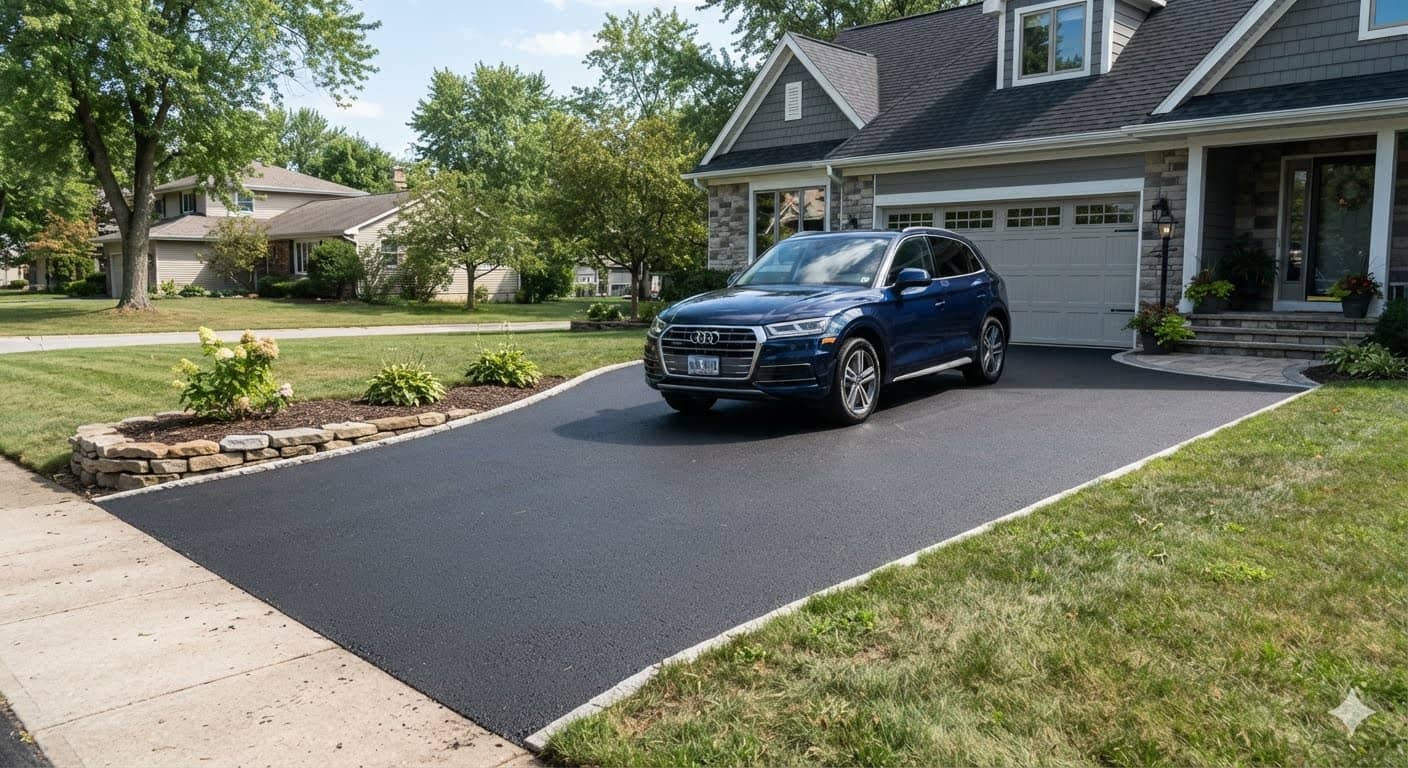
The short answer is: No.
Pine State Asphalt often tells customers to think of tire marks like a "bruise" rather than a "cut." Over time, as you drive over the marks and as the seasons change, these scuffs tend to iron themselves out.
Usually, by the time your driveway hits its first birthday, the majority of those first-summer scuffs will have vanished or become so faint they are unnoticeable.
While some marking is inevitable, there are steps you can take to minimize it during the critical first few months.
Whenever you turn your steering wheel, make sure your car is in motion: even just a slow roll. This prevents the "grinding" action that causes the deepest scuffs.
If you know you have a heavy delivery truck coming or you need to move vehicles around on a particularly scorching July afternoon, give your driveway a quick spray with the garden hose. Cooling the surface temperature by just 10 or 20 degrees can significantly "stiffen" the asphalt and prevent marks.
It’s not just cars. High-pressure points like motorcycle kickstands, bicycle stands, or car jacks can sink into fresh asphalt on a hot day. Pine State Asphalt recommends placing a small piece of plywood or a "coaster" under these points during the first summer to distribute the weight.
In the first few weeks, try to vary where you park slightly. If a heavy vehicle sits in the exact same spot during a heatwave every single day, it can occasionally lead to minor depressions or "rutting."
A common mistake is trying to "fix" tire marks by sealcoating the driveway immediately. Pine State Asphalt recommends waiting at least 12 months before applying your first coat of sealer. This allows the asphalt to fully cure and breathe. Sealcoating too early can trap oils and keep the asphalt soft for even longer.

While scuffs are normal, there are a few things that might warrant a call to your contractor. At Pine State Asphalt, we pride ourselves on being fully licensed, insured, and 5-star rated, which means we stand by our work.
You should reach out if you notice:
For paving contractors in Portland, Maine, the goal is always a balance between a beautiful finish and a lasting structure. Surface scuffs are a sign that the mix is flexible and healthy: exactly what you want before a Maine winter hits.
We’ve been serving Southern Maine for over 10 years, from Biddeford and Saco up to the Greater Portland area. We know that a driveway is a significant investment. Our team uses only premium materials specifically designed to withstand the unique climate of the Northeast.
We understand the anxiety that comes with seeing a mark on your new investment. But rest assured, Maine paving is a "long game." That rich, black surface will settle into its role as a durable, rugged part of your home’s infrastructure.
Your driveway is more than just a place to park; it’s the welcome mat to your home. Seeing those first few tire marks might feel like a setback, but in most cases, it’s just the asphalt "finding its feet." By following a few simple precautions: like avoiding stationary turns and keeping the surface cool on the hottest days: you can navigate the first summer with ease.
If you’re still planning your project and looking for paving in Portland, Maine, remember that choosing an experienced contractor is the best way to ensure your base and mix are handled correctly from day one.
Ready to upgrade your property? Whether you need a new residential driveway or a large commercial parking lot, Pine State Asphalt is here to help. We provide fast, local service that’s on time and on budget.
Contact Pine State Asphalt today for a free estimate and let’s get your project on the calendar!



"They were easy to work with and did a beautiful job sealing the driveway. So very happy we use them."


"Did my driveway. Very large, very steep driveway with some special features. Came out great. Very happy with the service. Nice people to work with too."

"You guys did an awesome job! The sealcoating looks great on my driveway and you can barely tell that the in-laws pothole was ever there. Thanks for the work!"


%201.png)


.jpg)
.jpg)
.png)
.png)