Building a private athletic court in Maine requires careful planning for the region's unique freeze-thaw climate. This comprehensive guide covers everything from court dimensions and site selection to foundation requirements and local regulations. Learn why professional paving contractors and proper drainage are essential for a durable court that withstands Maine winters.

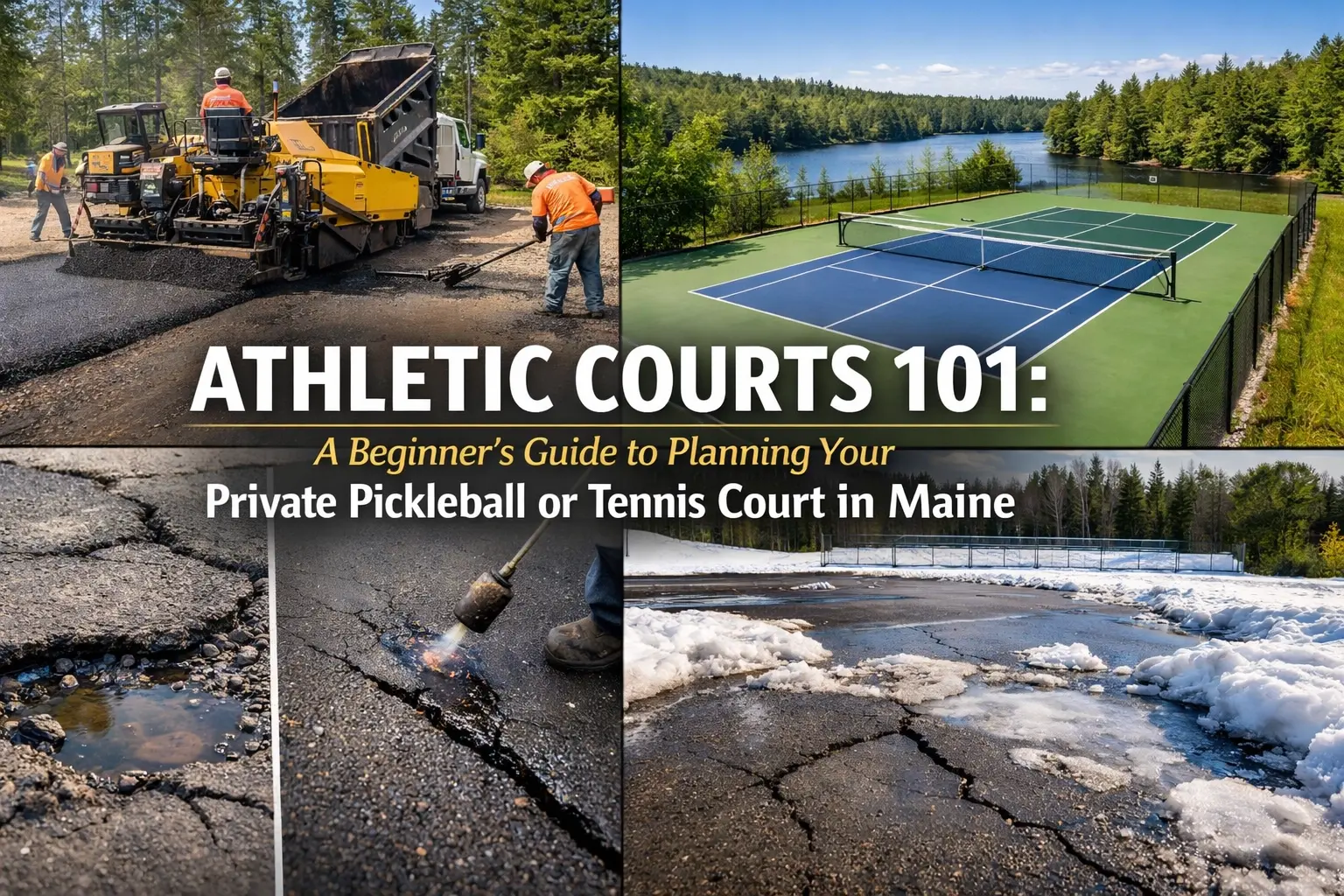
There is something special about a Maine summer. After months of snow and the inevitable "mud season," the arrival of warm breeze and long evenings makes everyone want to head outside. For many homeowners in the Portland area and across Southern Maine, that outdoor lifestyle has shifted toward a new trend: the private athletic court. Whether it is the fast-paced social fun of pickleball or the classic elegance of tennis, having a court in the backyard is becoming the ultimate home improvement project.
However, building an athletic court in New England is not quite the same as building one in Florida or Arizona. Our unique climate, characterized by deep freezes and significant spring thaws, requires a specific approach to construction. Pine State Asphalt knows that a court is more than just a place to play: it is a significant structural investment that relies entirely on the quality of the foundation beneath it.
Pickleball has taken the country by storm, and Maine is no exception. Because it requires less space than a traditional tennis court, it has become a favorite for residential properties in tighter-knit communities like Scarborough, Saco, and South Portland. Tennis remains a staple for larger estates and those who appreciate the endurance and tradition of the sport.
Regardless of the game, the goal remains the same: a perfectly level, durable surface that can withstand the elements. When homeowners start searching for paving contractors portland maine, they are often surprised to learn how much engineering goes into a simple playing surface. This guide will walk through everything needed to transition from a dream to the first serve.
The first step in planning is determining if the property can actually accommodate a court. It is not just about the lines on the ground; it is about the "overrun" space required for safety.
A standard pickleball court measures 20 feet wide by 44 feet long. However, for a comfortable playing experience, a total footprint of 30 feet by 60 feet is highly recommended. This allows players to move backward and sideways without hitting fences or running into landscaping.
Tennis requires significantly more real estate. A regulation singles court is 27 feet wide, while doubles is 36 feet wide. The total length is 78 feet. When adding in the necessary space behind the baselines and outside the sidelines, a standard tennis court footprint is typically 60 feet by 120 feet.
Pine State Asphalt recommends measuring twice and planning for the largest possible footprint to ensure player safety and to allow for proper earth-works and drainage around the perimeter.
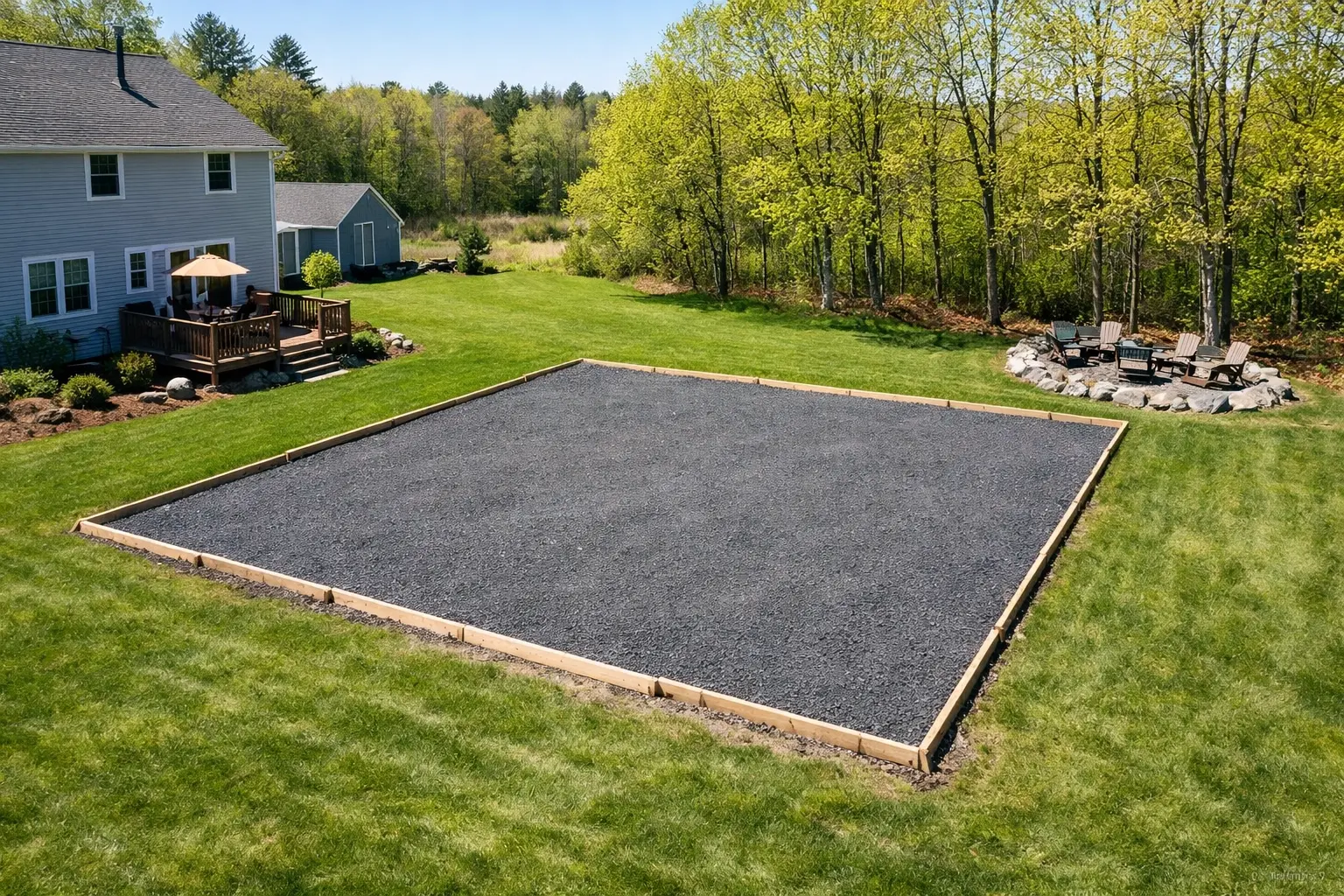
In Maine, where the terrain can range from rocky ledges to sandy coastal soil, site selection is the most critical phase of planning.
To avoid having the sun directly in the players' eyes during the most popular playing times (early morning and late afternoon), courts should ideally be oriented North-South. This ensures the sun crosses over the court rather than shining directly down the length of it.
While trees provide shade, they can also be a nuisance. Pine State Asphalt advises against placing courts directly under heavy tree canopies. Pine needles, sap, and leaves can stain the surface and trap moisture, leading to premature wear. Furthermore, roots from large trees can eventually push up through the asphalt, causing expensive cracks and "bumps" on the court.
In the world of maine paving, water is the enemy. A court must be built on a slight slope: usually 1%: to allow water to shed off the surface. If water pools on the court, it doesn't just ruin the game; it seeps into the asphalt and, during a Maine winter, freezes and expands, leading to the dreaded "frost heave."
The biggest mistake a homeowner can make is focusing on the "paint" or the "net" before the foundation. In Maine, the ground moves. Between the deep freezes of January and the saturating rains of April, the soil expands and contracts with immense force.
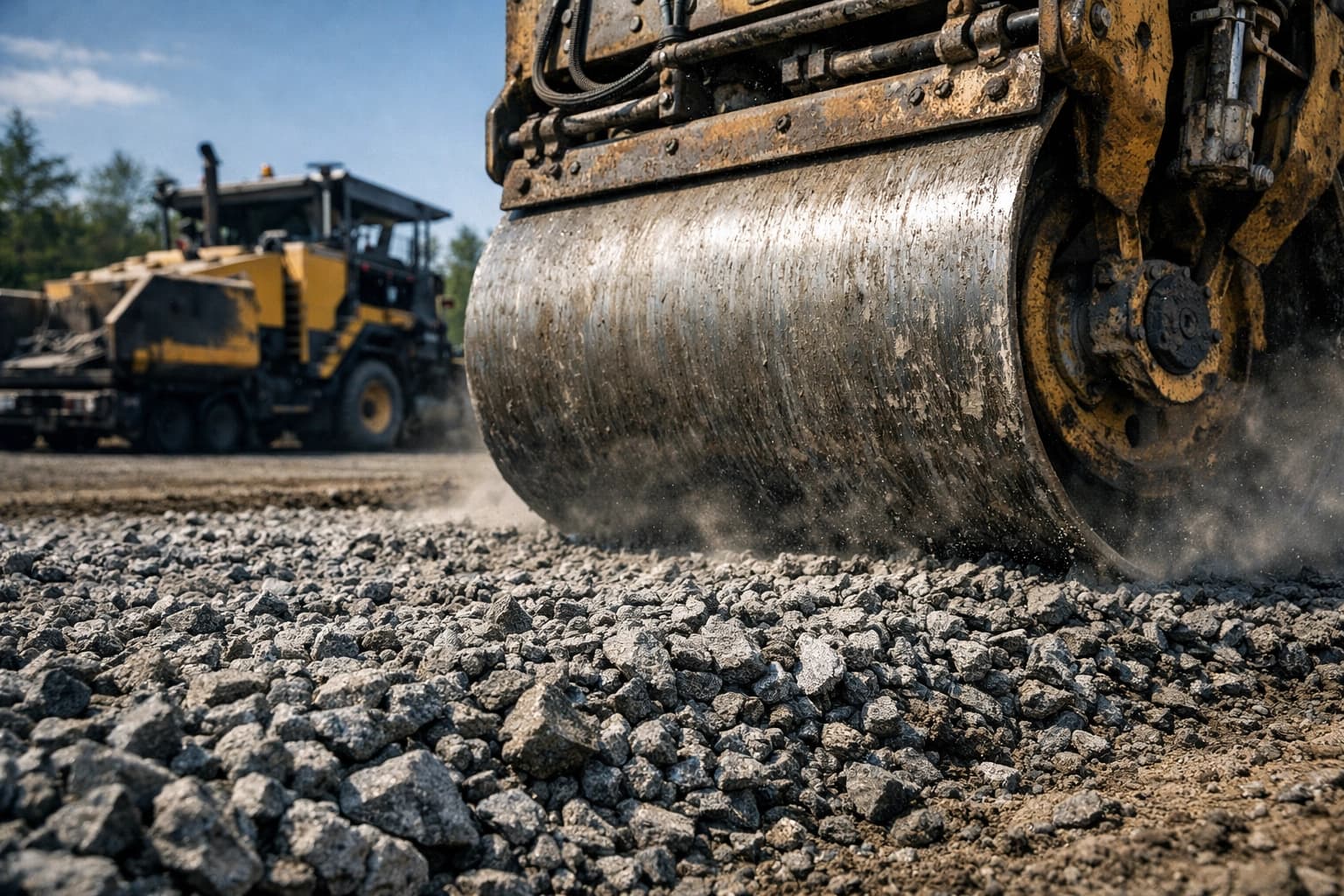
Pine State Asphalt emphasizes that an athletic court is only as good as the gravel beneath it. A standard driveway might require a few inches of base, but a high-quality athletic court in Maine often requires 12 to 18 inches or more of compacted, crushed stone. This layer provides the necessary drainage and a stable platform that won't shift when the ground freezes.
While concrete is an option, asphalt is the preferred choice for athletic courts in the Northeast. Asphalt is a flexible pavement, meaning it can "give" slightly during temperature fluctuations without cracking as easily as rigid concrete. It is also more cost-effective for the large surface areas required for tennis.
Before the first shovel hits the dirt, homeowners must navigate the legalities of construction. Every municipality in Maine has different rules regarding "impervious surfaces."
In many Portland-area towns, there are strict setback requirements. You may not be able to build within 10 to 30 feet of your property line. Additionally, some towns have limits on how much of your lot can be covered by non-porous materials like asphalt.
If the property is part of a planned community, the HOA may have rules regarding court placement, fence height, and even the color of the court surface. It is always best to get written approval before hiring paving contractors portland maine.
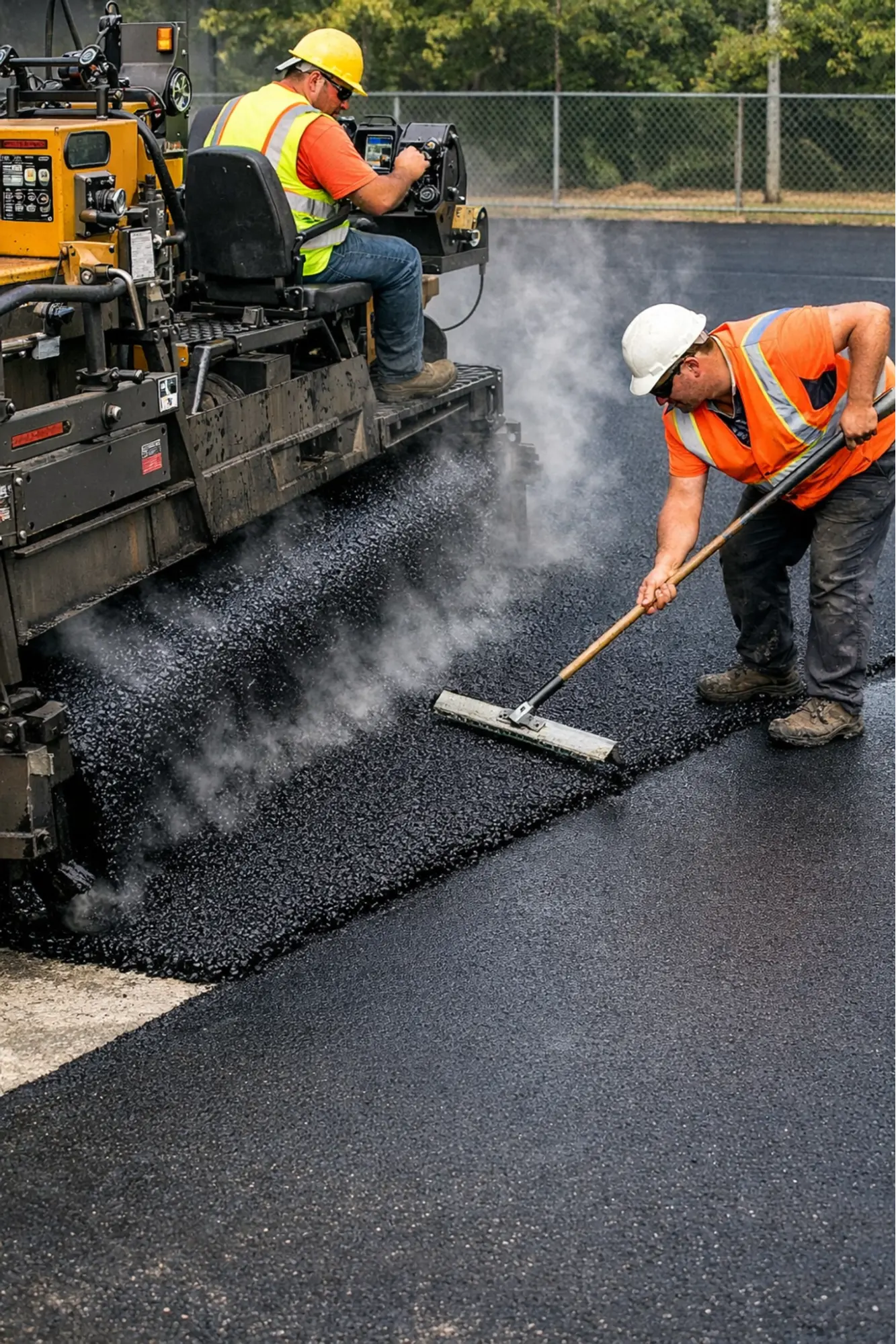
Once the permits are in hand and the design is finalized, the actual construction begins. It is a multi-step process that requires precision.
A court is more than just asphalt and lines. To make it a true backyard destination, consider these additions:
Even the best-built court requires care, especially after a Maine winter. Pine State Asphalt recommends a few simple steps to keep the court in top shape:
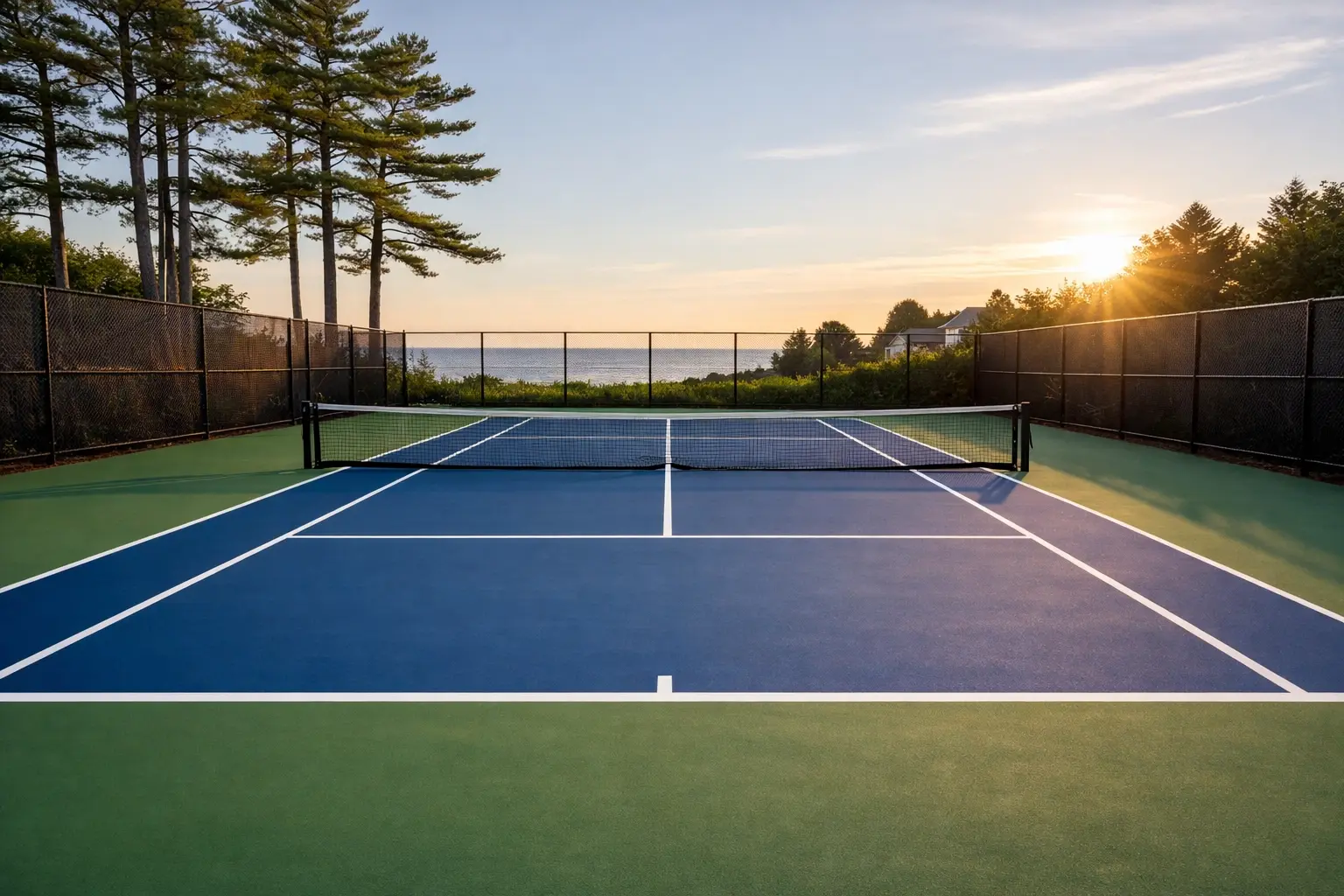
Building an athletic court is not a DIY project. It requires heavy machinery, laser-leveling technology, and an understanding of local soil conditions. Choosing experienced paving contractors portland maine ensures that the court stays level and playable for decades rather than just a few seasons.
A poorly built court will quickly develop "birdbaths" (low spots where water sits) or significant cracks that can make play dangerous or impossible. By investing in professional maine paving, property owners are also investing in their home’s value. A well-maintained athletic court is a unique selling point that can significantly boost your property value.
Planning a private pickleball or tennis court is an exciting journey. It is about creating a space for health, family, and community right in your own backyard. While the Maine climate presents its own set of challenges, they are easily managed with the right expertise and a focus on a solid foundation.
If you are ready to stop dreaming and start playing, Pine State Asphalt is here to help. From the initial earth-works to the final smoothing of the asphalt, we bring years of experience to every project. We understand the Maine ground better than anyone, and we are committed to building courts that stand the test of time.
Ready to bring the game home? Reach out to the team at Pine State Asphalt today for a consultation on your athletic court project. Visit our contact page to get started, or browse our work to see how we’ve helped your neighbors transform their properties across the Pine Tree State.



"They were easy to work with and did a beautiful job sealing the driveway. So very happy we use them."


"Did my driveway. Very large, very steep driveway with some special features. Came out great. Very happy with the service. Nice people to work with too."

"You guys did an awesome job! The sealcoating looks great on my driveway and you can barely tell that the in-laws pothole was ever there. Thanks for the work!"



%201.png)


.jpg)
.jpg)
.png)
.png)