Maine's brutal freeze-thaw cycle is causing driveways paved just five or six years ago to crack, heave, and fail prematurely—and the root cause is almost always an inadequate gravel base. For Portland-area homeowners, proper base depth ranges from 6–8 inches on sandy soils to 10–12 inches or more on clay-heavy ground. Choosing a paving contractor who prioritizes deep excavation, quality crushed aggregate, and proper drainage is the single most important factor in getting a driveway that lasts for decades.


It’s July in Maine. The sun is high, the lupines are in full bloom, and for many homeowners in Portland, South Portland, and Scarborough, it’s the season for home improvements. If you’ve been looking at your driveway and noticing fresh cracks, spiderwebbing, or a "spongy" feeling when you pull the SUV in, you aren't alone.
In 2026, we are seeing an uptick in "early failures": driveways that were paved only five or six years ago but are already showing the wear of a thirty-year-old road. When homeowners call Pine State Asphalt, the question is often the same: "How did this happen so fast?"
While the black surface: the asphalt: is what you see, the secret to longevity lies beneath. In the world of Maine paving, the most critical factor is the base depth. If the foundation isn't right, the best asphalt in the world won't save your investment.
When you hire paving contractors in Portland, Maine, you are essentially buying a structural system. Think of your driveway like a house. You wouldn't build a beautiful coastal colonial on a foundation of sand and expect it to survive a Maine winter.
The asphalt itself is flexible; it’s designed to "give" slightly. However, that flexibility requires a rock-solid, unmoving base to support the weight of vehicles. When a base is too thin, the asphalt has to do all the structural heavy lifting. Over time, the weight of your cars stretches the asphalt beyond its limit, leading to "alligator cracking" and structural failure.
To understand why depth matters, you have to understand the "layer cake" of a professional installation:
Why is this more important in 2026 than in other parts of the country? The answer lies in our geology. According to the Maine Asphalt Paving Association, frost depth in Central and Southern Maine can reach between 36 and 48 inches during a typical winter.
When the ground freezes, water trapped in the soil expands. If your driveway is built on a thin base of only 2 or 3 inches of gravel, that expanding ice pushes directly against the bottom of your asphalt. This is called "frost heave."
As the ice thaws in the spring, it leaves behind voids and pockets of water. When you drive over those soft spots, the asphalt sinks, cracks, and eventually turns into a pothole. A deep, free-draining base of crushed aggregate acts as a buffer. It allows moisture to move away from the surface and provides enough structural mass to resist the upward pressure of the frozen earth.
In the past, some contractors might have told you that 4 inches of gravel was "plenty" for a residential driveway. In 2026, Pine State Asphalt recommends a more robust approach to handle heavier modern vehicles (like electric SUVs) and more volatile weather patterns.
Pine State Asphalt believes that skipping even two inches of base depth can reduce the lifespan of a driveway by 50%. It might look great on day one, but by year three, the cracks will tell the real story. You can learn more about our process on our residential paving page.
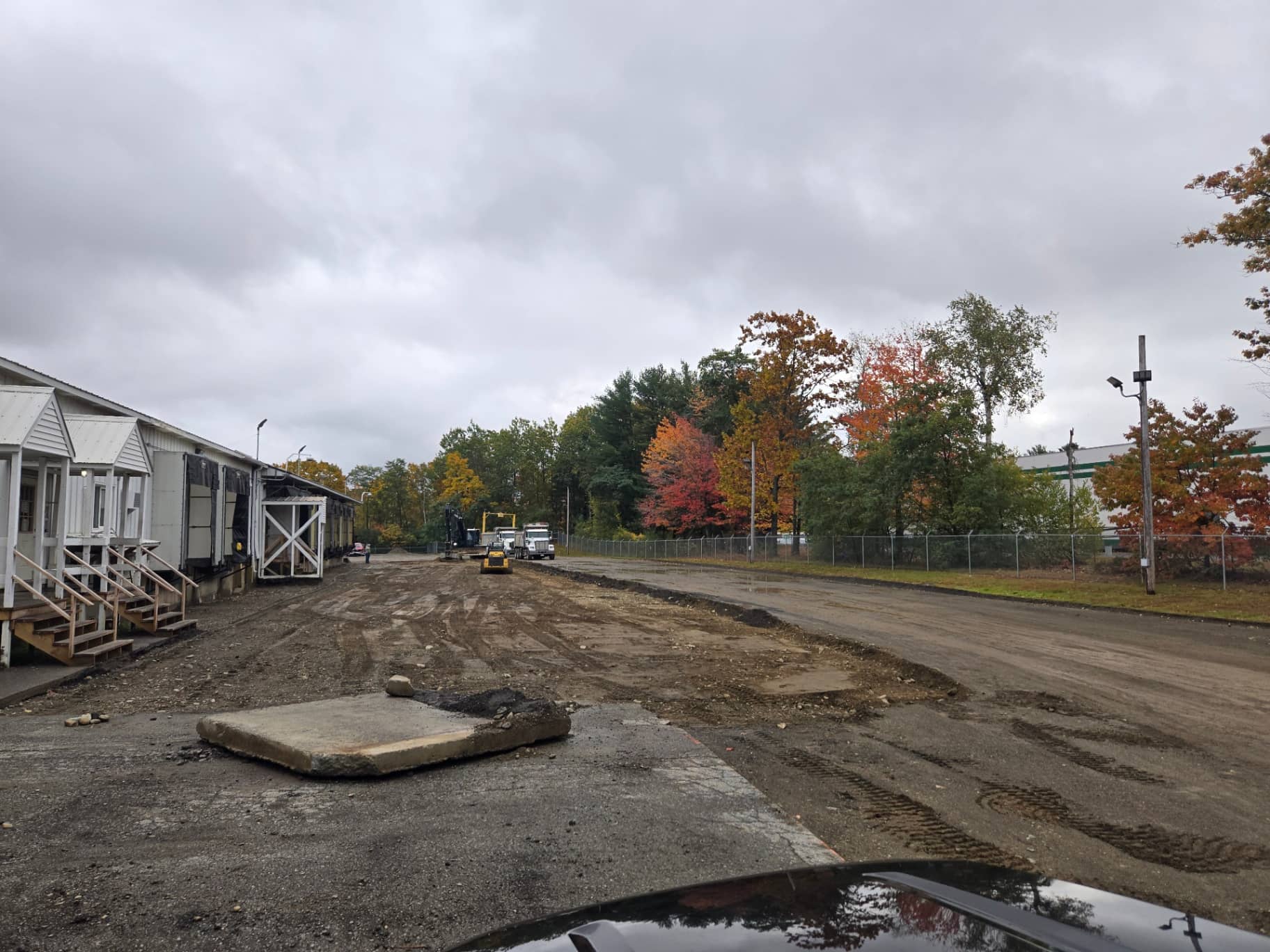
The biggest cost in a paving project isn't always the asphalt: it’s the "earthwork." Digging deep, hauling away old material, and bringing in tons of fresh, crushed gravel is labor-intensive and requires heavy machinery.
Some paving contractors in Portland, Maine might offer a significantly lower bid by reducing the excavation depth. They might suggest "overlaying" old pavement or simply "skimming" the surface. While this saves money upfront, it is the primary reason why Maine driveways are failing early.
Modern paving technology has improved, but the laws of physics haven't changed. One of the reasons base depth is even more critical now is the weight of our vehicles. The average modern vehicle is significantly heavier than its 1990s counterpart. When you add the weight of a heavy delivery truck (which we all use more often now) or a large EV, the "point load" on your driveway increases.
A thin base simply cannot distribute that weight effectively. Pine State Asphalt has seen an increase in "rutting": depressions where tires sit: on driveways that were built to "old" standards. Upgrading your base depth is an insurance policy against the changing demands of modern life.
You can have 12 inches of the best gravel in Maine, but if water has nowhere to go, your base will eventually fail. Drainage and base depth go hand-in-hand.
Pine State Asphalt ensures that every project is graded so that water flows away from the foundation of the home and off the edges of the driveway. If water pools on the edges, it seeps under the asphalt and saturates the base, turning your solid foundation into mud. This is especially dangerous during the "spring thaw" when the ground is already saturated.
If you are dealing with persistent water issues, it might be time to look into specialized drainage solutions alongside your new paving project.
It is tempting to focus on the immediate aesthetics of a smooth, black driveway. However, the true value of Maine asphalt paving is measured in decades, not months.
A driveway with a properly engineered base will:
Pine State Asphalt takes pride in being locally owned and operated, which means we understand the specific soil conditions from Biddeford to Yarmouth. We don't use a "one-size-fits-all" depth because we know the clay in South Portland behaves differently than the sandy soil in Kennebunk.
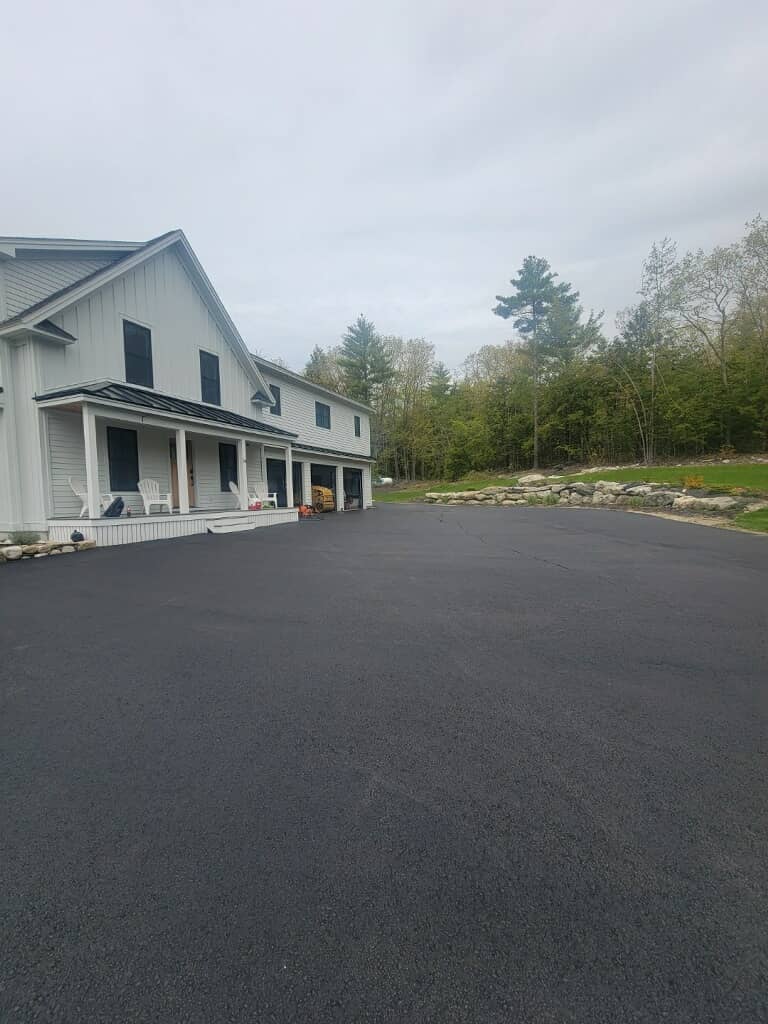
If you are planning a paving project this summer, remember that what you don't see is just as important as what you do see. Insist on a contractor who prioritizes base depth and quality materials.
Does your base depth really matter in 2026? More than ever. Between the increasing weight of vehicles and the relentless Maine freeze-thaw cycle, a thick, well-compacted foundation is the only way to ensure your driveway stands the test of time.
Pine State Asphalt is committed to providing 5-star rated professional service that stays on time and on budget. If you're ready to build a driveway that lasts, we’re here to help you get the foundation right. Contact us today for a consultation and let's make sure your property is prepared for whatever the Maine winter throws its way.



"They were easy to work with and did a beautiful job sealing the driveway. So very happy we use them."


"Did my driveway. Very large, very steep driveway with some special features. Came out great. Very happy with the service. Nice people to work with too."

"You guys did an awesome job! The sealcoating looks great on my driveway and you can barely tell that the in-laws pothole was ever there. Thanks for the work!"



%201.png)


.jpg)
.jpg)
.png)
.png)