Maine winters are brutal on pavement. We reveal the science behind freeze-thaw damage, how to spot "alligator cracking" early, and the essential maintenance steps you must take before the first hard freeze to save thousands in repairs.

Maine winters are legendary for their harshness, and if you own property with asphalt surfaces, you've probably noticed the toll our long, brutal seasons take on driveways and parking lots. What many property owners don't realize is that Maine's specific winter conditions create a perfect storm of destruction for asphalt surfaces. The good news? Understanding what's happening beneath the surface can help you protect your investment and avoid costly repairs down the road.
Let's dive into the science behind winter asphalt damage and explore proven strategies that Pine State Asphalt has developed through decades of Maine winters.
Maine experiences something most other states don't deal with to the same extent: dozens of freeze-thaw cycles throughout the winter season. While a consistently frozen winter might seem harsh, it's actually the constant back-and-forth between freezing and thawing that creates the most damage to asphalt surfaces.
Here's what happens during a typical Maine freeze-thaw cycle: Water seeps into small cracks in your asphalt during the day when temperatures rise above freezing. When evening temperatures drop, that water freezes and expands by approximately 9-10%. This expansion exerts tremendous pressure from within the crack, widening it and creating space for even more water during the next thaw cycle.
This process repeats throughout our extended winter season, turning hairline cracks into significant fissures, and eventually into potholes that can damage vehicles and create liability issues for property owners.
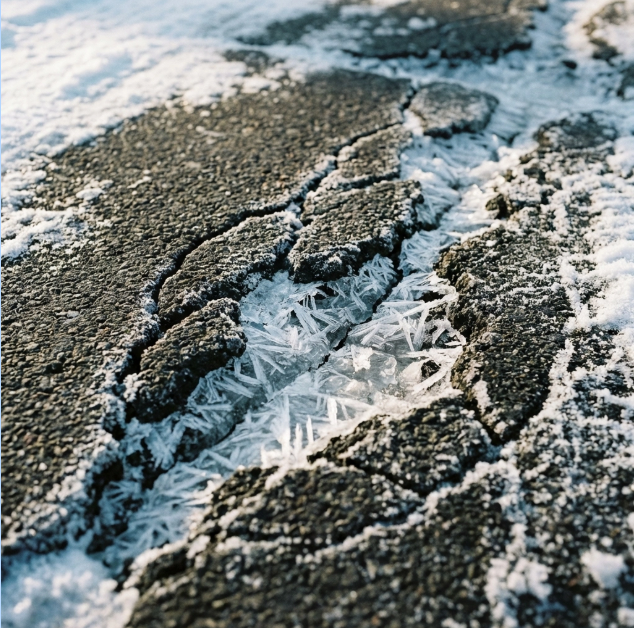
Beyond the freeze-thaw cycles, Maine winters bring additional challenges. Heavy snow loads put extra weight on asphalt surfaces, while ice formation can lift and shift pavement sections. De-icing salt, though necessary for safety, accelerates the breakdown of asphalt binders and promotes moisture absorption into the pavement structure.
The asphalt binder itself becomes brittle in Maine's cold temperatures, making the entire surface more susceptible to cracking under normal traffic loads. This brittleness, combined with the expansion and contraction of the base materials beneath the asphalt, creates stress points that eventually become visible damage.
Pine State Asphalt sees certain damage patterns repeatedly across Maine properties after harsh winters. Understanding these patterns can help property owners identify problems early, before they become major structural issues.
Frost heave is one of the most serious problems Maine property owners face. This occurs when water freezes below the pavement surface, particularly in areas with existing drainage issues or structural weaknesses. The freezing water pushes upward, causing sections of asphalt to buckle, shift, and lift. Frost heave compromises the structural integrity of the entire pavement section and typically requires significant repair work.
Linear cracking often follows the path of least resistance through asphalt surfaces, typically appearing as long, relatively straight cracks that seem to appear overnight. These cracks usually develop along construction joints or areas where different materials meet, and they're accelerated by the freeze-thaw process.
Alligator cracking appears as interconnected cracks that resemble reptile skin. This pattern indicates deeper structural issues, often related to problems with the base layer beneath the asphalt. When combined with winter conditions, alligator cracking can quickly deteriorate into failed pavement sections.
Edge deterioration is particularly common along driveways and parking lot perimeters, where drainage issues combine with freeze-thaw cycles to break down the asphalt along edges and transitions to other surfaces.
The most effective asphalt protection happens before winter arrives. Pine State Asphalt recommends completing winterization work by mid to late October, before Maine's first hard freeze.
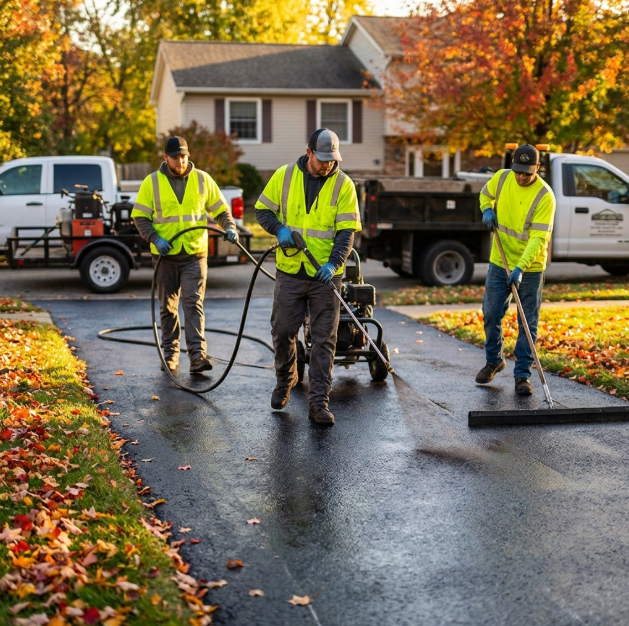
Sealcoating serves as your asphalt's winter coat, providing multiple layers of protection. A quality sealcoat creates a waterproof barrier that prevents moisture penetration, offers chemical resistance against salt and de-icing agents, and provides UV protection during those bright winter days when snow reflects sunlight onto pavement surfaces.
Timing is critical for sealcoating work. The application must be completed when temperatures are consistently above 50°F, with no rain expected for 24-48 hours. This gives the sealcoat time to cure properly before facing winter conditions. Applying sealcoat too late in the season, when temperatures are marginal, often results in poor adhesion and premature failure.
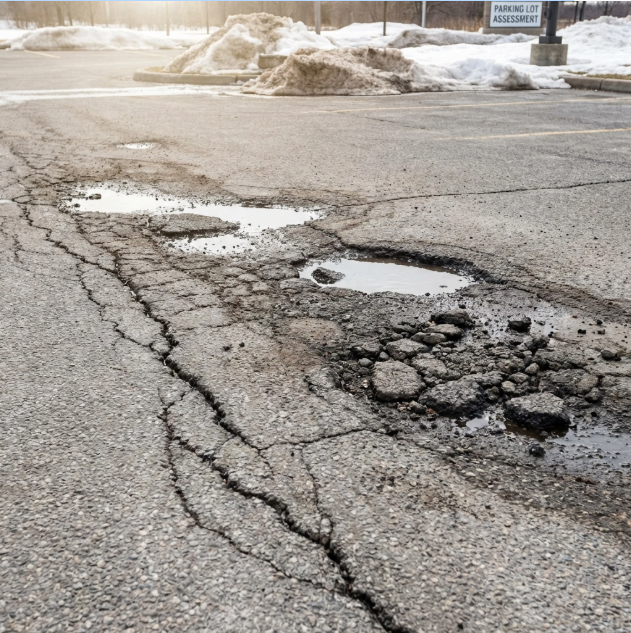
Crack sealing addresses existing vulnerabilities before winter arrives. Even small cracks can become major problems during freeze-thaw cycles, so sealing them in fall prevents water infiltration and the resulting expansion damage. Professional crack sealing involves cleaning out debris, preparing the crack surfaces, and applying specialized sealants designed to flex with temperature changes.
Drainage maintenance might be the most overlooked aspect of winter protection, but it's equally critical. Proper drainage prevents the water accumulation that accelerates freeze-thaw damage throughout your asphalt surfaces.
Property owners should ensure gutters and downspouts direct water away from paved areas, verify that driveways and parking lots slope away from buildings, and clear drainage ditches to prevent water backup. In some cases, installing drain-tile piping below the surface can remove water from subsurface layers before it causes frost heave problems.
Even with proper fall preparation, Maine winters require ongoing attention to prevent small problems from becoming expensive repairs.
Monthly winter inspections help catch developing issues early. Property owners should look for new cracks or expansion of existing ones, check for pooling water or ice in areas that should drain properly, notice any sections that appear to be lifting or settling, and document problems with photos for spring repair planning.
When it comes to de-icing products, not all salts are created equal. Traditional rock salt is effective but highly corrosive to asphalt binders. Pine State Asphalt recommends calcium magnesium acetate (CMA) when possible, as it's less damaging to asphalt surfaces while still providing effective ice melting.
Snow removal techniques can either protect or damage asphalt surfaces. Avoiding metal-edged tools directly on asphalt, setting plow blades slightly above the surface, and removing snow promptly to prevent repeated freeze-thaw cycles in snow pack all help preserve pavement integrity.
During ice storms, resist the urge to chip away thick ice buildup with heavy tools. Instead, apply de-icing products and allow them time to work, preventing mechanical damage to the asphalt surface.
Spring reveals the full extent of winter damage, making it the ideal time for assessment and repair planning. The key is addressing problems promptly, before they worsen during the next winter season.
Deep cleaning removes winter debris and salt residue that can continue damaging asphalt surfaces even after warm weather returns. Power washing or professional cleaning removes accumulated contaminants and provides a clear view of any damage that occurred during winter.
Crack repair should be prioritized based on the size and location of damage. Small cracks can often be sealed effectively, while larger cracks may require routing and filling with hot-pour sealants. Addressing these repairs in spring, when materials cure properly, prevents minor damage from becoming major structural problems.
Drainage evaluation becomes critical after winter, as freeze-thaw cycles often shift base materials and change drainage patterns. Areas that pooled water during spring snowmelt should be addressed before the next winter season.
For extensive damage, spring is the ideal time to plan major repairs or reconstruction. Scheduling this work early in the season ensures completion before winter returns and often provides better pricing and availability from contractors.
Beyond seasonal maintenance, certain long-term strategies significantly extend asphalt lifespan in Maine's challenging climate.
Base improvement addresses underlying structural issues that make asphalt susceptible to frost heave and drainage problems. While more expensive initially, improving the base layer prevents repeated surface repairs and extends overall pavement life.
Strategic landscaping can reduce winter damage by directing water away from paved areas and providing windbreaks that moderate temperature fluctuations around asphalt surfaces.
Regular maintenance scheduling spreads costs over time while preventing minor issues from becoming major problems. Pine State Asphalt typically recommends sealcoating every 2-3 years for most Maine properties, with annual inspections to catch developing problems early.
Maine winters don't have to mean constant asphalt problems. Property owners who understand the challenges and implement proper protection strategies can maintain attractive, functional paved surfaces even through our harshest seasons.
The key is taking action before problems develop. Fall preparation, winter monitoring, and prompt spring repairs create a cycle of protection that keeps asphalt surfaces strong and resilient. While Maine's climate presents unique challenges, proper maintenance and protection strategies ensure your asphalt investment provides reliable service for years to come.
Remember, every crack sealed before winter and every drainage issue addressed in fall saves money and prevents headaches when spring arrives. Your asphalt surfaces are a significant investment: protecting them from Maine's winter conditions ensures they'll serve your property well for decades to come.



"They were easy to work with and did a beautiful job sealing the driveway. So very happy we use them."


"Did my driveway. Very large, very steep driveway with some special features. Came out great. Very happy with the service. Nice people to work with too."

"You guys did an awesome job! The sealcoating looks great on my driveway and you can barely tell that the in-laws pothole was ever there. Thanks for the work!"


%201.png)


.jpg)
.jpg)
.png)
.png)