Warm-Mix Asphalt (WMA) is transforming paving in Portland, Maine by allowing contractors to work earlier in spring and later in fall, overcoming the state's notoriously short paving season. Produced at temperatures 30–75°F lower than traditional hot-mix, WMA achieves superior compaction for longer-lasting, more water-resistant surfaces that stand up to Maine's harsh freeze-thaw cycles. Beyond performance, WMA cuts plant energy consumption by up to 35%, reduces on-site fumes, and supports greater use of recycled asphalt, making it a smarter choice for both property owners and the environment.

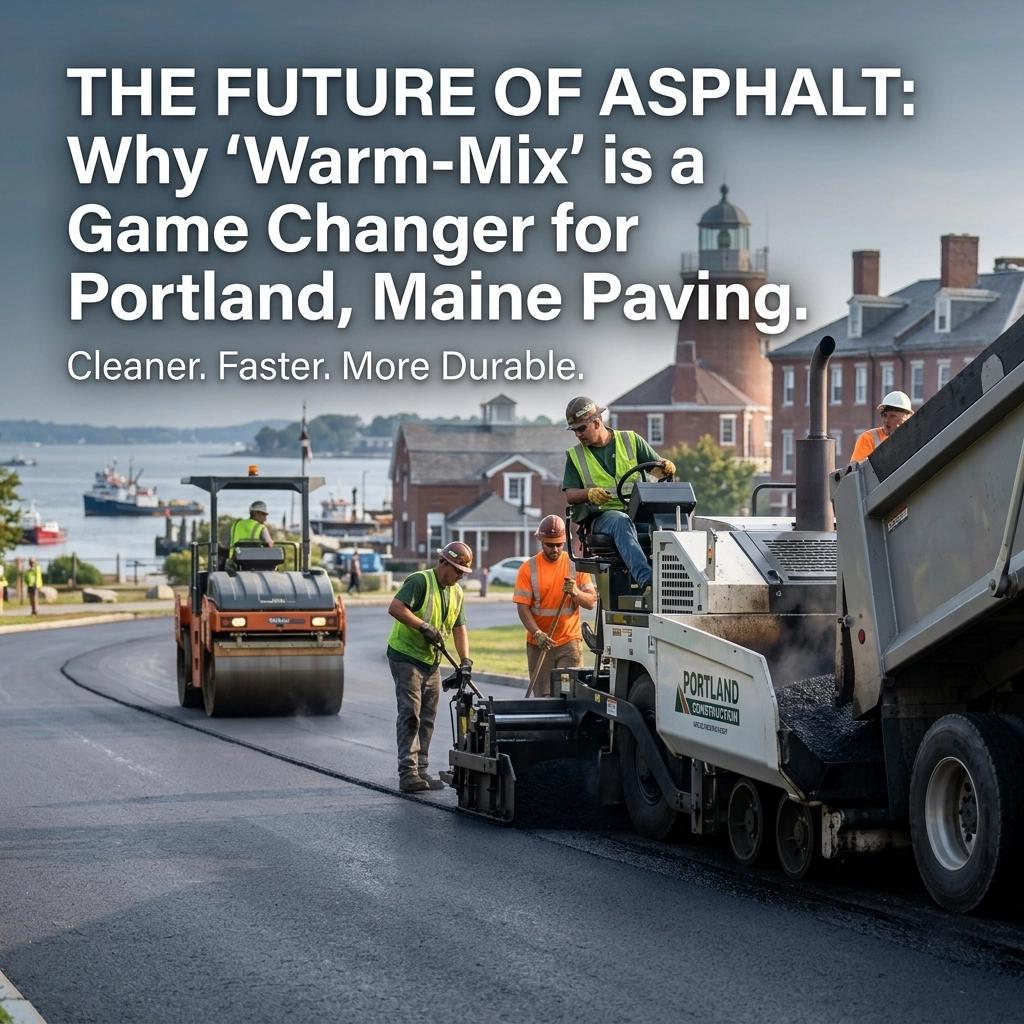
As the frost finally begins to retreat from the coast of Maine this April, property owners and facility managers in Portland are starting to look at their driveways and parking lots. After another long winter of freeze-thaw cycles and heavy plowing, the cracks and potholes are becoming impossible to ignore. Traditionally, the "paving season" in Maine has been a strict race against the thermometer, but a technological shift is changing the way Pine State Asphalt approaches these projects.
Warm-Mix Asphalt (WMA) is not just a trend; it is a fundamental shift in how roads and parking lots are built in northern climates. While traditional Hot-Mix Asphalt (HMA) has been the industry standard for decades, WMA offers a suite of benefits that feel almost tailor-made for the specific challenges of the Pine Tree State. From extending the window of time crews can work to improving the long-term durability of the surface, here is why warm-mix is the future of paving in Portland and beyond.
To understand why this is a game changer, it is helpful to understand the science behind it. Traditional Hot-Mix Asphalt is produced at extremely high temperatures, usually between 280°F and 320°F. These high temperatures are necessary to make the asphalt binder (the "glue") fluid enough to coat the stone aggregates and remain workable long enough to be spread and compacted on a job site.
Warm-Mix Asphalt, by contrast, is produced at temperatures roughly 30°F to 75°F lower than traditional hot-mix. This is achieved through the use of specific additives: such as zeolites, waxes, or water-foaming technologies: that reduce the viscosity of the asphalt binder at lower temperatures.
Pine State Asphalt recommends this technology because it allows the material to behave like hot-mix while it is being laid, but without the extreme heat requirements. For a property owner, this might seem like a technicality, but the implications for the finished product are massive.
In Portland, Maine, the paving window is notoriously tight. Paving too early in the spring or too late in the fall usually results in a sub-par finish because the asphalt cools down too quickly when it hits the cold ground. If the material cools before it can be properly compacted, it becomes brittle and prone to early failure.
This is where WMA shines. Because it starts at a lower temperature and stays workable longer, it allows paving contractors in Portland, Maine to start projects earlier in the spring and continue later into the autumn. On a typical April morning in Maine, the ground might still be holding a chill that would "shock" traditional hot asphalt, causing it to seize up. Warm-mix allows for a more gradual cooling process, ensuring the crew has the time needed to achieve a smooth, professional finish.
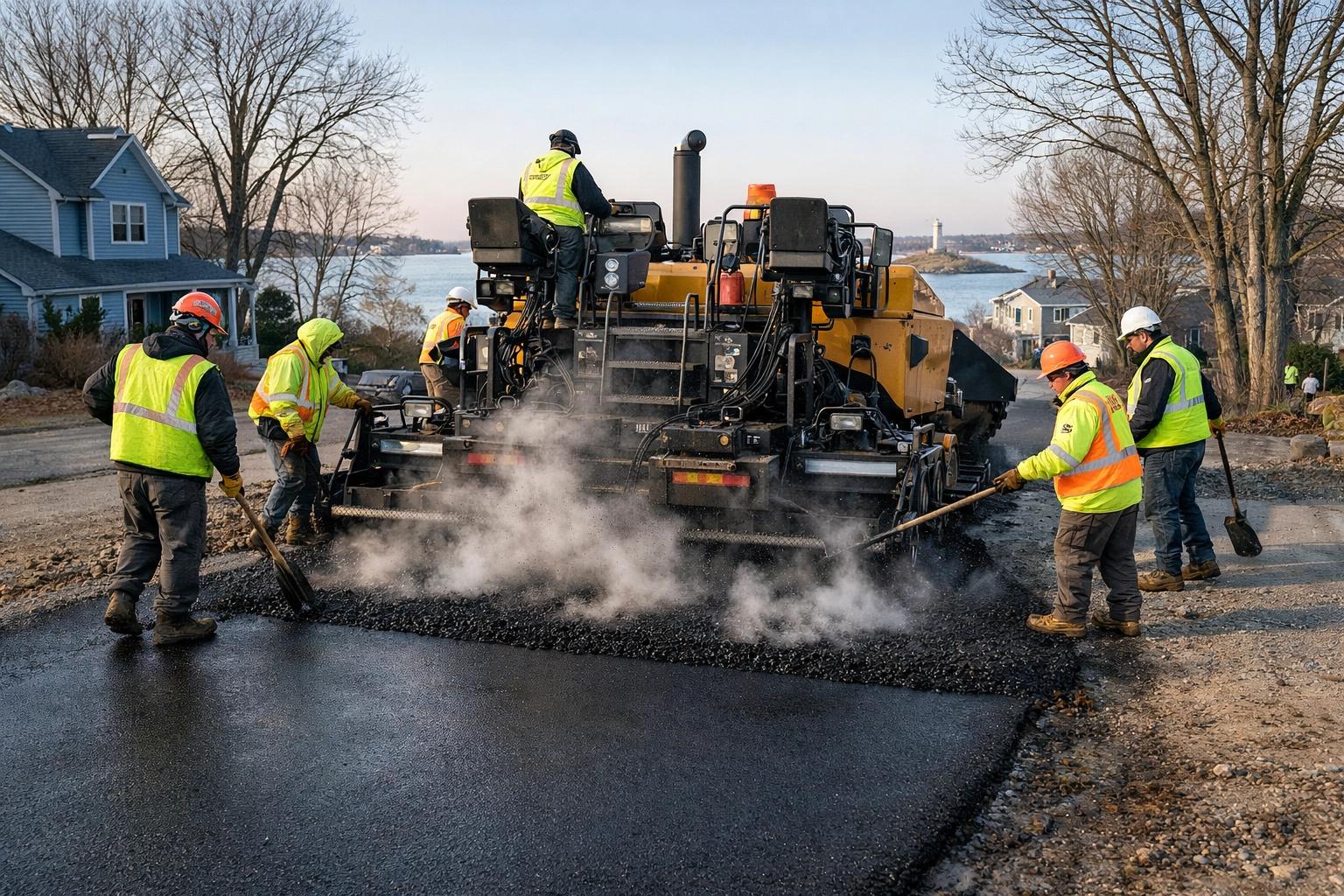
Superior Compaction: The Secret to Longevity
Ask any experienced paving professional what the most important part of the job is, and they will likely say "compaction." If the asphalt is not compacted to the correct density, air pockets remain. These air pockets eventually fill with water, which freezes and expands, leading to the dreaded Maine pothole.
Because WMA remains "soft" and workable for a longer period of time, even as it cools, it is much easier to achieve maximum density. Research shows that for every 1% improvement in compaction, the life of a pavement surface can be extended by up to 10%. By using WMA, Pine State Asphalt can deliver a denser, more water-resistant surface that stands up better to the harsh coastal elements of Biddeford and Saco.
Better compaction translates directly to property value. A driveway or parking lot that resists cracking for two or three extra years saves the owner significant maintenance headaches down the road. For those looking to maximize their investment, Pine State Asphalt suggests reading more on how to boost your property value with paving tips.
As Maine moves toward greener construction practices, the environmental benefits of WMA cannot be overstated. Producing asphalt at lower temperatures requires significantly less fuel: usually a 30% to 35% reduction in energy consumption at the plant. This directly lowers the carbon footprint of every ton of asphalt laid in our communities.
Furthermore, WMA produces fewer fumes and odors during the installation process. This is a major benefit for commercial paving projects in high-traffic areas like downtown Portland or Ellsworth. When paving a retail parking lot or a medical facility, reducing the "asphalt smell" and visible steam makes the process much less intrusive for customers and employees.
Pine State Asphalt is committed to sustainable practices, and Warm-Mix Asphalt plays a key role in that mission. WMA technology makes it easier to incorporate higher percentages of Recycled Asphalt Pavement (RAP).
When old roads are milled up, that material can be reused in new asphalt. However, recycled asphalt is often "stiff." The additives used in warm-mix act as a rejuvenator, making the recycled material more flexible and easier to work with. This creates a circular economy where old Maine roads are reborn into new, high-quality surfaces, reducing the need for newly quarried stone and virgin petroleum.
For large-scale commercial paving, the logistics of transporting asphalt can be a challenge. In a state as spread out as Maine: from Penobscot County down to the southern coast: the distance between the asphalt plant and the job site matters.
Traditional Hot-Mix has a "shelf life" in the back of a truck. If it sits in traffic too long or the haul is too far, it loses its heat and becomes unusable. Warm-mix extends the "haul time" significantly. Because it is designed to be workable at lower temperatures, it can travel further without losing its integrity. This allows Pine State Asphalt to maintain high quality-control standards even on projects that are a significant distance from the production plant.
While property owners care most about the finished product, the safety and comfort of the paving crew also contribute to the quality of the work. Paving with traditional hot-mix on a humid July day in Maine can be grueling. The extreme heat radiating off the asphalt, combined with the ambient temperature, is taxing for even the most seasoned workers.
WMA significantly reduces the heat exposure for the crew. Lower temperatures mean less steam and a more comfortable working environment. When a crew isn't battling heat exhaustion, they can focus more on the fine details: the edges, the drainage slopes, and the transitions. At Pine State Asphalt, we believe that a focused, healthy crew always produces a better result for the client.
While WMA offers many advantages, it is important to work with a contractor who understands when and how to use it. For most residential driveways and commercial lots in the Portland area, the answer is a resounding yes. The improved durability and the ability to pave in the "shoulder seasons" of spring and fall make it a superior choice for the Maine climate.
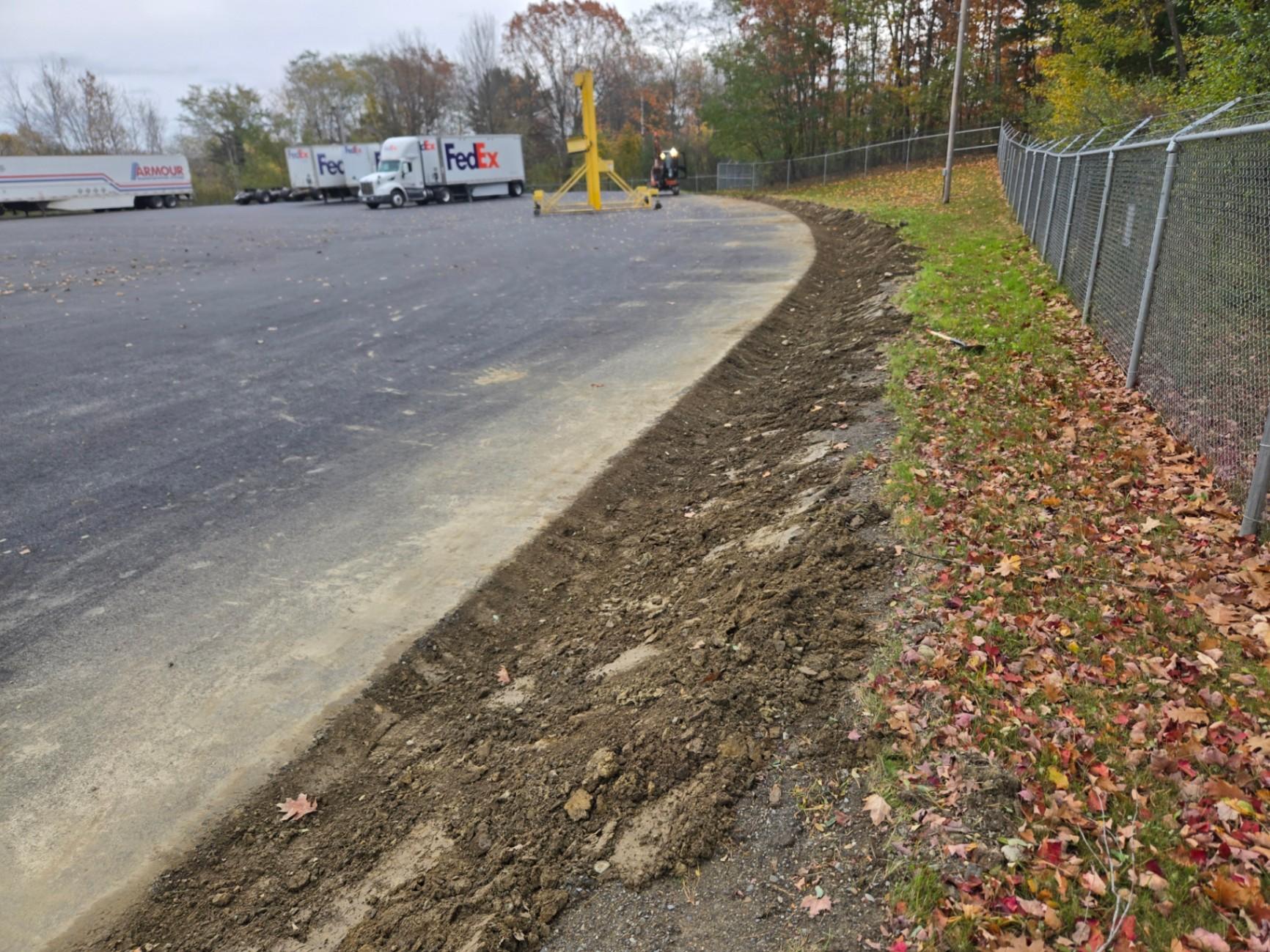
However, the foundation of any good paving job: regardless of the mix type: is the earthworks and grading. Even the most advanced warm-mix asphalt will fail if it is laid over a poorly drained or unstable base. Pine State Asphalt takes a holistic approach, ensuring the sub-base is prepared to handle Maine’s intense freeze-thaw cycles before a single ton of asphalt is laid.
Maintenance Still Matters
Choosing a high-quality material like Warm-Mix Asphalt is a great first step, but it doesn't mean the pavement is "set it and forget it." Especially in Maine, where salt and sand are used heavily during the winter, maintenance is key.
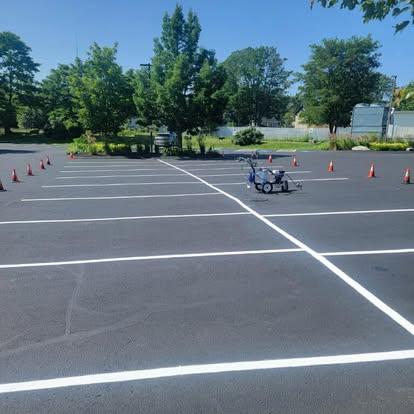
Pine State Asphalt recommends a proactive maintenance schedule, which includes crack sealing and sealcoating once the asphalt has had time to cure properly. For those interested in protecting their new investment through the winter months, our guide on winterizing your driveway offers essential tips for keeping that smooth surface intact.
As we look toward the rest of 2026 and beyond, Pine State Asphalt is excited to continue leading the way in adopting these advanced technologies. The goal has always been to provide Maine property owners with surfaces that are built to last, and Warm-Mix Asphalt is one of the most effective tools in our arsenal to achieve that.
Whether you are a business owner in Scarborough needing a parking lot overhaul or a homeowner in Portland looking to refresh your curb appeal, understanding these innovations helps you make a more informed decision. The "future of asphalt" isn't a distant concept: it's being laid on Maine roads right now.
If you have questions about your upcoming paving project or want to see if Warm-Mix is the right fit for your property, feel free to reach out to our team. We’re always happy to discuss the best solutions for your specific needs and help you plan a project that will stand the test of time and weather. For a look at what we've been up to lately, check out our work across the state.



"They were easy to work with and did a beautiful job sealing the driveway. So very happy we use them."


"Did my driveway. Very large, very steep driveway with some special features. Came out great. Very happy with the service. Nice people to work with too."

"You guys did an awesome job! The sealcoating looks great on my driveway and you can barely tell that the in-laws pothole was ever there. Thanks for the work!"


%201.png)


.jpg)
.jpg)
.png)
.png)