Hiring the right paving contractor in Portland, Maine requires careful vetting to ensure your asphalt survives the region's harsh freeze-thaw winters. This comprehensive checklist covers everything from verifying licensing and insurance to evaluating equipment, reviewing material specs, and spotting common scams. Follow these steps to protect your investment and get a durable, high-quality surface that lasts for decades.

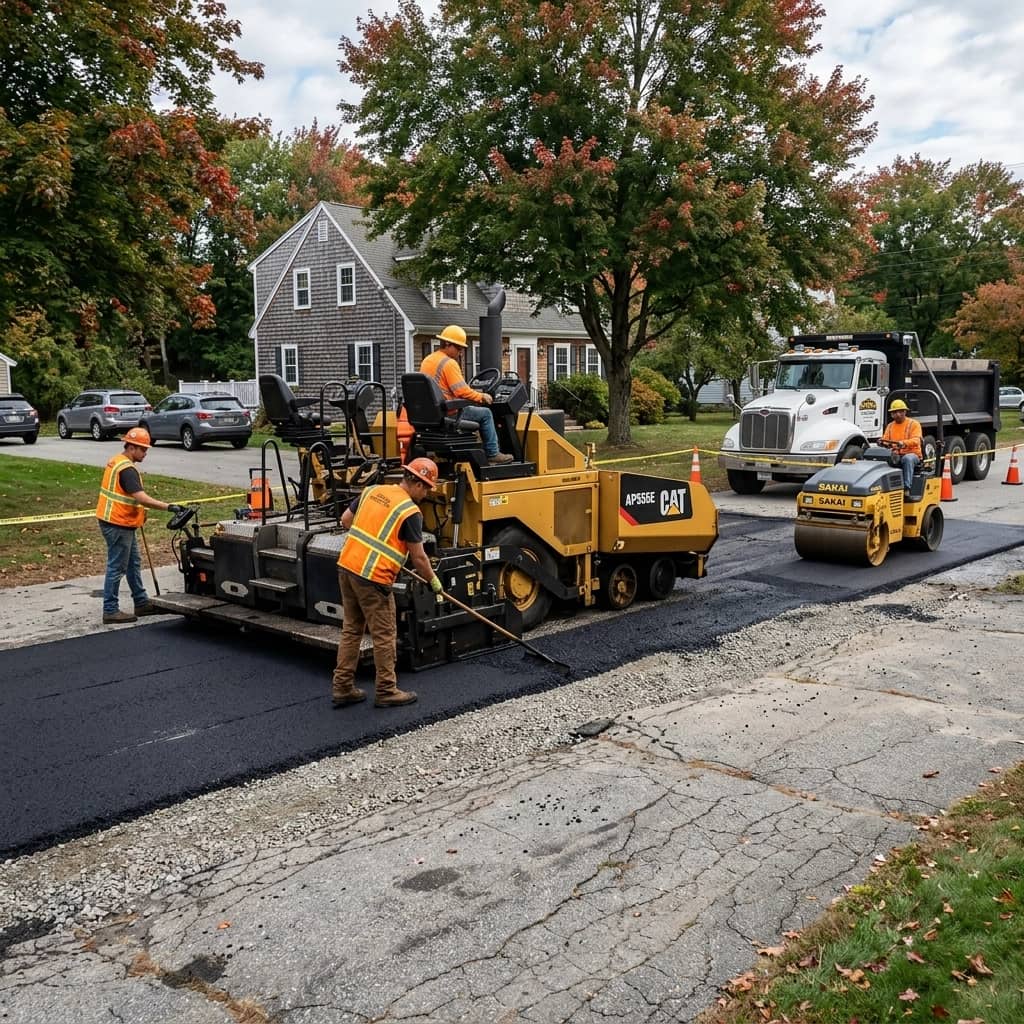
Choosing the right partner for an asphalt project in Portland, Maine, is a decision that property owners will live with for decades. Whether it is a residential driveway or a sprawling commercial parking lot, the quality of the installation determines whether the surface lasts twenty years or begins to crumble after just three Maine winters. The local climate is notoriously difficult on asphalt, with dramatic freeze-thaw cycles that can easily wreck a poorly installed surface.
Finding a contractor who understands the nuances of paving portland maine requires more than a quick search and a few phone calls. It requires a systematic approach to vetting professionals. Pine State Asphalt recommends using a comprehensive checklist to ensure that every dollar invested into a property results in a durable, high-quality finish.
The first step in any hiring process is confirming that the contractor is legally authorized and fully protected to perform the work. In the paving industry, high-energy machinery and heavy materials are the norms, which makes safety and liability coverage non-negotiable.
While Maine does not have a single statewide "paving license" in the way some states do, contractors should be able to provide evidence of their business registration and any specific municipal permits required in the Portland area. A legitimate contractor is a registered business entity that stands behind its work.
This is where many property owners make a mistake. Pine State Asphalt suggests never hiring a crew that cannot produce a current Certificate of Insurance (COI).
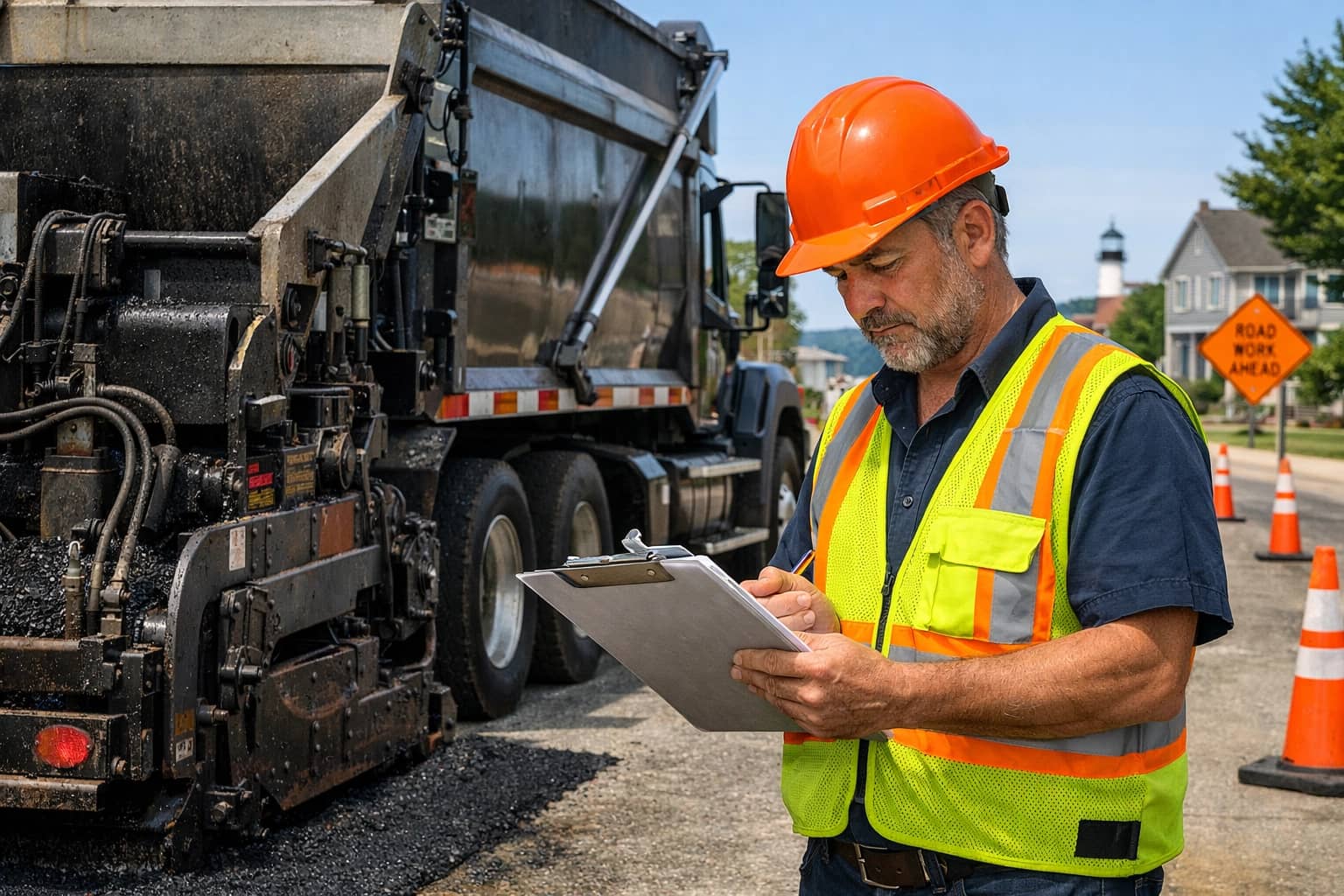
Paving in the Northeast is a specialized skill. A contractor who primarily works in warmer climates may not understand the specific sub-base requirements needed to survive a Portland winter. Pine State Asphalt emphasizes that "local knowledge" is not just about knowing the streets; it’s about knowing the soil.
In Maine, the ground expands and contracts as water freezes and thaws. If a paving contractor does not account for this by ensuring proper earth-works and sub-base preparation, the asphalt will eventually "heave" and crack. When interviewing paving contractors portland maine, ask them specifically how they prepare the ground to handle the winter. If they don't mention drainage or base compaction, it is a significant red flag.
From environmental regulations near Casco Bay to specific zoning requirements in the Old Port or surrounding suburbs like Scarborough, an experienced local contractor will navigate the paperwork and compliance hurdles more efficiently than an out-of-town outfit.
A professional paving estimate cannot be done over the phone or by looking at a Google Maps satellite view. Every property has unique challenges, such as:
Pine State Asphalt recommends only considering contractors who walk the property, take measurements, and identify potential problem areas like "soft spots" in the soil. A contractor who skips this step is likely to hit the property owner with "surprise" change orders once the project begins.
Not all asphalt is created equal. The "mix" used for a highway is different from the mix used for a residential driveway. A reputable contractor will be transparent about the materials they plan to use.
Pine State Asphalt suggests asking about the "grade" of the asphalt. In Maine, professionals often use specific mixes designed to remain flexible during cold temperatures to resist cracking. Furthermore, the thickness of the asphalt matters. A standard residential driveway should typically have at least 2 to 3 inches of compacted asphalt, while commercial lots require more to handle heavy vehicle traffic.
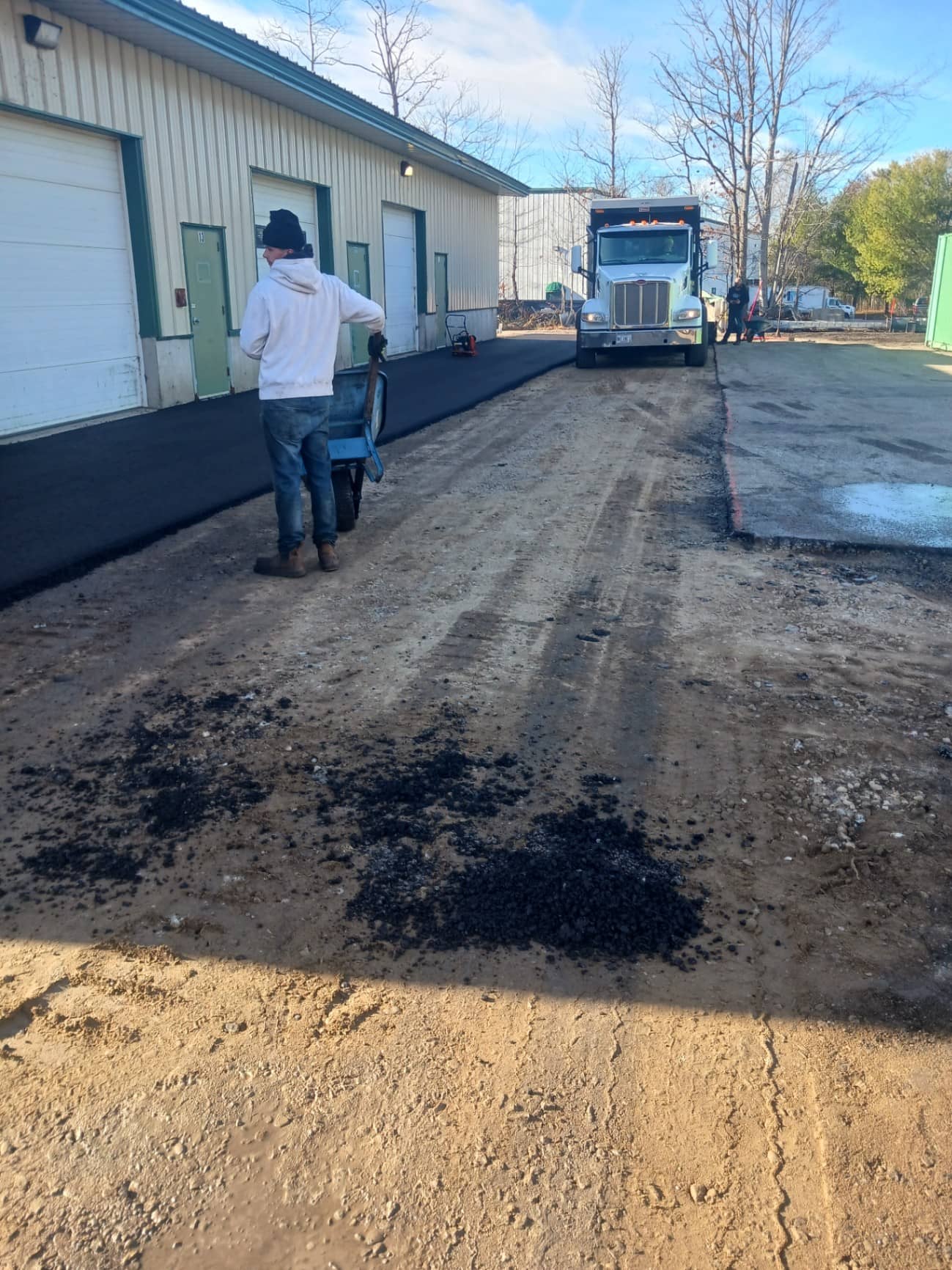
Asphalt is only as good as the ground it sits on. The checklist should include a section on the base material.
Without a solid base, even the most expensive asphalt will fail within a few years. Proper preparation is the hallmark of a professional job.
Online reviews are a good starting point, but they can be manipulated. Pine State Asphalt recommends asking for at least three recent references from projects that are similar in scope to your own.
One of the best things a property owner can do is drive by a project the contractor completed two or three years ago. Does it still look dark and smooth? Are there signs of "alligator cracking" or sinking? Seeing how a contractor’s work holds up after a few Maine winters tells a more honest story than a polished sales pitch. You can often see examples of high-quality finishes in our our work gallery to use as a baseline for comparison.
When calling a previous customer, ask:
A handshake deal has no place in the construction industry. A professional contract protects both the property owner and the contractor. Pine State Asphalt insists that every agreement should include:
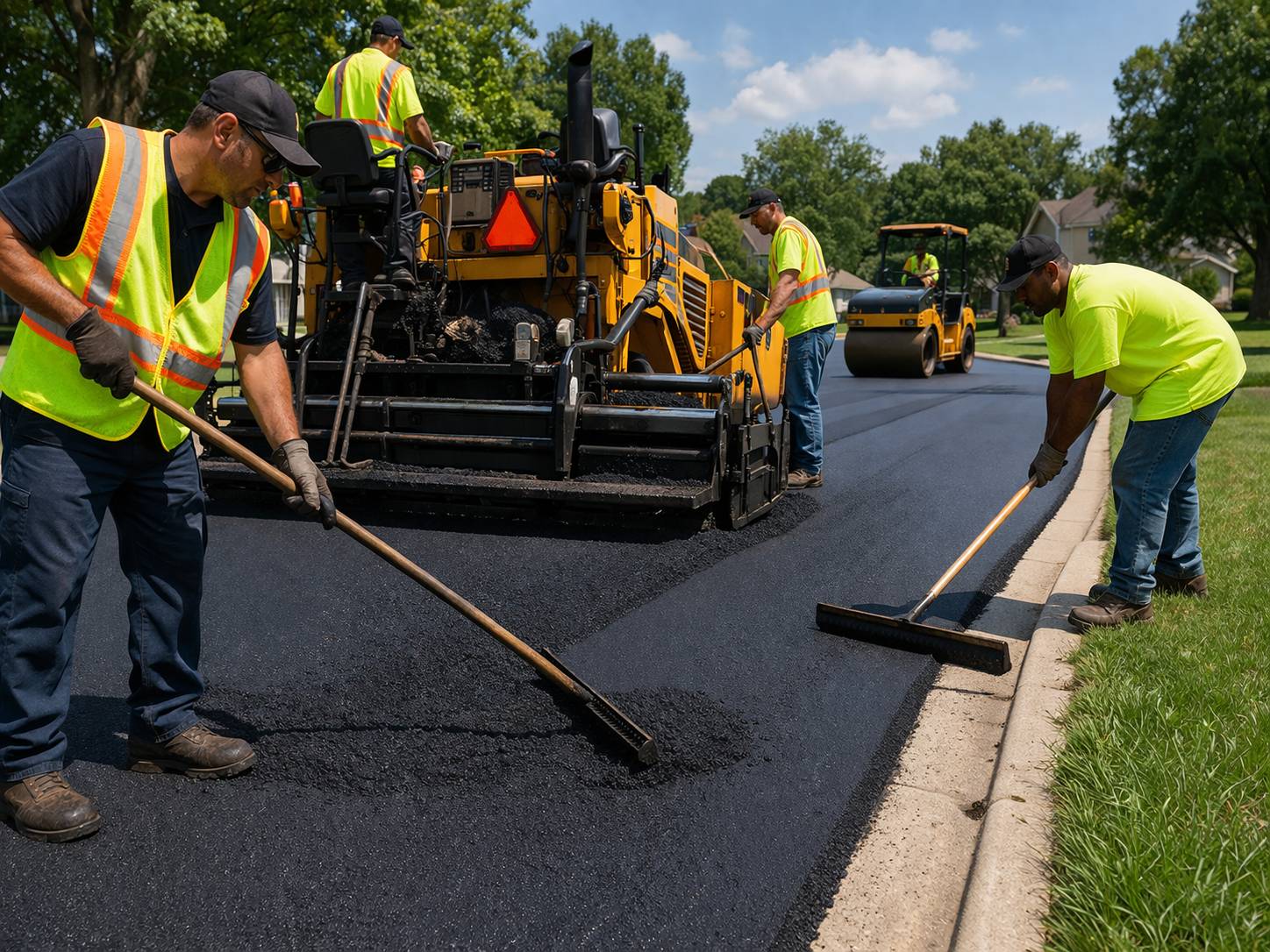
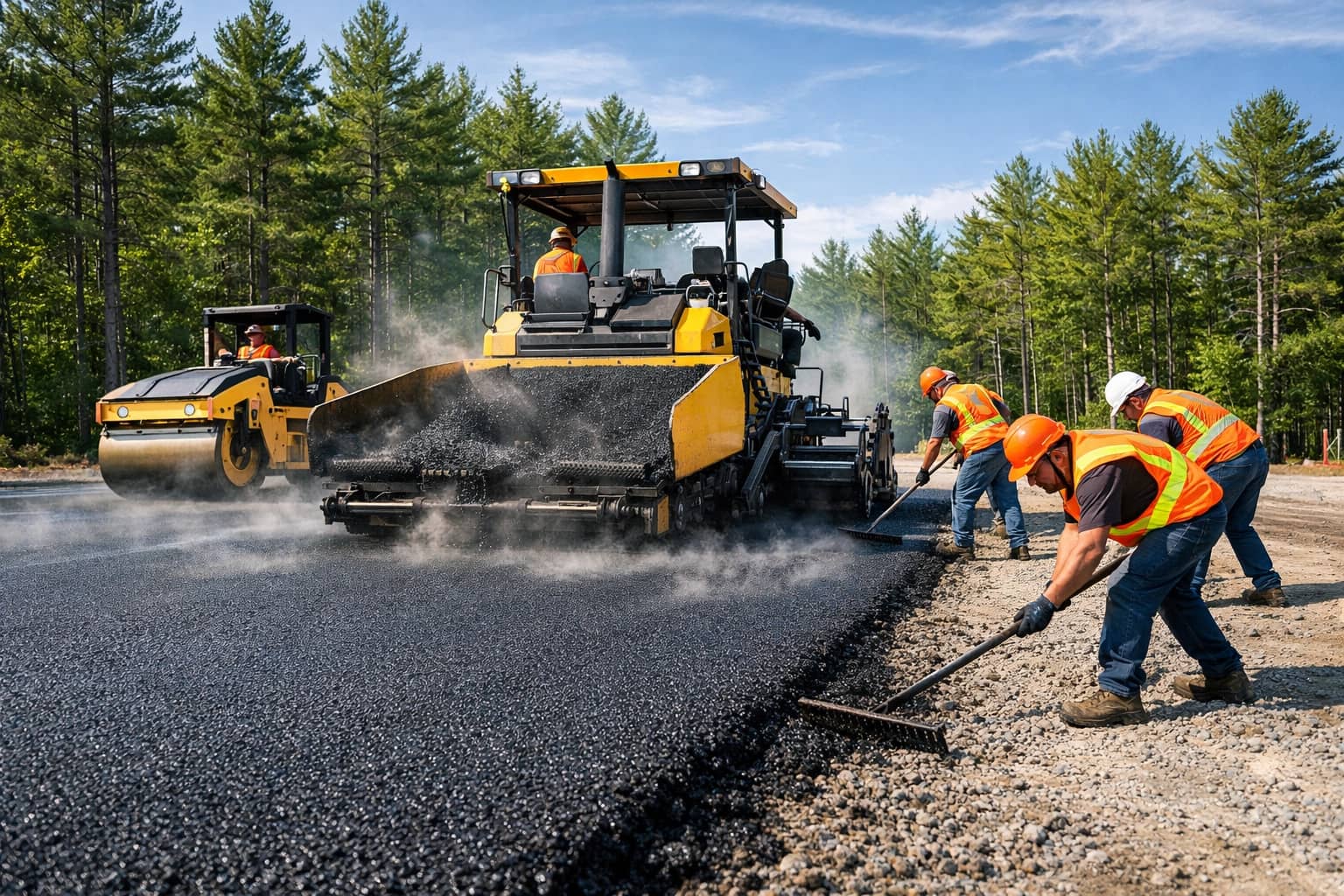
The quality of an asphalt job is heavily dependent on the equipment used. Paving is not a DIY job or a "truck and a shovel" operation. Professional paving contractors portland maine should arrive with modern, well-maintained machinery.
While small patches might be done by hand, any significant surface area should be laid using a self-propelled paving machine to ensure an even thickness and a smooth finish. Compaction should be handled by a heavy-duty vibratory roller, not just a small plate compactor.
A standard driveway or parking lot requires a coordinated team. You need operators for the paver, the rollers, and the trucks, plus several ground crew members to manage the "raking" and "luting" of the edges. If a contractor shows up with only two people for a large commercial job, the asphalt will cool before it is properly compacted, leading to a weak surface.
While many great contractors are working in Southern Maine, the industry also attracts "scammers" or "gypsy pavers" who travel through town offering low-cost deals. Pine State Asphalt warns property owners to look out for these warning signs:
The hiring process doesn't technically end when the asphalt is laid. A great contractor will educate the property owner on how to protect their investment.
Asphalt needs time to harden. A professional will provide specific instructions on when you can walk on it, drive on it, and park on it. They should also explain that asphalt remains "pliable" for the first full summer, meaning you should avoid turning your steering wheel while the car is stationary to prevent scuff marks.
Ask the contractor about long-term maintenance. When should you apply the first coat of sealcoating? (Pine State Asphalt generally recommends waiting at least 12-24 months for the oils to cure). For more tips on keeping your new surface in top shape, you can read our guide on winterizing your driveway.
At the end of the day, the best paving contractor is the one who prioritizes quality over speed. By following this checklist, property owners in Portland, Biddeford, and Saco can feel confident that they are hiring a team that understands the local landscape.
A high-quality asphalt surface does more than provide a place to park; it significantly increases the curb appeal and market value of a property. If you want to dive deeper into how a new driveway impacts your home's worth, check out these 5 Maine paving tips to boost property value.
Investing time in the vetting process today ensures that the pavement outside your door remains smooth, safe, and beautiful for decades to come. Whether you need a residential refresh or a commercial parking lot in Ellsworth, Pine State Asphalt recommends doing your homework, asking the tough questions, and never settling for "good enough."



"They were easy to work with and did a beautiful job sealing the driveway. So very happy we use them."


"Did my driveway. Very large, very steep driveway with some special features. Came out great. Very happy with the service. Nice people to work with too."

"You guys did an awesome job! The sealcoating looks great on my driveway and you can barely tell that the in-laws pothole was ever there. Thanks for the work!"


%201.png)

.jpg)
.png)
.png)