Winter weather poses serious challenges to Portland Maine commercial parking lots through freeze-thaw cycles, heavy snow, and de-icing chemicals. Pine State Asphalt provides a comprehensive guide to preventing costly spring repairs through proper fall preparation, smart winter maintenance, and strategic planning for the construction season.

Winter in Portland, Maine brings real challenges for commercial property owners. Freeze–thaw cycles, heavy snow loads, and aggressive de-icing take a toll on parking lots and drive lanes. The most effective way to avoid costly spring repairs is to understand how winter damages asphalt and take a few practical steps at the right times.
Pine State Asphalt recommends a simple approach: prepare in the fall, monitor through winter, and plan repairs early in the construction season. Most winter damage can be prevented or minimized with routine maintenance and sound decision-making.
Winter damage usually traces back to water. When moisture finds a path into pavement, cold weather finishes the job.
• Freeze–thaw expansion: Water in cracks and joints freezes, expands, and pries the pavement open. Repeated cycles in Portland’s coastal climate accelerate raveling, potholes, and edge failures.
• Drainage problems: Birdbaths and clogged catch basins hold meltwater on the surface.
Standing water repeatedly freezes into ice lenses that lift and fracture the mat.
• Plow and loader abrasion: Steel blades scraping tight to the surface can scuff fresh sealcoat, lift raveling aggregate, and catch raised joints or utility covers.
• De-icing chemicals and coastal exposure: Traditional rock salt (sodium chloride) and salt spray from Casco Bay increase surface wear and keep the pavement wet, compounding freeze–thaw effects—especially for properties near the waterfront.
Focus on keeping water out and moving. Portland properties that handle these basics in fall see fewer spring surprises.
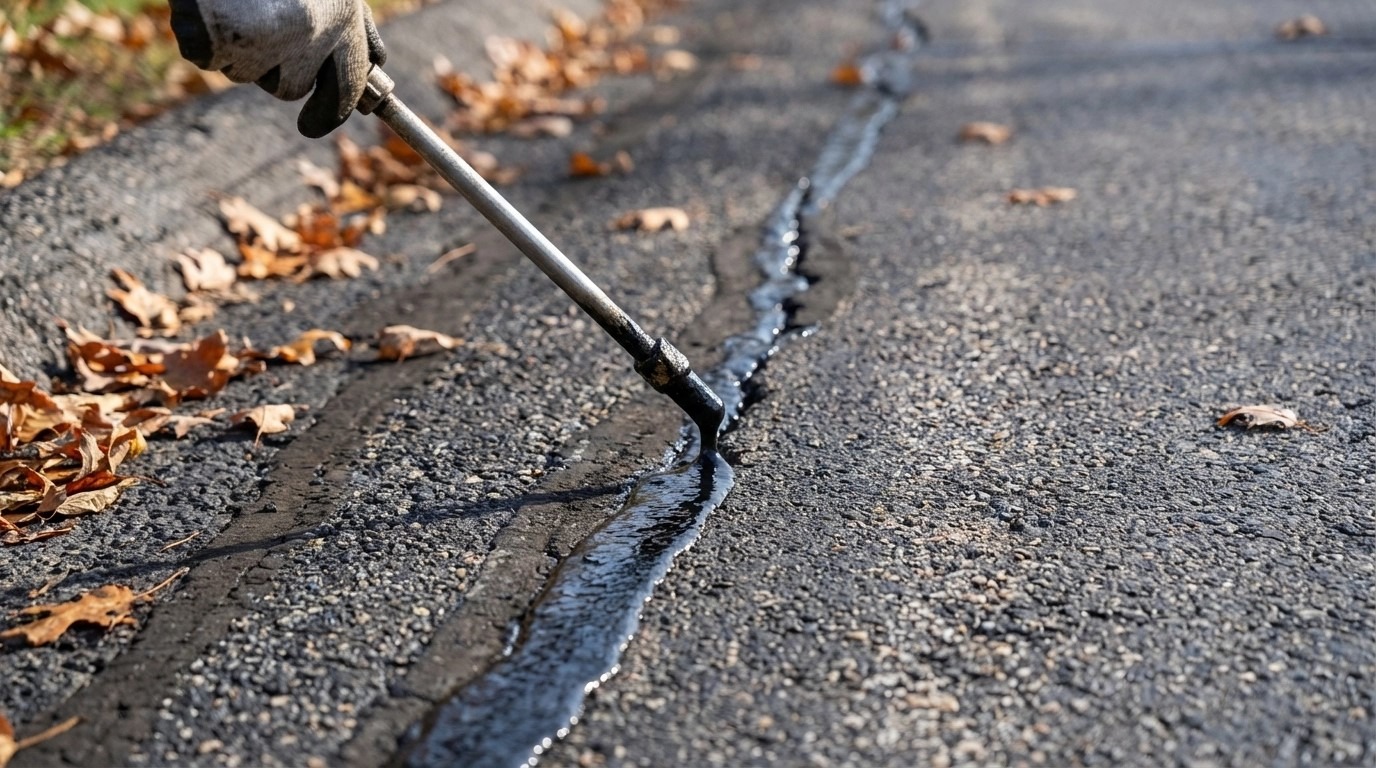
• Seal active cracks before overnight lows consistently dip below freezing—ideally by late October to early November.
• Treat even hairline cracks; many widen significantly by mid-winter.
• Professional crack sealing uses hot-applied material that bonds to crack walls and stays flexible through temperature swings. This step interrupts the water–freeze–expand cycle that causes most potholes.
• Clean and test catch basins and laterals; confirm water flows to inlets, not away from them.
Identify and mark low spots that pond water after rain. Minor leveling, spot milling, or small skin patches can remove “birdbaths” before they become ice pans.
• Make sure downspouts discharge away from the pavement. Redirect if they drain across drive lanes.
• Sweep leaves, grit, and organic debris that trap moisture in surface texture.
• Cut back turf and soil that have crept over the pavement edge; this helps snowmelt drain off instead of back onto the lot.
Snow needs to move, but the way it moves matters.
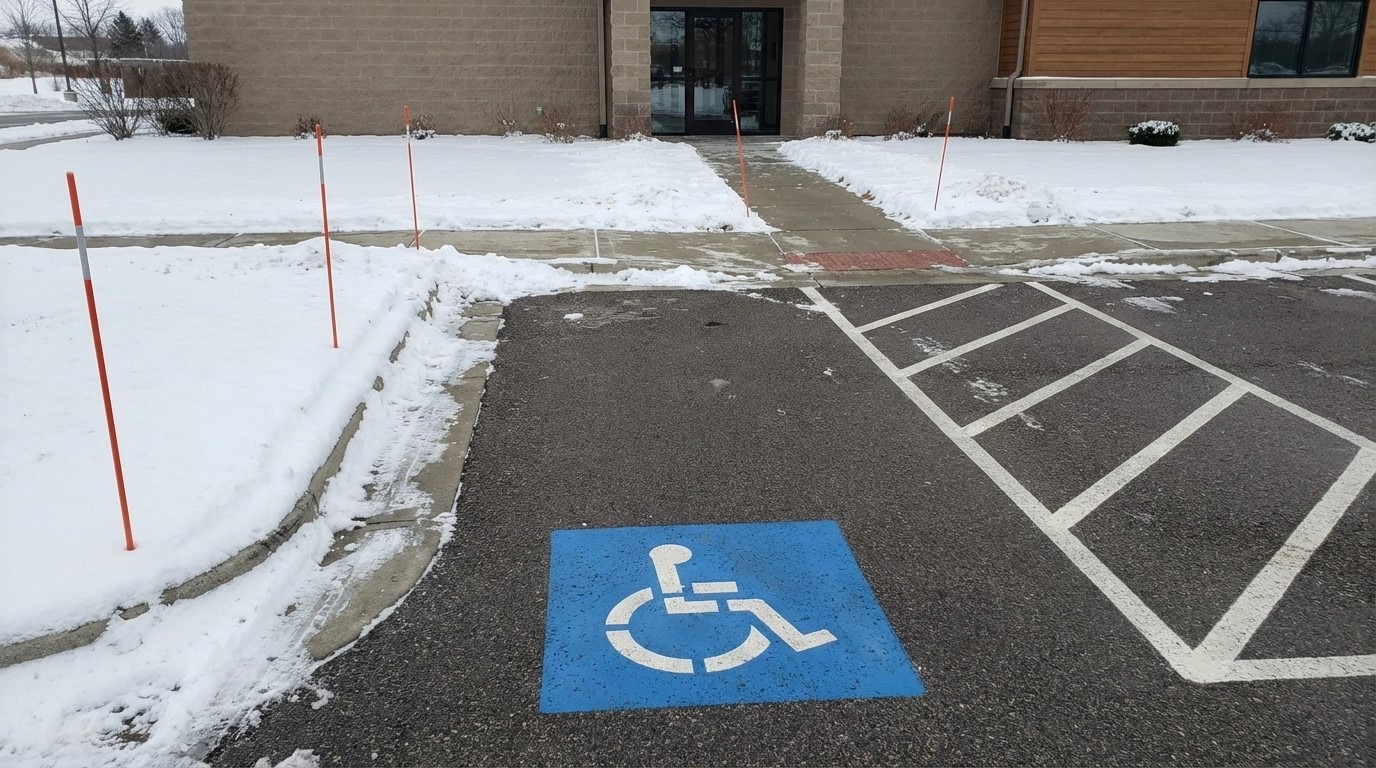
• Establish designated on-site snow storage areas that do not block inlets, ADA routes, or sight lines.
• Mark curbs, islands, inlets, and utility structures with tall, high-visibility stakes before the first storm.
• Use rubber or poly blade edges where practical and keep blade shoes slightly elevated to avoid gouging.
• Push snow with the slope of the lot so meltwater finds drains, not low-use corners that refreeze.
• Brief staff and vendors on where to pile snow and what to avoid.
• Use the lightest effective dose for conditions. Spot-treat high-traffic areas, ramps, and slopes first.
• Consider calcium chloride or magnesium chloride when temperatures are too low for rock salt to be effective; sand adds traction without chemical wear.
• Store de-icing products under cover and away from pavement edges to prevent concentrated runoff that accelerates surface wear.
Portland prohibits pushing or dumping snow from private lots onto public sidewalks and access ramps. Property owners are responsible for safe pedestrian access and clear sight lines.
• Keep ADA stalls, access aisles, and curb ramps plowed and de-iced.
• Plan snow storage so spring meltwater drains to your on-site system.
• For questions: Public Works 207-874-8493; sidewalk plowing concerns 207-874-8793.
Image suggestion: ADA stall and access aisle with plow markers and a clear path to the building entrance.
Walk the lot once a month, and after major thaw–freeze events. Look for:
• New or widening cracks, especially along joints and at curb lines
• Heaving around catch basins, trench patches, and building entrances
• Potholes, raveling, and loose aggregate
Persistent ponding after storms
Document with photos and brief notes. Early awareness helps prioritize temporary fixes and spring work.
• Patch potholes that present a trip hazard or vehicle risk, even in mid-winter. Cold-patch is acceptable as a temporary measure.
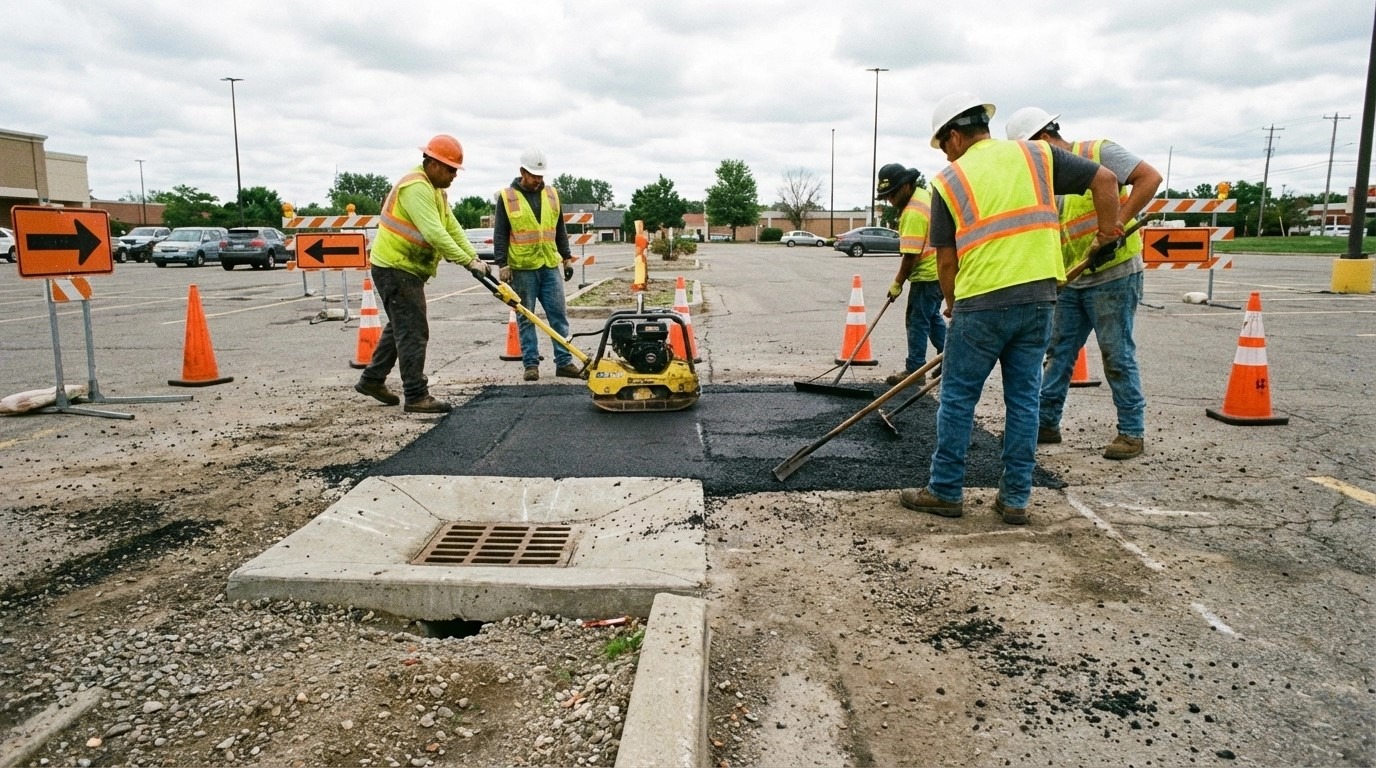
• Clean the hole, square the edges if possible, compact in lifts, and cone or barricade until set.
• Revisit temporary patches in spring; many need a permanent repair or milling and inlay.
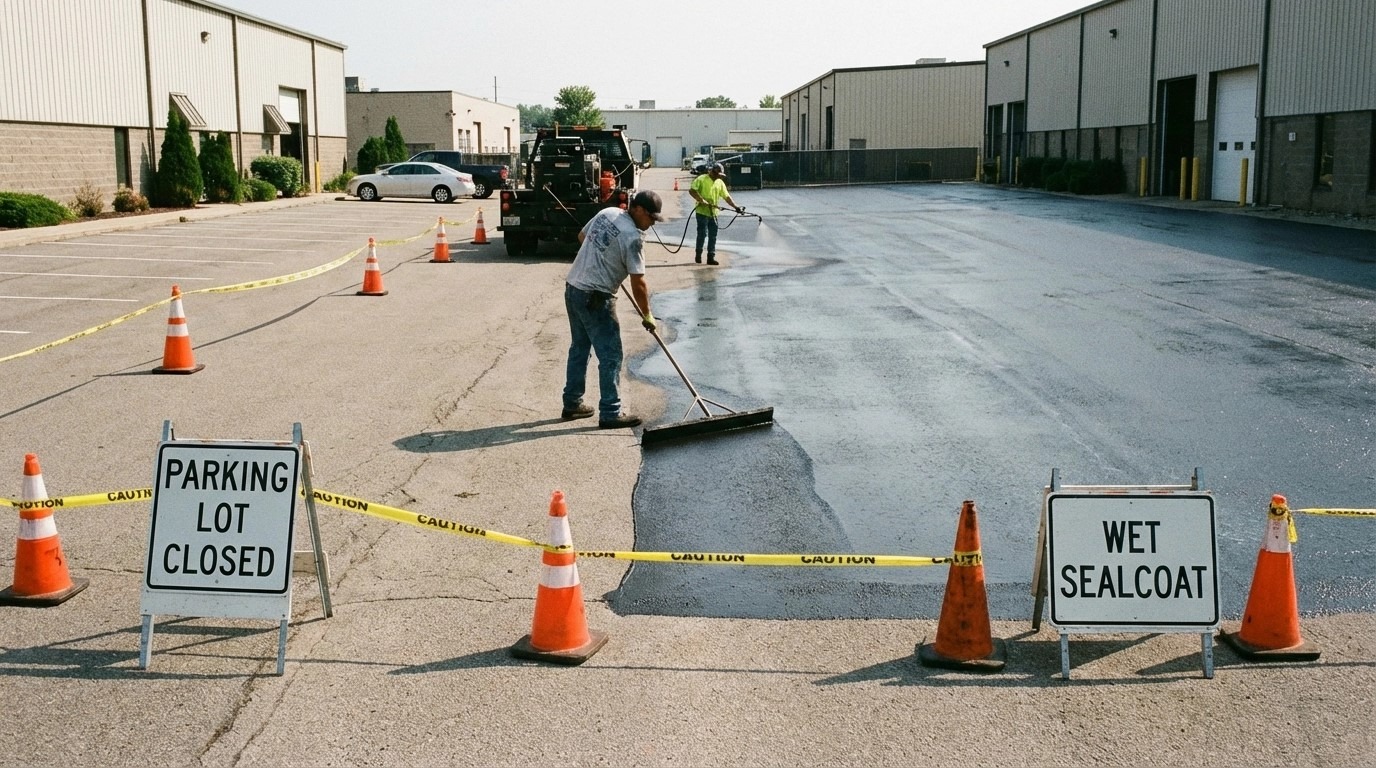
Sealcoating protects against water, oxygen, and de-icing chemicals, and refreshes striping contrast. It does not repair structural problems or wide cracks.
• Best window in Maine: late spring through early September, allowing warm, dry curing conditions.
• Frequency: typically every 2–3 years on commercial lots with regular traffic.
• Preparation matters: crack sealing and patching should precede sealcoat so defects don’t telegraph through.
Choose the fix that matches the cause of the damage.
• When overlay works: the base is sound, drainage is adequate, and damage is mainly surface-level (widespread cracking, shallow raveling). Mill first to maintain curb reveal, then place a new wearing course.
• When full-depth replacement is smarter: repeated freeze–thaw has compromised the base, drainage is poor, or there’s chronic settlement. Rebuild the structure and correct drainage so the new surface lasts.
Preventive maintenance usually costs far less than corrective work.
• Annual crack sealing often runs 10–15% of the cost of major patching or overlays that become necessary when water is allowed in.
• A simple planning target: budget 1–2% of the lot’s replacement value each year for preventive care. This spreads costs, protects asset value, and reduces liability.
Keep dated logs of winter inspections, plow events, de-icer applications, and temporary repairs.
• Save photos and invoices for all maintenance activities.
• Detailed documentation helps with claims management and demonstrates due diligence on slip-and-fall risks.
Pine State Asphalt recommends partnering with contractors who understand Portland’s climate and regulations.
• Licensed, insured, and experienced with freeze–thaw damage and drainage corrections
• Comfortable with maintenance planning, not just emergency repairs
• Clear proposals that address base condition, drainage, traffic control, and phasing around tenant needs
• Familiarity with ADA requirements, curb reveal, and catch basin adjustments when milling and overlaying
• Book sealcoating and overlays early; Maine’s prime paving calendar runs roughly May– October.
• Line up spring assessments during winter so work is scoped and scheduled before the rush.
• For busy sites, discuss off-hours work, phased closures, and temporary striping plans.
Image suggestion: Crew placing a compacted patch near a catch basin, cones and signage directing traffic.
A well-maintained parking lot supports safety, tenant satisfaction, and curb appeal. In Portland’s competitive commercial market, consistent winter care reduces emergency calls, preserves ADA access, and stretches paving dollars further.
Pine State Asphalt encourages property owners to think seasonally:
• Fall: seal cracks, correct drainage, set snow plans
• Winter: monitor, document, and patch hazards
• Spring: assess and schedule permanent repairs
• Summer: complete overlays or sealcoat within the best weather window
With steady attention and the right repairs at the right time, most winter paving problems can be avoided or kept small. That means fewer surprises in March and a longer service life for your Portland, Maine parking lots and drive lanes.
Ready to keep your Portland parking lot or driveway protected all year? Pine State Asphalt is here to help with winter maintenance, spring assessments, and expert repairs whenever you need them. Get in touch today for a free evaluation or customized maintenance plan—let's keep your pavement safe, smooth, and looking sharp through every Maine season!



"They were easy to work with and did a beautiful job sealing the driveway. So very happy we use them."


"Did my driveway. Very large, very steep driveway with some special features. Came out great. Very happy with the service. Nice people to work with too."

"You guys did an awesome job! The sealcoating looks great on my driveway and you can barely tell that the in-laws pothole was ever there. Thanks for the work!"



%201.png)


.jpg)
.jpg)
.png)
.png)